How do fillers work?

Drs. Tom van Eijk
Dermal fillers work by placing a gel-like substance at a carefully selected depth in or beneath the skin. Depending on the treatment area, a filler may restore volume, support facial contours or soften the appearance of a fold.
Many temporary fillers contain hyaluronic acid. This is made into a gel that can provide temporary volume and structural support within the tissue.
The result depends on more than the product itself. Injection depth, product consistency, amount used, facial anatomy and practitioner technique can all affect the outcome.
This page explains what happens beneath the skin, why fillers behave differently across facial areas and when the result can usually be assessed.
In brief, fillers add gel-like volume or support beneath the skin. The effect depends on the product, placement, treatment area and the experience of the practitioner.
Learn more about dermal fillers.
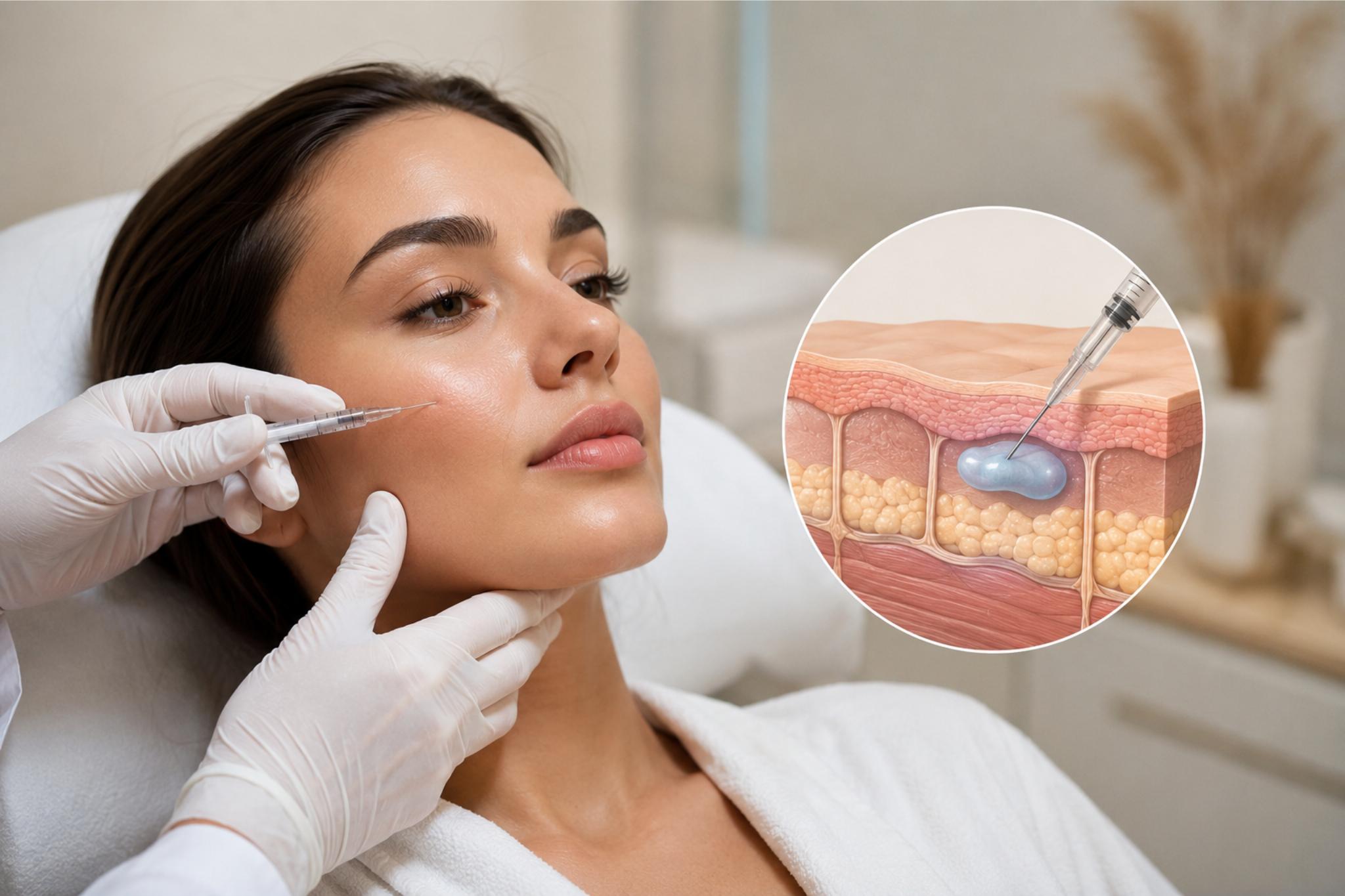
How do dermal fillers work beneath the skin?
A filler does not simply fill a visible line from the surface. It is placed within a particular skin or tissue layer, where it may add volume, support an underlying structure or make a fold appear less pronounced.
The correct placement depends on the treatment goal. Subtle softening may require a different depth and product from treatments intended to provide projection or facial definition.
Before treatment, the practitioner should assess more than the visible concern. Skin thickness, facial proportions, movement, volume loss and underlying anatomy may all influence the treatment plan.
Why does injection depth matter?
The face contains several tissue layers, including the skin, fatty tissue and deeper supporting structures.
A filler may be placed more superficially for subtle correction or deeper where structural support is required. The appropriate depth varies between treatment areas and individuals.
Placement can influence:
how much volume or support is created;
how naturally the treated area moves;
whether the product suits the tissue;
the final balance of the face;
the risk of unwanted effects.
Different products also behave differently. Softer gels may be selected for mobile areas, while firmer products may be considered for contour or support.
Read about dermal filler techniques.
How does a dermal filler treatment work?
- 1 The face and treatment area are assessed.
- 2 The practitioner discusses the intended result and its limitations.
- 3 The product, amount and placement technique are selected.
- 4 The skin is cleaned and the treatment is prepared.
- 5 The filler is placed using a needle or cannula.
- 6 The gel provides volume, support or contour in the selected area.
- 7 Temporary swelling or tenderness may affect the initial appearance.
- 8 The surrounding tissue recovers and the result becomes easier to assess.
- 9 Temporary fillers are gradually broken down by the body.
What does hyaluronic acid do in dermal fillers?
Many temporary dermal fillers contain hyaluronic acid. In filler products, it is processed into a gel that can be placed beneath the skin.
Hyaluronic acid can bind water, but fillers do not work through hydration alone. The product’s firmness, elasticity, composition and placement also influence how it behaves.
A softer filler may be considered for a mobile area, while a firmer gel may be selected where more support or definition is required.
Hyaluronic acid fillers may be used to:
replace some lost facial volume;
provide support beneath a fold;
improve the definition of a facial contour;
add subtle fullness;
adjust facial proportions.
Learn more about hyaluronic acid fillers.
How do fillers work for different treatment goals?
The intended result affects the choice of product, amount and injection depth.
Restoring volume
The gel adds temporary volume within the selected tissue layer. This approach may be used in areas such as the cheeks, temples or lips.
Supporting facial contours
A filler may provide projection or definition around the chin, jawline or cheekbones. These areas may require a different product from highly mobile areas.
Softening folds
A filler can support tissue beneath a fold, making it appear less deep. Treating the fold directly is not always the only option, as volume loss elsewhere may contribute to its appearance.
Adjusting facial balance
Small changes to areas such as the chin, cheeks or lips may alter how facial proportions appear. More filler does not automatically create a better-balanced result.
Supporting skin hydration
Some hyaluronic acid products are used more superficially to support hydration and skin quality. These treatments are not intended to provide the same contour or projection as conventional volumising fillers.
Explore facial filler treatments.
Why do fillers work differently in each facial area?
Skin thickness, movement, fatty tissue, blood supply and underlying facial structure vary throughout the face. Practitioners should therefore not use the same product or technique everywhere.
Lips
Lip treatment focuses on shape, proportion and volume. Because the lips move frequently, product choice and the amount used require careful consideration.
Cheeks
Cheek fillers may restore volume or support facial balance. In some cases, cheek volume can also affect the appearance of folds lower in the face.
Read about cheek fillers.
Chin
Chin filler may alter projection and profile balance. The treatment should be planned in relation to the lips, jawline and other facial features.
Jawline
Jawline treatment generally focuses on support and definition. It may not be suitable where the main concern is significant skin laxity.
Read about jawline fillers.
Cheekbones
Filler may support cheekbone definition, but placement should follow the person’s natural facial structure.
Read about cheekbones fillers.
Nasolabial folds
These folds may be treated directly, although cheek volume loss and facial movement can also contribute to their appearance.
Read about nasolabial folds.
Under the eyes
The under-eye area has thin tissue and can be prone to swelling. Tear trough filler is not suitable for everyone and requires careful assessment.
Do dermal fillers work immediately?
A change may be visible immediately because the gel begins providing volume or support as soon as it is placed.
However, the first appearance is not always the final result. Swelling, tenderness, redness or bruising may temporarily make the treated area look fuller or less even.
During the first few days, the initial reaction should begin to settle. The appropriate time for assessing the result varies according to the product, treatment area and individual recovery.
Contact the clinic if symptoms become increasingly painful, if the skin develops an unusual colour change or if you are concerned about how the area is healing.
Find out how long dermal fillers last.
What happens when dermal fillers break down?
Temporary fillers are gradually broken down by the body. The rate varies between products and individuals.
Factors that may affect longevity include:
the type and amount of filler;
the treatment area;
movement within the area;
individual metabolism;
previous treatments;
the properties of the chosen product.
When a person stops having temporary fillers, the treated area usually moves gradually towards its previous appearance. This process does not happen at the same rate for everyone.
Some hyaluronic acid fillers may be dissolved using hyaluronidase following a clinical assessment. This does not apply to every filler product.
Learn about dissolving dermal fillers.
Why is more filler not always better?
Using more filler does not automatically produce a more natural or balanced result.
Too much volume can alter facial proportions, reduce natural definition or make a mobile area appear heavy. The position and suitability of the product are often more important than the number of millilitres used.
A careful practitioner should assess the face as a whole rather than focusing only on the area the patient initially asks to change.
In some cases, a smaller amount, staged treatment or a different procedure may be more appropriate.
When might fillers be less suitable?
Dermal fillers are not the best option for every concern.
They may be less suitable when:
the concern is mainly caused by significant skin laxity;
there is an active infection or inflammatory skin condition;
the expected result cannot realistically be achieved;
previous filler products cannot be clearly identified;
earlier complications require further assessment;
another treatment is more appropriate;
medical history creates additional considerations.
A consultation should cover suitability, expected limitations, possible side effects and alternative options.
Read about dermal filler side effects.
Dermal fillers, Botox and skin boosters: how do they differ?
These treatments are sometimes discussed together, but they work in different ways.
Dermal fillers
Fillers add temporary volume or structural support beneath the skin. They may be used for facial volume loss, folds, lips or contour definition.
Botulinum toxin treatment
Botulinum toxin, often referred to by the brand name Botox, temporarily reduces activity in selected muscles. It is commonly considered for expression lines caused by facial movement.
Skin boosters
Skin boosters are generally intended to support hydration and skin quality. They are not normally used to create the same projection or structural definition as volumising fillers.
The most suitable treatment depends on whether the main concern involves volume, muscle movement, skin quality or a combination of factors.
What should you ask during a consultation?
Understanding how fillers work can help you ask more useful questions before deciding whether to proceed.
Consider asking:
Which filler product is being recommended and why?
At what depth will it be placed?
How much product may be required?
What result is realistic for my facial structure?
When should the result be reviewed?
Which temporary reactions are common?
Which symptoms require urgent contact with the clinic?
Can the selected filler be dissolved?
What qualifications and relevant experience does the practitioner have?
What aftercare and follow-up are provided?
The practitioner should explain the product, treatment plan, limitations, risks and aftercare without pressuring you to book immediately.
Internal link: Read how to choose a dermal filler clinic.
How can you compare dermal filler clinics?
Do not compare clinics by price alone.
Consider:
who performs the treatment;
the practitioner’s qualifications and relevant experience;
whether facial anatomy and suitability are properly assessed;
how clearly the product and treatment plan are explained;
whether risks and limitations are discussed;
whether prices are transparent;
the availability of aftercare;
independent patient reviews;
whether you are given enough time to decide.
Injectablesbooking.co.uk allows you to compare clinics, practitioners, reviews and available treatment rates.
Compare dermal filler clinics.
Compare clinics in United Kingdom

- Botox zone from
- £ 180,00
- Filler per ml from
- £ 250,00
- Profhilo per 2 ml from
- £ 300,00



- Botox zone from
- £ 300,00
- Filler per ml from
- £ 450,00
- Profhilo per 2 ml from
- £ 400,00


- Botox zone from
- £ 129,00
- Filler per ml from
- £ 250,00
- Profhilo per 2 ml from
- £ 195,00

- Botox zone from
- £ 135,00
- Filler per ml from
- £ 210,00
- Profhilo per 2 ml from
- £ 325,00

- Botox zone from
- £ 129,00
- Filler per ml from
- £ 250,00
- Profhilo per 2 ml from
- £ 195,00

- Botox zone from
- £ 129,00
- Filler per ml from
- £ 250,00
- Profhilo per 2 ml from
- £ 195,00

- Botox zone from
- £ 129,00
- Filler per ml from
- £ 250,00
- Profhilo per 2 ml from
- £ 195,00

- Botox zone from
- £ 129,00
- Filler per ml from
- £ 250,00
- Profhilo per 2 ml from
- £ 195,00
Reviews of dermal filler treatments in the UK
It’s only been a day since having my Botox, so it’s still very early to see the full results, but I’m already really pleased with how it’s looking. Sophie was so thorough and knowledgeable, and took the time to make sure I was comfortable throughout the whole treatment.
Such a lovely experience from start to finish. I felt completely confident in Sophie’s hands and will definitely be returning. ⭐️⭐️⭐️⭐️⭐️ Show less »
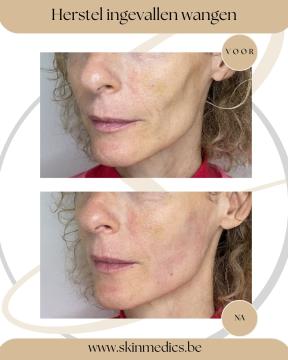
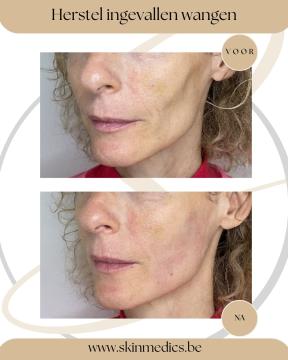
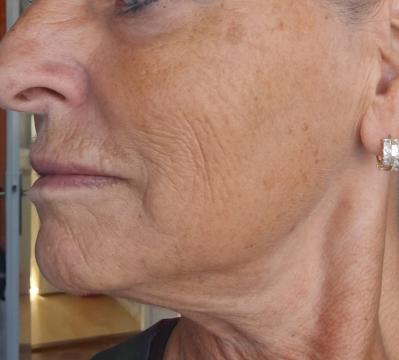
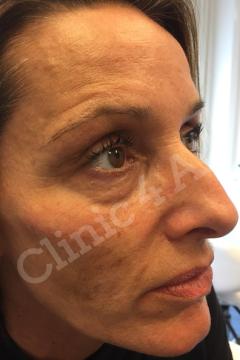
Dermal filler before and after photos




Frequently asked questions about how dermal fillers work
How do dermal fillers work?
Dermal fillers work by placing a gel-like substance in or beneath the skin. Depending on the area, the gel may add volume, support a facial contour or soften the appearance of a fold.
What happens to filler beneath the skin?
The filler is placed within a selected tissue layer. Its effect depends on the product, injection depth, amount used, treatment area and individual anatomy.
What does hyaluronic acid do in fillers?
Hyaluronic acid can bind water and can be processed into a gel that provides temporary volume or support. Hyaluronic acid fillers are gradually broken down by the body.
Do fillers work through volume or hydration?
Their effect comes from a combination of gel volume, structural support and product properties. Water binding may contribute, but placement and product consistency are also important.
How quickly can you see the result?
A change may be visible immediately, but swelling and bruising can affect the first appearance. The result is usually easier to assess after the initial reaction has settled.
What happens if you stop having fillers?
Temporary fillers are gradually broken down. The treated area will usually move towards its previous appearance, although the timing varies between individuals and products.
Why does the same filler not work identically everywhere?
Each facial area has different skin thickness, movement and underlying anatomy. The lips therefore require a different approach from the cheeks, chin, jawline or under-eye area.
Can dermal fillers be dissolved?
Some hyaluronic acid fillers may be dissolved with hyaluronidase after clinical assessment. Other filler types cannot necessarily be dissolved in this way.
What is the difference between fillers and Botox?
Fillers add temporary volume or support beneath the skin. Botulinum toxin treatment temporarily reduces activity in selected muscles and is generally used for expression lines.
Why is more filler not always better?
Too much filler can affect natural facial proportions or movement. Product suitability and accurate placement are usually more important than volume alone.
Compare dermal filler treatments near you
Compare on experience & price Make an appointment immediately