Fillers – how they work, results, prices & comparing options

Drs. Tom van Eijk
Fillers are injectable products used to add volume, support contours or soften the appearance of certain lines and folds. What can be achieved depends on your anatomy, the treatment area, the product used and the treatment plan.
There are different types of fillers. Hyaluronic acid fillers are an important group of temporary fillers, while other products work differently, including biostimulating fillers.
Filler treatment can cause side effects and complications. A good decision therefore starts with what you want to change, whether filler is suitable and who will perform the treatment — not simply the number of millilitres or the lowest price.
On Injectablesbooking you can learn about fillers and compare clinics, practitioners, prices, reviews and treatments across the UK.
Go quickly to:

What are fillers?
A filler is a product placed by injection into or beneath tissue. Depending on the product and treatment plan, it may be used to add volume, support a contour or make a particular line or fold less noticeable.
Not every filler works in the same way, and filler is not suitable for every cosmetic concern.
The final effect can depend on:
the filler product;
the anatomy of the treatment area;
product placement;
the amount used;
previous filler treatments;
the treatment goal;
the practitioner's experience and technique.
For a more detailed explanation, read what are fillers?.
What types of fillers are there?
An important distinction is the material used and how the product is intended to create its effect.
Hyaluronic acid fillers
Hyaluronic acid fillers can be used where adding volume, changing shape or providing structural support forms part of the treatment goal. Different products have different properties and uses.
Biostimulating fillers
Biostimulating fillers work differently. Their intended effect involves stimulating a response within the body's own tissue, so they should not be considered identical to conventional hyaluronic acid fillers.
Read more about hyaluronic acid fillers or biostimulating fillers.
Temporary and permanent fillers
Many fillers used for cosmetic treatments are temporary or biodegradable.
Permanent fillers are a separate category because the material is designed to remain much longer. This can affect treatment planning and what options are available if the result later needs assessment or correction.
The exact product being used should therefore always be clear before treatment.
Read more about temporary fillers and permanent fillers.
Hyaluronic acid filler or biostimulating filler?
These products do not have the same treatment purpose and are not automatically interchangeable.
The choice can depend on:
what you want to change;
your anatomy;
the treatment area;
the desired type of volume or support;
the proposed product;
previous treatments;
relevant risks and limitations.
There is no single type of filler that is automatically suitable for every person or treatment area.
See hyaluronic acid fillers vs biostimulating fillers for a more detailed comparison.
Filler brands: why the specific product matters
There are different brands and product variations within the filler market. A brand name alone does not tell you whether a particular filler is suitable for the area being treated.
The practitioner should be able to explain:
which specific product is proposed;
why it is being considered;
what treatment goal it is intended for;
the proposed amount;
relevant risks and limitations.
Examples of dedicated product pages include Juvéderm fillers and Aliaxin fillers.
Other filler products
Alongside widely used hyaluronic acid fillers, there are other products with different properties and treatment goals.
Do not compare fillers by brand name alone. Consider the specific product, intended treatment and the practitioner's experience with that product and treatment area.
Where can fillers be used?
Fillers are used in different areas of the face and, in some cases, elsewhere. The treatment goal can differ considerably by area.
Examples include:
cheeks;
cheekbones;
jawline;
temples;
nose;
nasolabial folds;
marionette lines;
corners of the mouth;
lines around the mouth;
under-eye area;
hands;
neck and décolletage.
Technique and risk considerations differ by anatomical area. Experience in one treatment area does not automatically mean the same level of experience in another.
See the broader overview of face fillers.
Cheeks, jawline and facial volume
Filler may be considered when someone wants to discuss a specific change in volume or contour.
Cheek volume, cheekbone definition, jawline contour and general facial volume loss are different treatment goals and require separate assessment.
Read more about adding volume to the cheeks or jawline fillers.
Search filler clinics
Compare on experience & price Make an appointment immediately
Lines and folds around the mouth
Not every line around the mouth has the same cause. A nasolabial fold is anatomically different from a marionette line and does not automatically require the same treatment approach.
A practitioner should assess what is contributing to the line, the surrounding anatomy and whether filler is an appropriate option.
Read more about nasolabial fold fillers or marionette line fillers.
Fillers across multiple areas of the face
Some people are interested in how several facial areas relate to one another rather than changing one isolated area.
That does not mean filler is required everywhere.
A wider treatment plan should assess which areas contribute to the concern, which areas may benefit from treatment and whether treatment is appropriate at all.
Read more about full-face filler.
What can fillers not correct?
Depending on the product, fillers can provide volume or support. They are not automatically appropriate for every wrinkle, skin concern or change in facial shape.
Fillers do not automatically correct:
underlying bone or dental position;
every type of skin laxity;
pigmentation;
every cause of dark circles;
every wrinkle caused mainly by muscle movement.
A good consultation should explain both what filler may achieve and when another option or no treatment may be more appropriate.
What happens when considering filler treatment?
- 1 Discuss what you want to change
- 2 Review your medical and treatment history
- 3 Assess the treatment area
- 4 Decide whether filler is appropriate
- 5 Discuss the proposed product and amount
- 6 Review risks and expected limitations
- 7 Decide whether you want to proceed
When can you see filler results?
With many volume-adding filler treatments, some change may be visible immediately after injection. The appearance directly after treatment is not necessarily the final result.
Swelling, redness, tenderness or bruising can temporarily affect how the treated area looks.
When a result can be properly assessed varies according to the product, treatment area and individual recovery.
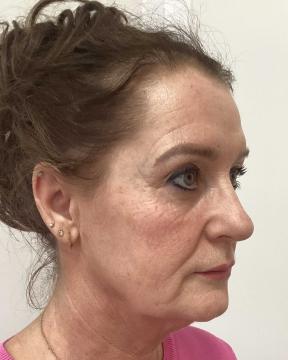
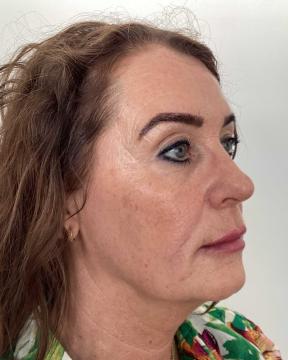
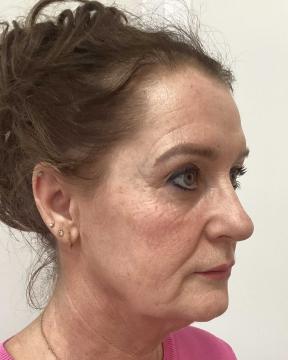
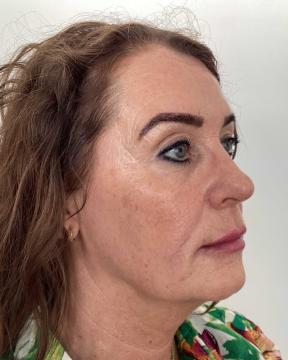
Fillers before and after: what can photos show?
Before-and-after photos can show the type of change achieved for another patient. They cannot predict the result possible for you.
When comparing photos, look at:
camera angle;
lighting;
facial expression;
treatment area;
when the after photo was taken.
Read more about assessing fillers before and after.
Filler before and after examples








How long do fillers last?
There is no universal duration for fillers. How long a visible result remains depends on factors such as the filler material, specific product, treatment area and individual differences.
How long a result remains visible is also not necessarily identical to how long filler material may remain present.
Treatment should therefore not be repeated purely according to a fixed calendar.
Read the detailed guide to how long fillers last.
Side effects and risks of fillers
Filler treatment can cause side effects and complications.
Temporary reactions around an injection site may include:
swelling;
redness;
tenderness;
discomfort;
bruising.
Less common and more serious complications can also occur. Relevant risks depend on factors including the product, treatment area, individual circumstances and technique.
Risks should be discussed before treatment.
Read more about filler side effects and filler complications.
What if you are unhappy with existing filler?
A result that looks different from expected does not automatically mean filler has been placed incorrectly or needs to be removed.
Swelling, asymmetry, lumps, overcorrection and migration are different situations and can sometimes appear similar.
The first step is to establish what may be causing the concern before automatically adding more filler or attempting correction.
Read about filler migration or dissolving filler.
What should you discuss before filler treatment?
Have you had fillers before?
Explain where you have previously had filler and, if known, which product was used. Existing filler can be relevant when planning another treatment.
Are you pregnant or breastfeeding?
Tell the practitioner if you are pregnant or breastfeeding before considering cosmetic filler treatment. Read the dedicated guidance about fillers during pregnancy.
Do you have an infection or inflammation?
Tell the practitioner about an active infection or inflammation in or around the proposed treatment area so they can assess whether treatment should be postponed.
Do you take medication or supplements?
Discuss relevant medication and supplements before treatment. Do not stop prescribed medication yourself because you are considering fillers.
Do I have to have treatment after the consultation?
No. A consultation does not commit you to treatment. You can gather information, compare practitioners and decide not to proceed.
How much do fillers cost?
Filler prices vary because treatments do not all use the same product, quantity or treatment area.
The cost can depend on:
treatment area;
product;
quantity;
practitioner and clinic;
complexity of the treatment plan;
consultation and follow-up.
Do not compare treatments purely by the price per millilitre. Check which product is being used, who is performing the treatment and what is included.
See current information on the filler cost page.
What can filler reviews tell you?
Reviews can help you understand how other patients experienced a consultation, treatment, communication and follow-up.
Do not look only at the average rating. Check:
which treatment was reviewed;
which practitioner is mentioned;
when the review was written;
how expectations were discussed;
communication and accessibility;
follow-up;
how questions or concerns were handled.
Reviews cannot predict your own medical or cosmetic result.
Read more about assessing filler reviews.
Filler reviews
Stacey takes the time to speak with me.
Gives me the best results for chin filler.
Amazing shape for lip filler.
Botox appointments are always good.
Stacey takes the time to speak with me.
Gives me the best results for chin filler.
Amazing shape for lip filler.
Botox appointments are always good.
Highly recommend!
How do you choose a filler practitioner?
Who performs the treatment is an important part of choosing fillers.
Check:
who will perform the procedure;
their professional background and registration where applicable;
relevant training and experience;
experience with your treatment area;
what product is being proposed;
how suitability is assessed;
how risks are explained;
how follow-up is organised.
A registration or professional title alone does not show how much experience someone has with your specific filler treatment. Look at the full practitioner profile and relevant experience.
Read more about choosing a filler practitioner.
Cosmetic specialists in United Kingdom


- Filler from
- £ 250,00

- Filler from
- £ 250,00




- Filler from
- £ 210,00

How do you choose a filler clinic?
Comparing filler clinics involves more than price.
Consider:
who performs the treatment;
experience with the treatment area;
transparency about products;
consultation process;
reviews;
prices;
follow-up;
accessibility if you have questions or concerns.
Read the detailed guide to choosing a filler clinic.
Compare clinics in United Kingdom

- Filler from
- £ 250,00



- Filler from
- £ 250,00


- Filler from
- £ 250,00

- Filler from
- £ 250,00

- Filler from
- £ 250,00

- Filler from
- £ 250,00

- Filler from
- £ 250,00

- Filler from
- £ 250,00
Compare fillers
There is no single filler, practitioner or clinic that is automatically the right choice for everyone.
A useful comparison considers:
your treatment goal;
filler type;
treatment area;
individual practitioner;
relevant experience;
explanation of risks;
price;
reviews;
follow-up.
Use comparison tools to understand your options and prepare questions before a consultation.
Read more about how to compare fillers.
Frequently asked questions about fillers
What are fillers?
Fillers are injectable products that can be used to add volume, support contours or soften the appearance of certain lines and folds, depending on the product and treatment plan.
What are fillers made from?
This differs by product. Many temporary fillers contain hyaluronic acid, while other products use different materials or work through a biostimulating effect.
What can fillers do?
Depending on the product and placement, fillers can add volume or support and may change the appearance of certain contours, lines or folds. What is suitable depends on the individual's anatomy and treatment goal.
How long do fillers last?
There is no universal duration. The visible effect depends on the product, treatment area and individual differences.
Are all fillers temporary?
No. Many cosmetic fillers are temporary or biodegradable, but permanent fillers also exist as a separate category.
Are fillers safe?
Filler treatment has potential side effects and complications. Suitability and relevant risks should be discussed before treatment.
What are common reactions after fillers?
Temporary swelling, redness, tenderness, discomfort or bruising can occur around injection sites. Unexpected, severe or worsening symptoms require appropriate assessment.
Can fillers be dissolved?
Some hyaluronic acid fillers can be broken down with hyaluronidase in appropriate circumstances. This does not apply to every filler type and requires assessment first.
How much filler do I need?
There is no standard amount. The proposed quantity depends on your anatomy, treatment area, product and treatment goal. More filler does not automatically mean a better result.
How much do fillers cost in the UK?
Prices vary according to the treatment area, product, quantity, practitioner and clinic. Compare what is included in the treatment rather than looking only at the headline price.