Eyebrow lift

Drs. Tom van Eijk
A Botox brow lift is a non-surgical treatment that uses botulinum toxin to reduce the activity of selected muscles that pull the eyebrows down. Changing this muscle balance may allow the brow to sit slightly higher, particularly towards the outer part of the eyebrow.
The change is usually subtle. A botulinum toxin brow lift does not physically remove excess skin or reposition tissue in the way surgery can.
“Botox” is a brand name for a botulinum toxin type A medicine, although other botulinum toxin products may be used. If you are researching the treatment more broadly, see our guide to Botox treatment.
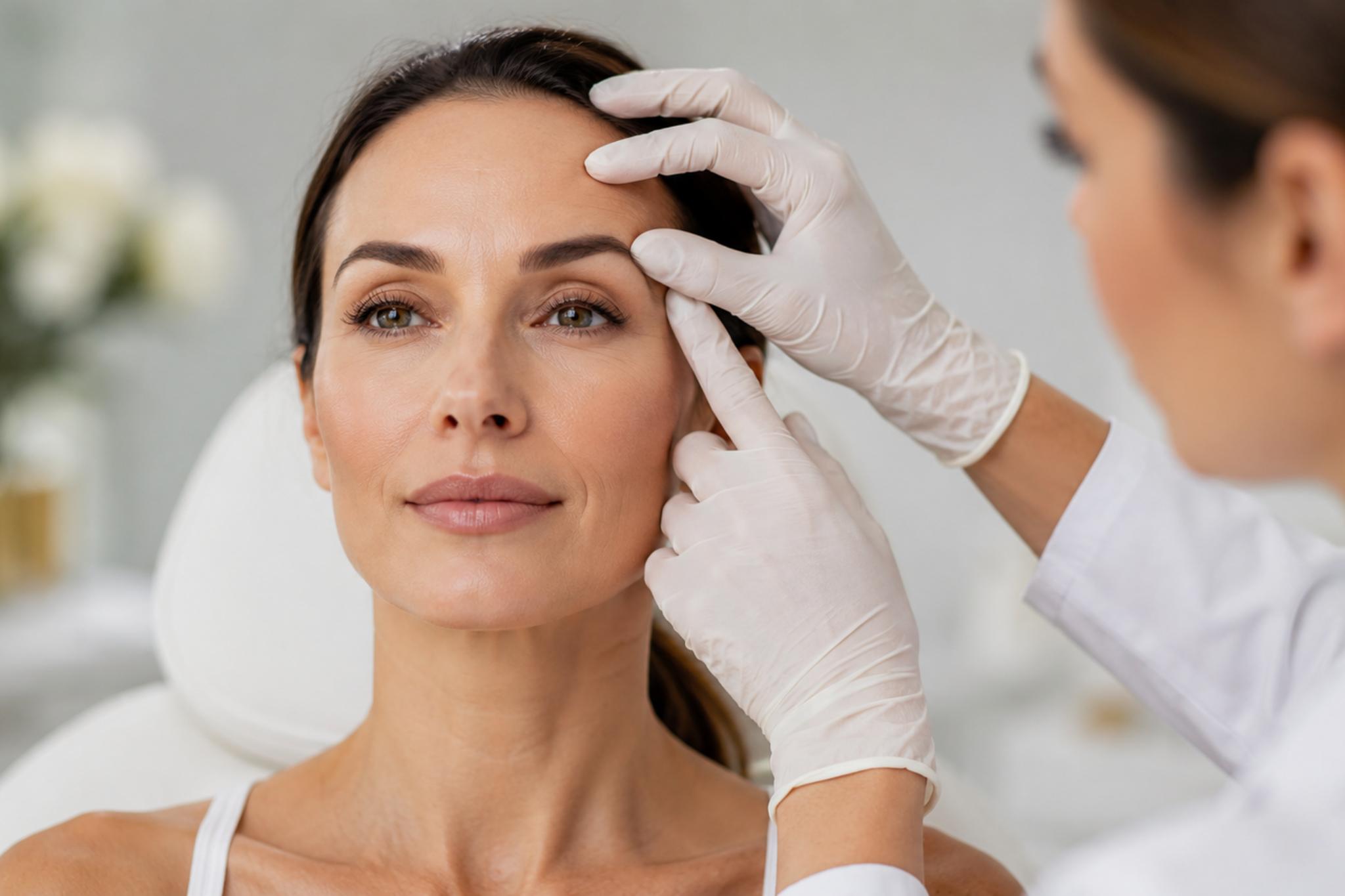
What is a Botox brow lift?
A Botox brow lift is an injection technique intended to create a small change in eyebrow position without adding volume or surgically lifting the skin.
Your brow position is controlled by several muscles working against each other. The frontalis muscle can raise the brows, while muscles around the eyes and between the eyebrows can contribute to downward pull.
A practitioner may place botulinum toxin into selected brow-depressor muscles to reduce some of that downward force. The untreated lifting muscles can then have relatively more influence on the position of the eyebrow.
The exact injection pattern depends on your anatomy and muscle activity. There is no single brow-lift injection pattern that is appropriate for everyone.
How does a Botox eyebrow lift work?
Botulinum toxin temporarily reduces signalling between nerves and the muscles being treated. Those muscles then contract less strongly.
For a brow lift, treatment is planned around the balance between the muscles that elevate the brow and those that pull parts of it down. Treatment may involve selected areas around the outer brow or glabella, depending on the person's anatomy.
The aim is not to “freeze” the entire forehead. Excessive weakening of muscles that help raise the eyebrows can potentially make the brow feel or appear heavier instead of creating the intended lift.
This is why assessment of your brow position at rest and during facial movement matters before treatment.
What happens during a Botox brow lift?
- 1 Brow position and facial movement are assessed
- 2 Your treatment goals and limitations are discussed
- 3 The practitioner plans the injection points
- 4 Small amounts of botulinum toxin are injected
- 5 Aftercare and follow-up are explained
What result can a Botox brow lift realistically achieve?
A Botox brow lift may produce a small elevation or change in the shape of the eyebrow, rather than a dramatic lift.
For some people, reducing downward muscle activity may make the outer brow sit slightly higher or make the area around the eyes appear more open. Results depend on your existing brow position, muscle activity, forehead anatomy and treatment plan.
A Botox brow lift cannot remove loose skin, reposition significant amounts of tissue or reproduce the effect of surgery.
It is therefore important to compare the proposed result with what you actually want to change. If your main concern is excess upper-eyelid skin or substantial brow descent, a practitioner should explain whether botulinum toxin is likely to address that concern at all.
Botox brow lift before and after photos


When does a Botox brow lift start working?
The effect develops gradually rather than immediately. Changes in muscle activity may start becoming noticeable during the first few days, but the final balance of the brows is better assessed once the botulinum toxin has had more time to take effect.
A follow-up assessment is therefore more meaningful than judging eyebrow position immediately after the injections.
How long does a Botox brow lift last?
The effect is temporary. Botulinum toxin treatment of the upper face commonly lasts for several months, but the duration and the visible brow-lift effect vary between individuals.
Factors can include the botulinum toxin product, dose, injection pattern, muscle activity and your individual response.
As muscle activity gradually returns, the eyebrow position also moves back towards its pretreatment state.
What are the risks of a Botox brow lift?
Most reactions around the injection sites are temporary, but a brow lift can also produce an unwanted change in the balance of the upper face.
Possible problems can include:
bruising, tenderness or swelling around injection points;
temporary asymmetry;
an eyebrow position that looks higher or lower than intended;
excessive elevation of part of the brow;
brow heaviness or brow ptosis;
temporary eyelid drooping;
unintended weakness of nearby muscles.
The precise risk profile depends on the product, injection sites, dose, anatomy and other individual factors.
For a more detailed explanation of adverse outcomes rather than brow-lift technique, see our guide to Botox complications.
Important safety information
When should you seek urgent medical help?
Rarely, botulinum toxin can cause effects beyond the intended muscles. Seek urgent medical attention if you develop symptoms such as difficulty swallowing, speaking or breathing, or significant muscle weakness after treatment.
What if one brow looks different from the other?
Small differences can become more noticeable while the toxin is taking effect because the muscles on each side of the face do not always respond identically. Contact the treating clinic if you are concerned about increasing asymmetry or an unexpected change in brow or eyelid position.
What if the eyelid or brow feels heavy?
An unwanted reduction in the activity of muscles that help support the brow can make the eyebrow or upper-eyelid area appear heavier. Contact the treating clinic for assessment rather than attempting to correct the result yourself.
Who might consider a Botox brow lift?
Someone may consider a Botox brow lift when they want to discuss a subtle, temporary change in eyebrow position and prefer to explore a non-surgical option.
Whether this is achievable depends on why the brow appears low in the first place. Muscle activity, brow anatomy, skin position and eyelid anatomy can all affect what botulinum toxin can realistically change.
A practitioner should assess your face both at rest and during movement before deciding whether the treatment is appropriate.
When might a Botox brow lift not be appropriate?
Treatment may not be appropriate in some circumstances, including particular medical conditions, infection at an intended injection site, pregnancy or breastfeeding, or situations involving medicines or conditions that affect neuromuscular function.
Tell the prescriber about your medical history, medicines and previous botulinum toxin treatment before treatment is planned.
How much Botox is needed for an eyebrow lift?
There is no universal number of units for a Botox brow lift.
The dose depends on factors including:
the specific botulinum toxin product;
which muscles are being treated;
the strength and pattern of your muscle activity;
your existing brow position;
the intended degree and shape of change.
Importantly, units from different botulinum toxin products are not directly interchangeable. Comparing clinics purely by the advertised number of units can therefore be misleading.
A consultation should focus on the proposed treatment plan and product being used rather than assuming that more units automatically mean a better result.
What should you do after a Botox brow lift?
Follow the instructions provided by the treating clinic because aftercare can depend on the product and treatment plan.
Avoid rubbing or deliberately manipulating the treated area immediately after the injections. If you experience an unexpected reaction or significant change in brow or eyelid position, contact the clinic that treated you.
For fuller guidance rather than duplicating it here, see Botox aftercare.
How much does a Botox brow lift cost in the UK?
The price of a Botox brow lift varies between clinics and treatment plans. Differences can reflect how the clinic structures its botulinum toxin pricing, the product used, the assessment required and whether the brow lift forms part of another upper-face treatment plan.
Do not compare price alone. Check what treatment the quoted price actually covers and whether consultation or follow-up arrangements are included.
You can also review the wider factors affecting Botox costs.
| Treatment | Unit | City/country | Price | |
|---|---|---|---|---|
| Eyebrow lift | per treatment | United Kingdom | £ 35 | Lowest price |
| Eyebrow lift | per treatment | United Kingdom | £ 181 | Average price |
| Eyebrow lift | per treatment | United Kingdom | £ 895 | Highest price |
Search for Botox brow lift clinics
Compare on experience & price Make an appointment immediately
Botox brow lift reviews
Whether it’s an eyebrow lift, fillers, or any aesthetic treatment, his results are always incredibly natural, balanced, and tailored to me. I’ve seen and tried practitioners in different countries over the years, but no one has ever come close to Dr. Marco’s expertise, precision, and eye for detail.
He always takes the time to listen, gives honest advice, and never recommends anything unnecessary. I leave every appointment feeling like the best version of myself rather than looking overdone, which is exactly what I love.
If you’re looking for someone who truly understands facial harmony and consistently delivers beautiful, elegant results, I couldn’t recommend Dr. Marco more highly. He’s simply the best. Show less »
I had an eyebrow lift and Botox, and I’m absolutely delighted with the results. Monica took the time to listen to what I wanted, explained everything clearly, and made sure I felt comfortable throughout. The results are natural, and I feel so much more confident.
Thank you, Monica, for your kindness, expertise, and wonderful care. I wouldn’t hesitate to recommend you to anyone considering facial aesthetic treatments. Show less »
From an aesthetic perspective, he is outstanding. I have naturally very hooded eyes, and he consistently achieves a subtle, natural-looking brow lift that opens up my eyes without ever looking overdone. The results are always balanced, tailored to my face, and exactly what I hope for every time.
After 13 years, I can honestly say his skill, integrity and dedication have never wavered. I wouldn’t hesitate to recommend him to anyone looking for a highly experienced doctor who genuinely puts patient care first and in fact have done so as he also sees several of my friends on a regular basis. Show less »
Nikkita is clearly a master of her craft. Knowledgeable, considered, and gifted at seeing what will work for your face rather than just going through the motions. I’d recommend her without hesitation. Show less »
How do you compare clinics for a Botox brow lift?
A brow lift requires more than simply placing injections around the eyebrow. The practitioner needs to understand how the brow elevators and depressors interact and how changing one area may affect another.
When comparing providers, look at:
who carries out the initial assessment;
who prescribes the botulinum toxin;
who performs the injections;
relevant training and experience with upper-face treatment;
how your brow movement is assessed;
which botulinum toxin product is proposed;
how limitations and risks are explained;
what follow-up is available if the result is uneven or unexpected.
Botulinum toxin is a prescription-only medicine in the UK, so the prescribing process should be clear before treatment.
For more detail on evaluating the person carrying out treatment, see our guide to choosing a Botox practitioner.
Compare clinics in United Kingdom
- Eyebrow lift from
- £ 225,00
- Eyebrow lift from
- £ 300,00


- Eyebrow lift from
- £ 85,00
- Eyebrow lift from
- £ 85,00

- Eyebrow lift from
- £ 85,00
- Eyebrow lift from
- £ 150,00
- Eyebrow lift from
- £ 175,00
Frequently asked questions about Botox brow lifts
Can Botox actually lift your eyebrows?
Botulinum toxin does not physically lift tissue. Instead, reducing the activity of selected muscles that pull the brow down may allow the muscles that elevate it to have relatively more influence. The resulting change is usually subtle and varies between individuals.
How much higher can your eyebrows go with Botox?
There is no fixed amount of lift that can be promised. The visible change depends on your starting brow position, muscle activity, anatomy, injection pattern and individual response.
Can a Botox brow lift help hooded eyes?
A small change in brow position may alter how open the upper-eye area appears in some people, but botulinum toxin does not remove excess eyelid skin. A practitioner should determine what is actually causing the hooded appearance before discussing treatment options.
Can Botox make one eyebrow higher than the other?
Yes. Temporary asymmetry can occur if the muscles on each side respond differently or if their original strength and position differ. Contact the treating clinic if you notice an unexpected or increasing imbalance.
Can a Botox brow lift cause a drooping eyelid?
Temporary eyelid ptosis is a recognised potential complication of botulinum toxin treatment around the upper face. Correct assessment and injection planning are important, but the risk cannot be eliminated completely.
Is a Botox brow lift the same as a surgical brow lift?
No. A Botox brow lift temporarily changes muscle activity and generally creates a smaller change. Surgery physically repositions tissues and can produce a more substantial and longer-lasting lift.