Radiesse filler treatment

Drs. Tom van Eijk
Radiesse is an injectable containing calcium hydroxylapatite, usually shortened to CaHA. It can provide an initial structural or volumising effect while also stimulating changes in the tissue, including new collagen formation over time.
Unlike a hyaluronic acid filler, Radiesse is not routinely dissolved with hyaluronidase. This makes product choice, treatment planning and placement particularly important.
Radiesse may be considered for selected facial or hand treatment goals, depending on the product used, treatment area and your individual anatomy. Results and suitability vary, so a practitioner should assess what may be appropriate during a consultation.
If you are still comparing injectable categories, read the dermal fillers guide.
Quick links
Radiesse treatment at a glance
Product type: calcium hydroxylapatite injectable
Common abbreviation: CaHA
Main treatment principle: initial structural support combined with collagen stimulation
Result timing: some change may be visible soon after treatment, with further changes developing over time
Result duration: temporary and variable between individuals
Reversible with hyaluronidase: no
Treatment plan: depends on the treatment area, anatomy, product formulation and intended result
Important consideration: Radiesse is not interchangeable with every other type of dermal filler
Initial swelling can temporarily affect how the area looks immediately after treatment. The appearance directly after an injection should therefore not automatically be treated as the final result.
What is Radiesse and how does it work?
Radiesse contains calcium hydroxylapatite microspheres suspended in a gel carrier. The gel can provide an initial filling or structural effect in the treated tissue.
Over time, the CaHA microspheres also act as a scaffold around which biological tissue responses can occur, including collagen formation. The visible result therefore does not depend only on the amount of material initially injected.
Is Radiesse a dermal filler?
Radiesse is generally described as a dermal filler, but it differs from conventional hyaluronic acid fillers because CaHA also has a biostimulatory effect.
The distinction matters because different injectable products have different characteristics, treatment uses and options if the result is unwanted.
Is Radiesse a collagen stimulator?
Radiesse has collagen-stimulating properties, but it can also provide an initial structural effect. How it is used depends partly on the formulation, dilution, treatment area and treatment goal.
It should therefore not be assumed that every Radiesse treatment uses the same technique or is intended to produce the same type of result.
What happens during a Radiesse treatment?
- 1 Consultation and medical history
- 2 Assessment of the treatment area
- 3 Discussion of goals, limitations and risks
- 4 Treatment planning and injection
- 5 Aftercare advice and follow-up
Where can Radiesse be used?
Radiesse may be used for selected facial and hand indications. The appropriate area depends on the specific product, formulation, technique and individual treatment plan.
Examples can include:
cheeks and facial support;
parts of the lower face and jawline;
nasolabial folds;
the backs of the hands;
selected skin-quality applications when Radiesse is used in a diluted form.
Not every area is suitable for the same formulation or injection technique. A practitioner should assess whether Radiesse is appropriate for the area you want to discuss.
Radiesse should not be treated as a substitute for every hyaluronic acid filler treatment simply because both products can be described as fillers.
What results can Radiesse provide?
Depending on how it is used, Radiesse may provide additional structural support, volume or contour in the treated area. Some treatments also use its biostimulatory properties with the aim of improving aspects of tissue or skin quality over time.
There can be two stages to the visible effect:
Initial effect
The carrier gel can create an early structural or volumising change. Swelling and other temporary injection reactions may also affect how the area appears during the first few days.
Developing effect
Collagen-related changes occur more gradually. This means the appearance can continue to change after the initial treatment period.
Why do Radiesse results differ?
Results can vary because of differences in:
anatomy;
tissue characteristics;
treatment area;
amount and formulation used;
product placement;
treatment plan;
individual biological response.
A practitioner should explain what they are trying to achieve rather than promising a standard result.
Radiesse before and after photos
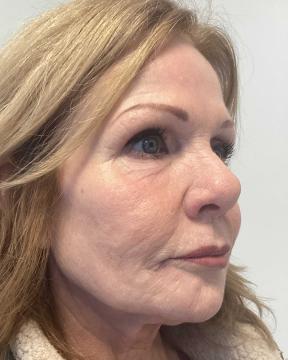
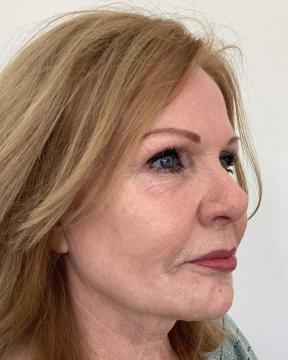
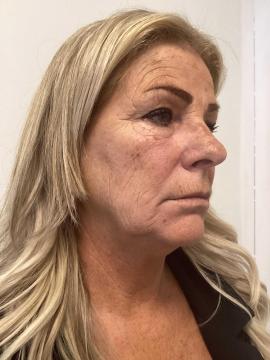
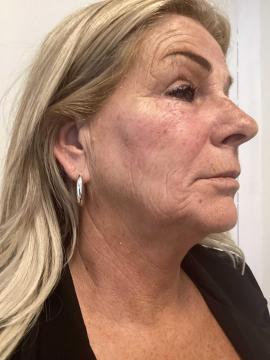
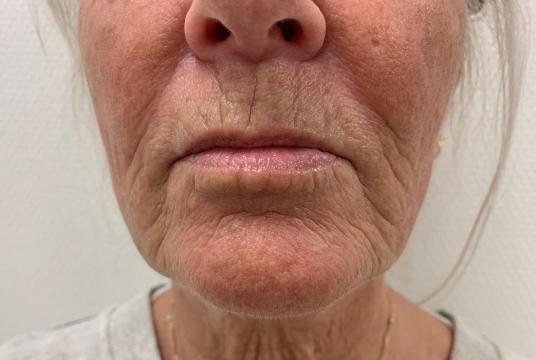
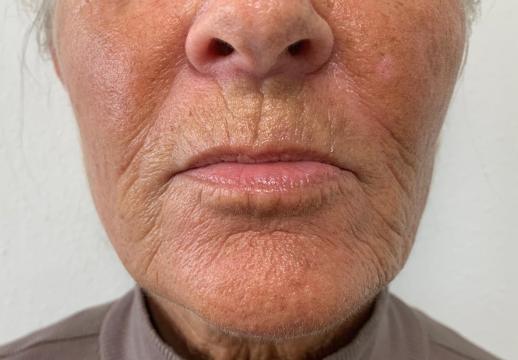
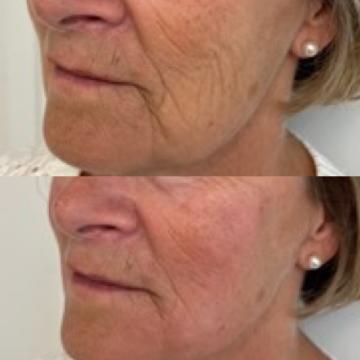
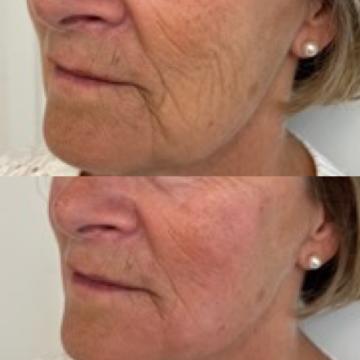
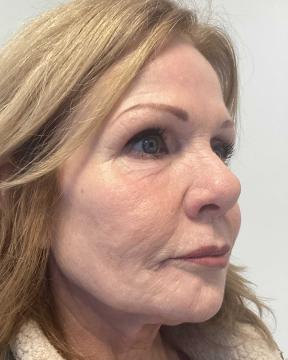
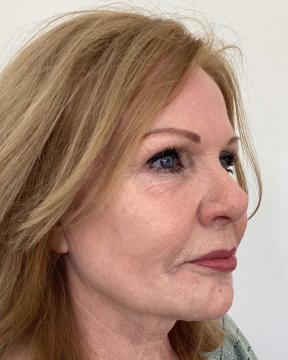
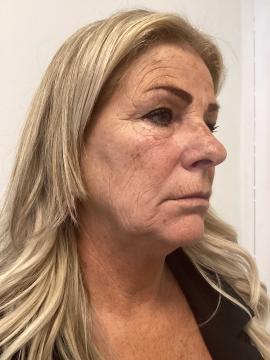
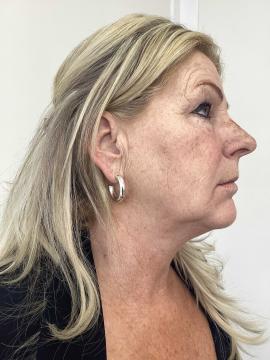
Results in Radiesse before-and-after photographs show individual treatment examples. They do not demonstrate what every person will achieve.
Differences in anatomy, treatment plan, product quantity, technique and healing response can all affect the result. When comparing photographs, consider whether the treatment area, angle, lighting and time after treatment are clearly explained.
Radiesse risks, reactions and limitations
Common temporary reactions
Temporary reactions around the injection site can include swelling, redness, tenderness, bruising or a feeling of firmness. The type and duration of reactions differ between individuals and treatment areas.
Your practitioner should explain what they expect after the specific treatment being proposed.
Lumps, nodules or unevenness
Firmness, palpable product, lumps, nodules or unevenness can occur after injectable treatment. Their cause and management are not always the same.
Contact the treating clinic if an unexpected lump persists, becomes painful, changes or concerns you rather than attempting to correct it yourself.
Possible complications
Injectable fillers can cause complications including infection and problems related to product placement. A rare but serious complication can occur if blood supply is affected.
For a broader explanation, see the guide to filler complications.
Why reversibility matters
Radiesse is not a hyaluronic acid filler and cannot routinely be dissolved using hyaluronidase.
This does not mean that every unwanted result is permanent, but correction can be less straightforward than with some hyaluronic acid fillers. This is an important point to discuss before treatment.
When should you seek urgent advice?
Contact the treating clinic urgently if you develop severe or increasing pain, unusual blanching or marked colour change in the skin, rapidly worsening symptoms or other unexpected changes.
Visual symptoms after filler injection require urgent medical assessment.
How long does Radiesse last?
Radiesse is temporary. A visible effect may last around 12 to 18 months in some treatment contexts, but duration cannot be predicted precisely for an individual.
How long the effect remains noticeable can depend on:
treatment area;
amount and formulation used;
treatment technique;
individual tissue response;
treatment goal;
subsequent treatments.
The initial filler effect and the longer biological response should not be treated as exactly the same thing.
Will you need another Radiesse treatment?
Not necessarily on a fixed schedule.
Some people may discuss further treatment or maintenance, while others may not. The decision should depend on the remaining result, treatment goal and a new assessment rather than automatically repeating treatment after a set number of months.
What should you do after Radiesse treatment?
Your practitioner should provide aftercare instructions based on the treatment area and technique used.
Advice may cover:
touching or applying pressure to the area;
exercise;
heat exposure;
skincare or make-up;
what temporary reactions to expect;
when to contact the clinic;
follow-up arrangements.
Do not massage a treated area unless your practitioner has specifically advised you to do so.
If your symptoms are different from what was explained during your consultation, contact the clinic for advice.
Who may consider Radiesse?
Radiesse may be discussed when someone is considering treatment for selected areas where additional support, contour, volume or biostimulatory effects are relevant.
That does not mean it is appropriate for every person or every area.
During consultation, the practitioner should consider factors including:
your treatment goal;
the anatomy of the area;
previous injectable treatments;
relevant medical history;
medicines and allergies;
current skin problems or infection;
whether another treatment or no treatment may be more appropriate.
Choosing not to proceed remains an option if the likely benefit, limitations or risks do not match what you want from treatment.
How much does Radiesse cost in the UK?
The cost of Radiesse can vary between clinics and treatment plans. Relevant factors can include the amount of product used, treatment area, consultation structure and what follow-up is included.
A higher or lower price does not by itself show that one clinic will produce a better result.
When comparing costs, check:
what product and quantity the quoted price includes;
whether consultation is included;
whether follow-up is included;
whether additional treatment would involve another charge;
who will perform the procedure.
For wider pricing context, see the UK dermal filler cost guide.
| Treatment | Unit | City/country | Price | |
|---|---|---|---|---|
| Radiesse | 1.5 ML | United Kingdom | £ 250 | Lowest price |
| Radiesse | 1.5 ML | United Kingdom | £ 395 | Average price |
| Radiesse | 1.5 ML | United Kingdom | £ 850 | Highest price |
What can Radiesse reviews tell you?
Reviews can provide context about other clients' experiences with matters such as:
the consultation;
communication;
the treatment process;
aftercare;
clinic organisation.
Reviews cannot establish that a treatment is medically safe for you and cannot predict your own result.
Look for detailed comments rather than relying only on an overall rating.
Radiesse reviews
The process is always fully explained and as she is also a GP you feel very relaxed and have total confidence in her abilities.
Would highly recommend.
I’m very happy with the care I’ve received so far and I’m looking forward to continuing the treatment. I would definitely recommend Claire to anyone considering PRP hair restoration. Thank you, Claire! 😊 Show less »
How to compare Radiesse clinics and practitioners
Radiesse cannot be compared on price alone. The consultation should give you enough information to understand why the product is being proposed and what the practitioner expects it to achieve.
Useful questions include:
How often do you use Radiesse for this treatment area?
Why are you recommending Radiesse rather than another injectable?
Which formulation and amount are you proposing?
What result are you aiming for?
What are the main limitations?
What reactions or complications should I know about?
What would happen if I were unhappy with the result?
What follow-up is available?
How does the clinic manage complications?
Professional registration, where applicable, is one factor you can check, but a professional title alone does not establish extensive experience with Radiesse or a particular anatomical area.
You can also read how to choose a filler clinic before comparing providers.
Compare clinics in United Kingdom

- Radiesse from
- £ 250,00


![Dr Fan Aesthetics [Botox, Dermal Filler, Skinbooster, Skin Care. Near Lytham St Anne’s - Fylde Coast]](https://s3.eu-west-1.amazonaws.com/files.botoxbooking.production/66909/conversions/Dr-Fan-Aesthetics-logo.jpg)
- Radiesse from
- £ 380,00



- Radiesse from
- £ 450,00

Frequently asked questions about Radiesse
What is Radiesse filler?
Radiesse is an injectable containing calcium hydroxylapatite, or CaHA. It can provide an initial structural effect and can also stimulate collagen-related changes in the treated tissue over time.
How long does Radiesse last?
Radiesse is temporary. Effects may remain visible for around 12 to 18 months in some treatment contexts, but duration varies according to the area, treatment plan and individual response.
Is Radiesse the same as hyaluronic acid filler?
No. Radiesse contains calcium hydroxylapatite rather than hyaluronic acid. The products have different characteristics, uses and options for managing unwanted results.
Can Radiesse be dissolv
Radiesse cannot routinely be dissolved with hyaluronidase in the way that many hyaluronic acid fillers can. This is an important limitation to discuss before treatment.
When can you see Radiesse results?
An initial change may be visible soon after injection, although swelling can affect the early appearance. Further changes may develop gradually as the tissue responds over time.
What are the disadvantages of Radiesse?
Possible disadvantages include temporary injection reactions, the risk of complications and the fact that Radiesse is not routinely dissolved with hyaluronidase. It is also not appropriate for every treatment area or treatment goal.
Is Radiesse safe?
Radiesse is an established injectable treatment, but no filler treatment is risk-free. Possible reactions and complications should be discussed before treatment, including what to do if unexpected symptoms occur.
How do I choose a clinic for Radiesse?
Compare relevant practitioner experience, consultation quality, treatment planning, follow-up, complication management, pricing information and verified profile details rather than choosing on price alone.