Nasolabial fold

Drs. Tom van Eijk
Nasolabial fold filler may be used to soften a noticeable crease running from the side of the nose towards the corner of the mouth. Nasolabial folds, also called nose-to-mouth lines or smile lines, are a normal part of facial anatomy. Treatment therefore usually aims to soften the fold rather than remove it completely.
The most visible part of the fold is not always the only area that matters. Reduced support in the cheek or midface can sometimes make a nasolabial fold appear deeper, so a practitioner may assess whether direct treatment of the fold, support elsewhere in the midface or no treatment is more appropriate.
More filler does not automatically produce a better result. The proposed treatment should take account of your facial anatomy, the cause of the fold and what can realistically be changed with filler.
For a broader explanation of treatment types and filler products, see the dermal fillers guide.
You can also compare clinics offering nasolabial fold filler further down this page.

What is nasolabial fold filler?
The nasolabial fold is the natural crease between the side of the nose and the corner of the mouth. Its depth can be influenced by facial structure, movement, skin characteristics and the support provided by tissues in the cheeks and midface.
Nasolabial fold filler involves placing an injectable filler in carefully selected areas to add volume or structural support. Temporary hyaluronic acid fillers may be considered for this area, but the appropriate product and treatment plan depend on the individual assessment.
The purpose is usually to reduce the depth or shadow of the fold while preserving a normal transition between the cheek, nose and mouth.
Filler cannot correct every reason a nasolabial fold appears prominent. If the fold is strongly influenced by skin laxity, facial structure or loss of support elsewhere, directly adding filler into the crease may have limited value.
Why can nasolabial folds become more noticeable?
The fold itself is only one part of the assessment. A practitioner may also consider:
the shape and projection of the cheeks;
support beside the nose;
facial movement;
skin thickness and quality;
differences between the two sides of the face;
previous filler treatment;
how the fold looks both at rest and during expression.
This is why treatment planning should consider the wider midface rather than simply filling the deepest visible line.
Direct or indirect treatment of nasolabial folds
There is no single approach that is appropriate for every nasolabial fold. Where filler is considered, the treatment plan may focus directly on the fold, on nearby facial support or on a combination of carefully selected areas.
Direct treatment of the fold
In some cases, filler may be placed in or around part of the nasolabial fold to reduce its depth or shadow.
The aim should usually be softening rather than making the entire crease completely flat. Your practitioner should explain which part of the fold may respond and which part is likely to remain visible.
Supporting the cheek or midface
A deeper nasolabial fold can sometimes be influenced by reduced support higher in the face. In this situation, a practitioner may consider whether restoring support in the cheek or midface could reduce some of the prominence of the fold without placing a large amount of filler directly into it.
This is a separate treatment consideration. Read more about cheekbone fillers.
When adding more filler may not help
Increasing the amount of filler does not guarantee a greater improvement.
Too much volume around the fold can create fullness that does not suit the surrounding facial anatomy. A staged or conservative approach may therefore be considered rather than attempting to erase the fold in a single treatment.
A practitioner can assess during consultation whether filler may be appropriate for your individual circumstances.
Nasolabial fold filler or Botox?
Dermal filler and botulinum toxin have different functions.
Filler adds volume or structural support. Botulinum toxin temporarily reduces activity in selected muscles.
A nasolabial fold does not simply result from one overactive muscle, so botulinum toxin does not replace missing volume or support within the fold. Directly weakening muscles around the mouth can also alter movement and expression.
This does not mean that every visible nasolabial fold should be treated with filler. The appropriate approach depends on what is contributing to the fold and what outcome is realistically achievable.
A consultation should establish the treatment goal before any injectable procedure is proposed. Choosing not to have treatment remains a valid option.
How does nasolabial fold filler treatment work?
- 1 Consultation and medical assessment
- 2 Assessment of the fold and midface
- 3 Discussion of treatment options and limitations
- 4 Agreement on product, placement and treatment plan
- 5 Filler treatment if appropriate
- 6 Immediate assessment of the treated area
- 7 Aftercare and contact instructions
How much filler is needed for nasolabial folds?
There is no standard amount of filler that is appropriate for every nasolabial fold.
The proposed amount can depend on:
the depth and cause of the fold;
your facial anatomy;
whether one or both sides require treatment;
whether treatment is direct or involves support elsewhere;
the filler product being considered;
previous filler;
the intended degree of correction.
Rather than focusing only on the number of millilitres, ask during the consultation:
Where would the filler be placed?
Why has that location been selected?
What part of the fold is expected to change?
What is unlikely to change?
How will unnecessary fullness be avoided?
Would a staged approach be more appropriate?
A larger quantity of filler is not a measure of treatment quality. The amount should follow from the assessment and treatment plan.
Nasolabial fold filler before and after



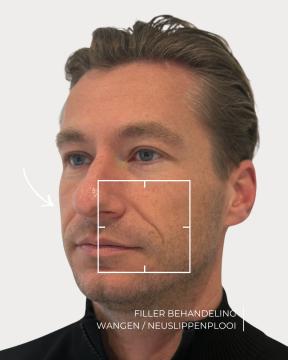
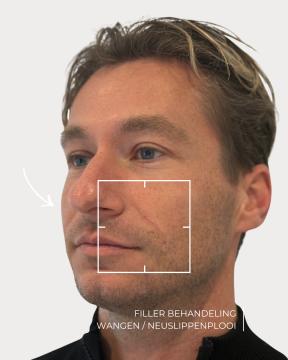


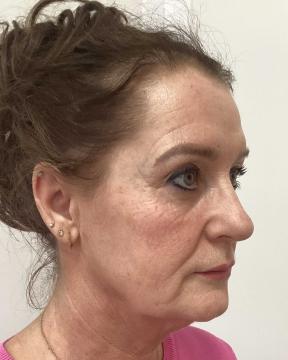
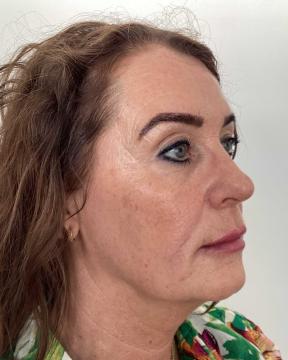
When can you see the result?
A change in the depth or contour of the nasolabial fold may be visible immediately after filler is injected. However, swelling, redness, tenderness or temporary unevenness can affect how the area looks during early recovery.
For that reason, the appearance immediately after treatment should not automatically be treated as the settled result.
What is a realistic result?
The intended result is usually a softer or less prominent nasolabial fold rather than complete removal of the natural crease.
How much the fold changes depends on factors including:
the original depth of the fold;
facial anatomy;
the reason the fold is prominent;
skin characteristics;
the product used;
filler placement;
the amount used.
A very deep fold or one strongly influenced by changes elsewhere in the face may improve only partly with direct filler treatment.
How long does nasolabial fold filler last?
Hyaluronic acid fillers are temporary. There is no single duration that applies to every nasolabial fold treatment because longevity varies with the product, amount, treatment area and individual response.
Ask how long the specific filler being proposed would generally be expected to remain noticeable and when the clinic would reassess the area.
For a broader explanation, see how long dermal fillers last.
What is recovery like?
Temporary swelling, redness, tenderness, firmness or bruising can occur around the injection area.
These reactions can temporarily make the fold appear fuller, uneven or different on one side. Follow the aftercare instructions provided by the clinic and make sure you know how to contact them if symptoms become unusual, severe or progressively worse.
Nasolabial fold filler side effects, risks and considerations
Which temporary reactions can occur?
Swelling, redness, tenderness, mild pain, bruising and temporary firmness or unevenness can occur after filler injections.
The important point is how symptoms develop. Mild reactions that are settling are different from symptoms that become increasingly painful, extensive or unusual.
Which symptoms need urgent assessment?
Severe or increasing pain, unusual pale, white, grey, blue or mottled skin changes, or a new change in vision require urgent medical assessment.
A rare but serious filler complication is vascular occlusion, where blood flow to tissue is reduced or blocked.
Do not assume these symptoms are part of ordinary recovery. Contact the treating clinic immediately and seek urgent medical assessment when appropriate.
For more detailed information, read about filler complications.
Can nasolabial fold filler look overcorrected?
Yes. Adding more volume than suits the anatomy and treatment goal can make the area around the nose and mouth appear fuller or heavier than intended.
Discuss what degree of softening is realistic before treatment and whether a staged approach would allow the result to be assessed before more filler is considered.
When might treatment be postponed or reconsidered?
A filler procedure is not appropriate in every circumstance.
Your practitioner should review relevant medical history, medicines, allergies, previous filler treatments and any current problem affecting the proposed injection area before deciding whether treatment can proceed.
Pregnancy or breastfeeding should also be discussed before cosmetic injectable treatment.
If the expected result cannot realistically be achieved with filler, an appropriate outcome of the consultation may be to change the plan or not treat.
Can nasolabial fold filler be dissolved?
Some hyaluronic acid filler can be broken down using hyaluronidase when clinically appropriate.
This does not mean that every unwanted filler result should automatically be dissolved, and not every type of filler responds to hyaluronidase. The product used, symptoms, treatment area and reason for considering correction should first be assessed.
Read more about dissolving filler.
What affects the cost of nasolabial fold filler?
There is no single treatment cost that applies to every nasolabial fold.
The total price can depend on:
the treatment plan;
the amount of filler proposed;
the product used;
whether treatment focuses on the fold itself or another supporting area;
the practitioner and clinic;
what consultation, review and aftercare are included.
When comparing prices, check exactly what the quoted amount covers. A headline price is difficult to compare if one clinic quotes per millilitre while another quotes for an individual treatment plan.
Price alone does not establish practitioner experience, treatment quality or suitability. Compare the proposed plan, practitioner information and aftercare as well as cost.
The Rates block below should display the current pricing information available through Injectablesbooking rather than adding a manually written UK price range.
| Treatment | Unit | City/country | Price | |
|---|---|---|---|---|
| Nasolabial fold | ML | United Kingdom | £ 70 | Lowest price |
| Nasolabial fold | ML | United Kingdom | £ 248 | Average price |
| Nasolabial fold | ML | United Kingdom | £ 800 | Highest price |
How to compare clinics for nasolabial fold filler
When comparing clinics, look beyond whether a clinic simply advertises nasolabial fold filler.
A useful consultation should explain why a particular area is being considered for treatment and why direct treatment of the fold, support elsewhere in the face or no treatment is being proposed.
Compare:
who would carry out the treatment;
their professional background and relevant registration where applicable;
their experience treating fillers in this anatomical area;
the product being considered and why;
the proposed treatment area;
the amount being discussed;
the limitations of the expected result;
how complications are managed;
how you can contact the clinic after treatment;
what review or follow-up arrangements are available.
Professional registration can be an important point to check where applicable, but registration alone does not demonstrate extensive experience with nasolabial fold treatment.
Injectablesbooking profiles can help you compare available practitioner and clinic information. Check the individual profile rather than assuming every practitioner at the same clinic has identical training or experience.
For a broader checklist, see how to choose a filler clinic.
You do not have to decide on treatment during the consultation. Advice to use less filler, change the treatment plan or not proceed can all be relevant outcomes of an assessment.
Compare clinics in United Kingdom

- Nasolabial fold from
- £ 250,00



- Nasolabial fold from
- £ 450,00


- Nasolabial fold from
- £ 250,00

- Nasolabial fold from
- £ 250,00

- Nasolabial fold from
- £ 250,00

- Nasolabial fold from
- £ 250,00

- Nasolabial fold from
- £ 250,00

- Nasolabial fold from
- £ 250,00
Frequently asked questions about nasolabial fold filler
What is nasolabial fold filler?
Nasolabial fold filler is an injectable filler treatment that may soften the crease between the side of the nose and the corner of the mouth. Treatment may involve the fold itself or support in a nearby area, depending on what is contributing to its appearance.
Can filler completely remove nasolabial folds?
Complete removal should not be assumed. Nasolabial folds are normal facial anatomy. Treatment generally aims to reduce their depth or prominence while maintaining a natural transition between the cheek, nose and mouth.
Is it better to fill the nasolabial fold or the cheeks?
It depends on your anatomy and what is making the fold prominent. Some folds may be treated directly, while others may be influenced by reduced support in the cheek or midface. A practitioner should assess this before proposing treatment.
Is filler or Botox better for nasolabial folds?
They work differently. Filler adds volume or structural support, while botulinum toxin reduces activity in selected muscles. Nasolabial folds are not simply caused by one overactive muscle, so the appropriate approach depends on an individual assessment.
How much filler is needed for nasolabial folds?
There is no standard amount for everyone. The quantity depends on facial anatomy, the cause and depth of the fold, the treatment area, previous filler, product choice and the intended result.
When can you see the result of nasolabial fold filler?
An initial change may be visible immediately, but swelling and temporary unevenness can affect the early appearance. The result should be assessed after the area has had time to settle according to the treating clinic's advice.
How long does nasolabial fold filler last?
The duration varies between individuals and filler products. Factors include the product used, amount, placement and individual response. Ask about the expected duration of the specific filler proposed for your treatment plan.
Can nasolabial fold filler look unnatural?
It can look overfilled if more volume is added than suits the anatomy or treatment goal. Treatment usually aims to soften the fold rather than make every natural crease completely flat.
Can nasolabial fold filler be dissolved?
Some hyaluronic acid fillers can be broken down using hyaluronidase when clinically appropriate. This does not apply to every filler, and correction or dissolving should follow an assessment of the product, treatment area and reason for concern.
Which symptoms after nasolabial fold filler need urgent assessment?
Severe or increasing pain, unusual pale, white, grey, blue or mottled skin changes, or a new change in vision require urgent medical assessment. These should not be treated as routine filler recovery.