Marionette line fillers

Drs. Tom van Eijk
Marionette line fillers may soften the folds that run downwards from the corners of the mouth towards the chin and jaw. The aim is usually to make the transition less noticeable rather than guarantee that the line disappears completely.
Not every marionette line should automatically be filled directly. A practitioner should assess the lower face as a whole, including the shape of the fold, the position of the mouth corners and the surrounding soft tissues, before proposing where filler may be placed.
The possible result depends on your anatomy, what is contributing to the fold, the filler used and the treatment plan. Results vary between individuals.
If you first want a broader overview of this treatment category, read about dermal fillers.

Compare clinics offering marionette line fillers
Compare on experience & price Make an appointment immediately
Marionette line fillers at a glance
Treatment goal
Filler may reduce the depth or shadow of the fold extending downwards from the mouth corner.
Treatment planning
The practitioner may assess the fold itself as well as surrounding structures of the lower face. Directly filling the visible line is not automatically the most appropriate plan.
Amount of filler
There is no standard quantity that is suitable for everyone.
Results
An initial change may be visible after treatment, but swelling and other temporary reactions can affect the early appearance.
Risks
Bruising, swelling, tenderness and redness can occur. Less common complications can require prompt medical assessment.
Costs
Cost depends on the individual treatment plan, filler product, quantity and what the clinic includes in its service and aftercare.
What are marionette lines?
Marionette lines are folds that extend from the corners of the mouth down towards the chin and jaw. They may also be described as labiomandibular folds.
They are not exactly the same as downturned mouth corners.
A person can have a visible marionette line without the mouth corner itself sitting substantially lower. Likewise, the position of the mouth corner may change without creating a deep fold.
This distinction matters because the visible line and the position of the mouth corner do not automatically have the same cause or require the same treatment plan.
Why do marionette lines become more visible?
Marionette lines usually reflect several features of the lower face rather than one single cause.
Facial structure, movement around the mouth, skin characteristics and the distribution of soft tissue can all influence how pronounced the fold appears.
Changes in facial soft-tissue support over time can also make shadows and transitions around the mouth, chin and jaw more noticeable. The pattern varies considerably between individuals.
For this reason, the depth of the visible line alone does not determine whether filler should be used or where it should be placed.
Can fillers reduce marionette lines?
Yes. Dermal fillers may soften marionette lines in some people by adding volume or support within selected areas of the lower face.
The aim is usually to make the fold appear less deep or reduce the sharp transition between the mouth corner and surrounding tissue.
Hyaluronic acid fillers are one type of dermal filler that may be used for facial folds. The appropriate product and placement depend on the individual treatment plan.
How much improvement may be possible depends on factors including:
the shape and depth of the fold;
surrounding soft-tissue support;
skin characteristics;
previous filler treatments;
filler placement;
the treatment goal.
Complete disappearance of the fold cannot be guaranteed.
For broader information about how filler treatment works, see the dermal filler treatment guide.
When may filler be more or less suitable for marionette lines?
When may marionette line filler be considered?
Filler may be discussed when your main concern is the visible fold running from the mouth corner towards the chin. A practitioner can assess during consultation whether adding volume or support may be appropriate for your anatomy and treatment goal.
When might the effect be limited?
If broader skin or soft-tissue changes across the lower face contribute substantially to the fold, treating the visible line alone may have a limited effect. The practitioner should explain what filler can and cannot realistically change before treatment.
Does filler always go directly into the marionette line?
No. Direct treatment of the fold may be appropriate in some treatment plans. In others, the practitioner may assess whether neighbouring structures are contributing to the visible shadow or transition. Using more filler or treating more areas does not automatically produce a better result.
Can a practitioner advise against treatment?
Yes. Consultation may identify a reason to postpone treatment, choose another approach or not proceed. Tell the practitioner about relevant medical conditions, medication, allergies, previous filler treatments and any previous complications.
How does a marionette line filler treatment work?
- 1 Consultation and medical history
- 2 Assessment of the marionette lines and lower face
- 3 Discussion of expected results and limitations
- 4 Agreement on filler product and treatment plan
- 5 Filler treatment
- 6 Aftercare and review
What should a practitioner assess before treatment?
A consultation for marionette line fillers should involve more than measuring the depth of the visible fold.
The practitioner may assess:
where the fold begins and ends;
the position of each mouth corner;
lower-face proportions;
surrounding soft-tissue support;
facial movement;
previous filler;
your treatment goal.
This assessment helps determine whether filler may be appropriate and whether treatment should focus directly on the fold or take surrounding structures into account.
The practitioner should also explain the expected limitations. A technically possible treatment is not automatically the right treatment for every person.
How much filler is needed for marionette lines?
There is no standard amount of filler that is appropriate for every marionette line.
The proposed quantity can depend on the shape and depth of the fold, surrounding anatomy, previous treatments, the properties of the filler and the intended result.
During consultation, ask:
how much filler is being proposed;
where it will be placed;
why that amount has been selected;
whether treatment is planned in one area or more than one area.
More filler does not automatically produce a more natural or more successful result.
Botulinum toxin or filler for marionette lines?
Dermal filler and botulinum toxin work in different ways.
Dermal filler adds volume or support within tissue. Botulinum toxin temporarily reduces the activity of selected muscles.
If the main visible feature is a fold or loss of tissue support, filler may be one option discussed during consultation. If muscle activity contributes substantially to the position of the mouth corner, the practitioner may consider whether a different approach is relevant.
Neither option is automatically better for every person.
The treatment discussion should be based on what is creating the visible change rather than simply choosing between two products.
Marionette line fillers before and after
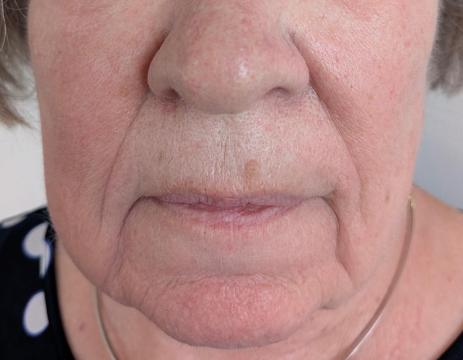
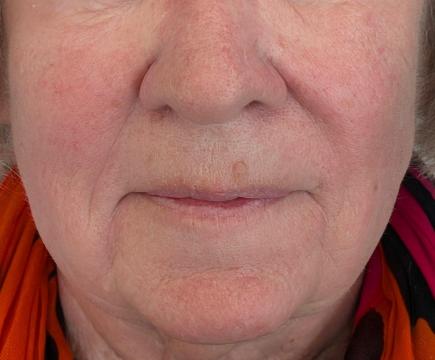


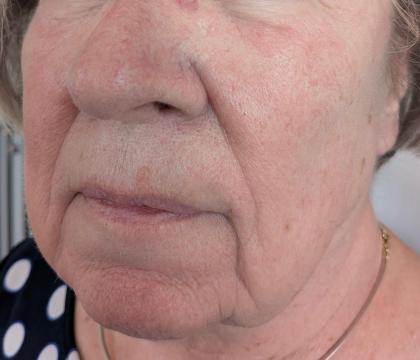
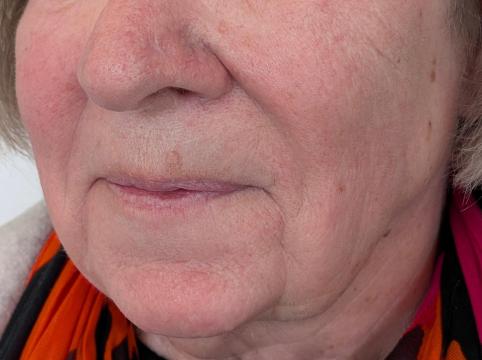


What results can you expect from marionette line fillers?
The aim of marionette line filler is usually to soften the fold rather than completely remove it.
The possible result depends on:
the original depth and shape of the line;
surrounding tissue support;
filler placement;
product characteristics;
the quantity used;
individual anatomy.
A subtle improvement may be more realistic than complete correction, particularly where several lower-face structures contribute to the visible fold.
Before-and-after photographs can help illustrate the range of possible changes, but another person's result cannot predict your own.
When will you see the result?
A change may be visible immediately after filler has been injected. However, swelling, redness, tenderness or bruising can influence how the treated area looks at first.
The appearance immediately after treatment should therefore not automatically be considered the settled result.
Ask the practitioner when they normally assess the outcome of the particular filler and treatment plan being proposed.
Dermal filler results are temporary. How long the effect remains visible differs according to factors such as the product, treatment area, amount used and individual characteristics.
Read more about how long dermal fillers last.
What are the risks of marionette line fillers?
Dermal filler treatment is not risk-free.
Temporary reactions around the injection sites can include:
swelling;
redness;
tenderness;
bruising;
temporary firmness or unevenness.
Less common complications can include infection, persistent lumps, inflammatory reactions or problems involving a blood vessel.
A vascular occlusion occurs when blood flow through a vessel becomes blocked or significantly reduced. Although uncommon, it can be serious and requires urgent assessment.
Contact the treating clinic promptly if you develop severe or increasing pain, unusual pale or mottled skin, significant colour change or rapidly worsening symptoms around the treated area.
New visual symptoms following facial filler treatment require immediate medical assessment.
Aftercare after marionette line fillers
Follow the individual aftercare instructions provided by your treating clinic.
Advice can differ according to the filler used, injection technique, treatment plan and your own circumstances.
Unless your practitioner specifically advises otherwise, avoid firmly massaging, pressing or trying to reshape the treated area yourself.
Before treatment, also ask who you should contact if an unexpected reaction develops and how urgent concerns are handled outside the clinic's normal opening hours.
Clear aftercare and complication arrangements are useful points to compare between clinics.
How much do marionette line fillers cost?
The cost of marionette line fillers can differ between UK clinics because the treatment plan is not identical for every person.
Factors that can influence the total cost include:
the filler product proposed;
the amount of filler used;
whether more than one area is included in the treatment plan;
who performs the treatment;
whether review appointments are included;
the clinic's aftercare arrangements.
When comparing prices, check what the advertised amount actually includes rather than relying only on the lowest visible starting price.
A lower price does not by itself indicate the experience of the practitioner, the suitability of the treatment plan or the quality of aftercare.
How to compare practitioners and clinics for marionette line fillers
- 1 Check who will perform the treatment
- 2 Check relevant professional information
- 3 Ask about lower-face filler experience
- 4 Assess the quality of the consultation
- 5 Ask why the proposed filler and placement were chosen
- 6 Check aftercare and complication arrangements
- 7 Compare more than the advertised price
Compare clinics for marionette line fillers
You can compare clinics offering marionette line filler treatment before deciding whether to request a consultation.
Look beyond price. Relevant comparison points include who performs the treatment, the information available about the practitioner, experience with lower-face fillers, the consultation process and how the clinic manages aftercare.
A consultation is also an opportunity to ask what the practitioner believes is causing the fold and what filler is realistically expected to change.
You remain free not to proceed with treatment.
Compare clinics in United Kingdom

- Marionette lines from
- £ 250,00



- Marionette lines from
- £ 450,00


- Marionette lines from
- £ 250,00

- Marionette lines from
- £ 250,00

- Marionette lines from
- £ 250,00

- Marionette lines from
- £ 250,00

- Marionette lines from
- £ 250,00

- Marionette lines from
- £ 250,00
Reviews mentioning marionette line fillers
The first day focused on Botox treatments, covering both the upper and lower face, as well as advanced Botox techniques. The second day covered dermal fillers for the cheeks, nasolabial folds, and marionette lines. The third day was dedicated to lip filler treatments, as well as the management of complications and understanding appropriate needle depths for safe and effective treatment.
The fourth and final day was a clinical day, during which we planned and carried out complete patient treatments from consultation through to completion. One aspect I particularly appreciated was that each delegate treated their own patient from start to finish every day, rather than sharing models. This provided invaluable hands-on experience and greatly increased my confidence.
Before attending the course, we were given access to extensive online learning materials through the app, and we continue to have access to them afterwards. The resources were incredibly thorough, well-structured, and a fantastic supplement to the practical training.
Rikin is a fantastic trainer and a true master of his craft. His knowledge, expertise, and teaching style made the learning experience both enjoyable and highly effective. Kajal and Camila were also excellent trainers, providing outstanding support throughout the course. Their wealth of knowledge, encouragement, and approachable manner helped create a welcoming, positive, and supportive learning environment where everyone felt comfortable asking questions and developing their skills.
Overall, the course exceeded my expectations and provided an excellent balance of theory, practical skills, and supervised clinical experience. I would highly recommend it to anyone looking to develop their aesthetic training with experienced and dedicated instructors. Show less »
I visited this time as a model for cheek filler, marionette lines and nasolabial.
Lauren was the instructor and a lady called Tish was the student. Everything is explained fully as to what to expect and the procedures Were delivered without any pain or discomfort.
After care is explained fully too.
I would highly recommend Kanvas medical to anyone thinking about non surgical procedures eitjer as a model client where the prices are so good or with Kayleigh who is exceptional at her job.
I would never go to any other clinic now and have been visiting Kanvas for a fee years now.
The tea are marvelous Show less »
Frequently asked questions about marionette line fillers
What are marionette lines?
Marionette lines are folds extending from the corners of the mouth towards the chin or jaw. They are different from the position of the mouth corners themselves, although both features can occur together.
Can filler completely remove marionette lines?
Complete removal cannot be guaranteed. Filler may soften the depth or appearance of the fold, but the possible result depends on your anatomy, surrounding tissues and treatment plan.
How much filler is needed for marionette lines?
There is no standard amount suitable for everyone. The proposed quantity depends on the fold, surrounding anatomy, filler product, previous treatments and intended result.
Does filler have to be injected directly into marionette lines?
Not always. The practitioner may assess whether the fold itself or surrounding structures are contributing most to its appearance before deciding where filler may be placed.
When can you see the result?
An initial change may be visible straight after treatment, but swelling, redness or tenderness can affect the early appearance. Ask your practitioner when the result should be reviewed.
How long do marionette line fillers last?
Dermal filler results are temporary. Duration varies according to the filler product, treatment area, amount used and individual factors.
What are the risks of marionette line fillers?
Temporary swelling, bruising, redness and tenderness can occur. Less common complications include infection, persistent lumps and vascular problems. Severe pain, unusual skin-colour changes or visual symptoms require urgent assessment.
Are marionette lines the same as downturned mouth corners?
No. Marionette lines describe folds extending downwards from the mouth, while downturned mouth corners describe the position of the corners themselves. They can occur together but may require different treatment considerations.
Is botulinum toxin or filler better for marionette lines?
Neither is automatically better. Filler adds volume or support, while botulinum toxin temporarily reduces selected muscle activity. The relevant option depends on what is contributing to the visible concern.
What if I am unhappy with the result?
Contact the treating clinic so the area can be assessed. Some hyaluronic acid fillers can be dissolved with hyaluronidase in appropriate circumstances, but this is a separate medical procedure and is not relevant to every filler or every concern.
How should I choose a clinic for marionette line fillers?
Compare who performs the treatment, relevant practitioner information, experience with fillers and the lower face, consultation quality, the proposed treatment plan, aftercare arrangements and price.