Crow’s feet

Drs. Tom van Eijk
Crow’s feet Botox temporarily reduces the muscle activity that creates lines at the outer corners of the eyes when you smile or squint. It tends to have the clearest effect on lines caused mainly by facial movement.
If the lines remain visible when your face is relaxed, changes within the skin also contribute. Reducing movement may still soften their appearance, but it cannot guarantee that established lines at rest will disappear.
Botox is one brand of botulinum toxin. Different botulinum toxin products may be used in aesthetic treatment.
This guide focuses specifically on treatment of crow’s feet. For a broader overview of treatment areas, uses and considerations, see Botox treatments.
What are crow’s feet?
Crow’s feet are lines that extend outwards from the outer corners of the eyes. They are also called lateral canthal lines.
They become more visible when the muscle surrounding the eye, particularly the orbicularis oculi, contracts during smiling, laughing or squinting. Repeated movement and changes in the skin over time can make some of these lines visible even when your expression is relaxed.
Crow’s feet are a normal part of facial expression and ageing. Whether you want to have them treated is a personal choice.
How does Botox work on crow’s feet?
Botulinum toxin reduces the activity of selected parts of the muscle around the outer eye. As that muscle contracts less strongly, the overlying skin folds less during smiling or squinting.
The treatment does not fill the lines or add volume. Its effect comes from temporarily reducing muscle movement.
This distinction matters because a movement-related line and a line already established in the skin do not respond in exactly the same way.
For a broader explanation of the mechanism, see how Botox works.
Does Botox work better for crow’s feet when smiling or at rest?
Crow’s feet that become much more visible when you smile or squint are largely influenced by muscle movement. Reducing that movement can make these dynamic lines less pronounced.
Lines that remain clearly visible with a relaxed expression have a static component. Skin elasticity, sun exposure and structural changes within the skin may also contribute, so muscle relaxation alone may not remove them completely.
Many people have a combination of both.
A practitioner therefore needs to assess your eye area while your face is relaxed and while you smile. This helps distinguish the movement being treated from lines already present within the skin.
What can crow’s-feet Botox realistically change?
Botulinum toxin may:
reduce movement in the treated part of the orbicularis oculi;
make the skin crease less strongly during smiling;
temporarily soften movement-related crow’s feet;
reduce how prominent the lines appear at maximum smile.
It does not:
replace lost facial volume;
repair the structure of the skin itself;
guarantee that lines visible at rest disappear;
permanently stop crow’s feet from returning;
guarantee the same degree of change for every person.
The aim of treatment should be discussed during consultation rather than assumed from photographs or another person’s result.
What happens during crow’s-feet Botox treatment?
- 1 Consultation and medical assessment
- 2 Assessment while your face is relaxed
- 3 Assessment while smiling or squinting
- 4 Treatment plan discussed
- 5 Botulinum toxin administered around the outer eye area
- 6 Aftercare instructions provided
- 7 Result assessed after the effect has developed
When do you see results from crow’s-feet Botox?
The effect is not immediate. Muscle activity starts to change gradually after treatment, and the appearance of the lines changes as that effect develops.
Some people notice a difference within the first few days. A clearer assessment is usually possible once the treatment has had time to take effect, commonly around 10 to 14 days.
How long does crow’s-feet Botox last?
The visible effect commonly lasts for several months. Around three to four months is a useful general expectation, but the exact duration differs between individuals and treatments.
As the effect wears off, muscle activity gradually returns and movement-related lines can become more noticeable again.
See more about how long Botox lasts.
Can you still smile normally after crow’s-feet Botox?
Crow’s-feet treatment does not automatically mean removing all movement around your eyes. The amount of movement that remains depends on your anatomy, existing muscle activity and the treatment plan.
If maintaining visible movement when you smile is important to you, say so during the consultation. The practitioner can take your priorities into account when discussing what may realistically be achievable.
No specific expression or “natural” result can be guaranteed.
What does crow’s-feet Botox cost in the UK?
Crow’s feet are commonly listed by clinics as a botulinum toxin treatment area or zone. The amount charged can vary between clinics, and the way a clinic defines one treatment area may also differ.
When comparing prices, check what the stated amount actually includes. Relevant questions include whether the price covers both sides, whether consultation is separate and what the clinic’s follow-up policy is.
The Rates block below should be used to display the current pricing information available through Injectablesbooking rather than manually adding a UK price range to this page.
For broader information about pricing structures, see Botox costs.
| Treatment | Unit | City/country | Price | |
|---|---|---|---|---|
| Crow’s feet | zone | United Kingdom | £ 50 | Lowest price |
| Crow’s feet | zone | United Kingdom | £ 176 | Average price |
| Crow’s feet | zone | United Kingdom | £ 350 | Highest price |
What are the risks of Botox around the eyes?
Temporary reactions around injection sites can include tenderness, redness, swelling, bruising or minor discomfort.
Because crow’s-feet injections are performed close to the eyes and surrounding facial muscles, unwanted changes in nearby muscle activity can also occur. Depending on the circumstances, this may include asymmetry or an unintended change in eyelid or eyebrow position.
No injectable treatment is risk-free. Contact the treating clinic if you develop an unexpected, significant or worsening problem after treatment.
For a broader explanation rather than a crow’s-feet-specific summary, see Botox complications.
Risks, aftercare and when to seek help
Common short-term reactions
Minor injection-site reactions can occur after treatment, including redness, tenderness, swelling or bruising. Their severity and duration vary between individuals.
Changes around the eyelid or eyebrow
Botulinum toxin can sometimes affect nearby muscles differently from what was intended. This can cause asymmetry or an unwanted change in eyebrow or eyelid position. Contact the treating clinic if you notice a significant or concerning change.
When should you seek urgent medical help?
Rarely, the effects of botulinum toxin can extend beyond the treatment area. Seek urgent medical help if you develop symptoms such as difficulty breathing, difficulty swallowing, difficulty speaking or marked generalised muscle weakness after treatment.
What should you do after crow’s-feet Botox?
Follow the aftercare instructions provided by the practitioner who treated you. Avoid unnecessary pressure or rubbing around the injection sites immediately afterwards and contact the clinic if you are unsure about a reaction.
For a fuller explanation of post-treatment guidance, see Botox aftercare.
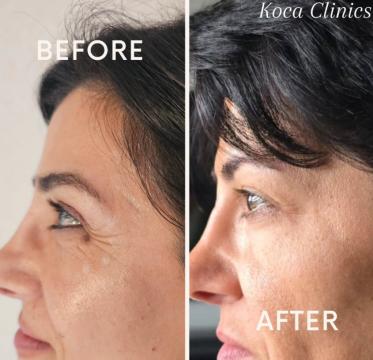
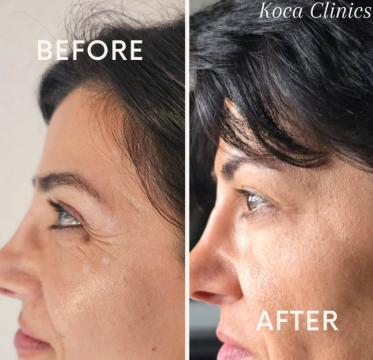
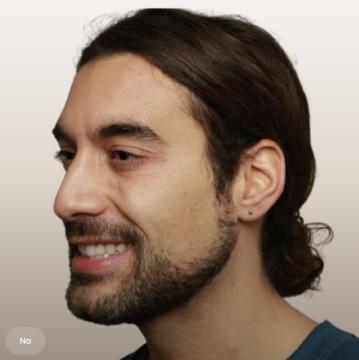
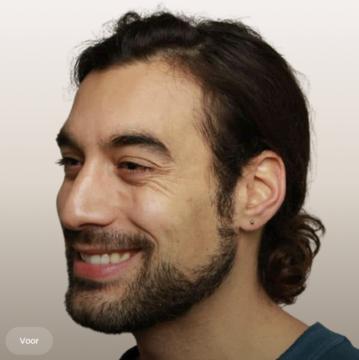
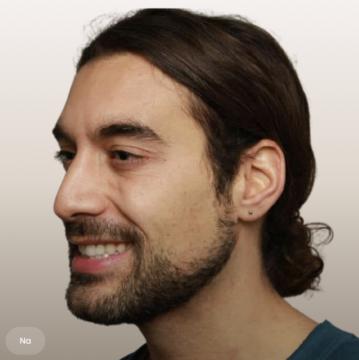
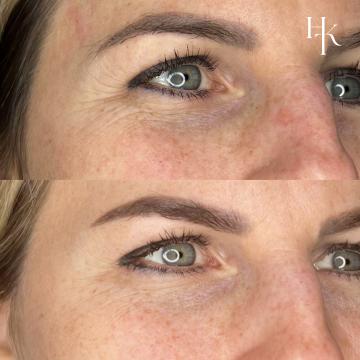
Crow’s-feet Botox before and after
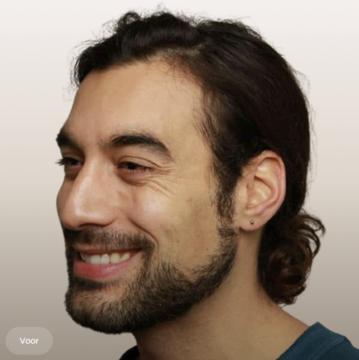
Before-and-after photographs can help you understand the type of visible change that has occurred in another person, but they cannot predict your own outcome.
For crow’s feet, pay particular attention to facial expression. A useful comparison should ideally show the person smiling in a similar way before and after treatment, with comparable lighting, camera angle and timing.
A photograph taken with a relaxed expression should not be compared directly with one taken at maximum smile.
For more guidance on interpreting treatment images, see Botox before and after.
Crow’s-feet Botox before and after





Crow’s-feet Botox reviews
Reviews can provide context about what other clients experienced at a clinic, particularly around consultation quality, communication, pricing information and follow-up.
They cannot establish whether crow’s-feet Botox is appropriate for you and do not prove that you will receive the same result.
When reading reviews, look for specific descriptions of the consultation and treatment experience rather than relying only on the overall rating.
You can also see broader Botox reviews.
Reviews of crow’s-feet Botox treatment
Highly recommend!" Show less »
Nikkita is clearly a master of her craft. Knowledgeable, considered, and gifted at seeing what will work for your face rather than just going through the motions. I’d recommend her without hesitation. Show less »
I also received some really helpful skincare advice (including the importance of daily SPF) but there was absolutely no hard sell of products, which I really appreciated.
On the day of my Botox appointment I was feeling quite anxious, but Nicky was wonderful at putting me at ease. The procedure itself was simple, and within a few days I had the most amazing results. My 11 lines had completely gone, my crow’s feet were significantly reduced, but I still had full movement in my face, which was exactly what I wanted. The treatment also gave a lovely lift to my eyes.
I’m also a regular blood donor, so it was really important to me that I could continue donating after treatment. As Nicky is a registered nurse, I was able to continue donating blood and successfully did so just three weeks after my procedure.
It was also great to see my before and after photos during my follow-up appointment. I’m so pleased with both the experience and the results that I have already recommended Nicky to friends, and I wouldn’t hesitate to continue recommending her. Show less »
What should you compare between clinics for crow’s-feet Botox?
Crow’s-feet treatment involves more than placing injections where lines are visible. The practitioner needs to assess how your muscles move around the eye and how this relates to your brow position, facial symmetry and expression.
When comparing clinics and practitioners, consider:
whether your face is assessed both at rest and while smiling;
relevant experience treating the outer eye area;
whether realistic limitations are discussed;
whether possible eye-area complications are explained;
how follow-up is handled;
what is included in the stated treatment price.
Professional registration and qualifications should also be checked where relevant, but a professional title alone does not tell you how much experience someone has treating this particular area.
Compare clinics for crow’s-feet Botox
Use the clinic results below to see which UK clinics list treatment for crow’s feet.
Compare the available information rather than price alone. Location, practitioner information, treatment details, reviews and follow-up arrangements may all be relevant when deciding where to request a consultation.
Compare clinics in United Kingdom




- Crow's feet from
- £ 150,00

- Crow's feet from
- £ 150,00


- Crow's feet from
- £ 150,00

- Crow's feet from
- £ 150,00

- Crow's feet from
- £ 150,00

Frequently asked questions about crow’s-feet Botox
Does Botox work for crow’s feet?
Botulinum toxin can temporarily soften crow’s feet when muscle movement is a major reason the lines appear. It reduces activity in selected muscles around the outer eye so the skin creases less strongly during smiling or squinting.
Does Botox work if my crow’s feet are visible when I am not smiling?
It may still reduce the movement contributing to the lines, but lines already visible at rest may not disappear completely because changes within the skin also contribute.
When do you see the result?
The effect develops gradually rather than immediately. Some change may become noticeable within several days, with a clearer assessment commonly possible around 10 to 14 days after treatment.
How long does crow’s-feet Botox last?
The visible effect commonly lasts around three to four months, but duration varies between individuals and treatments. Muscle movement gradually returns as the effect wears off.
Can you still smile after crow’s-feet Botox?
Yes, treatment does not automatically remove all movement around the eyes. How much movement remains depends on your anatomy, muscle activity and treatment plan.
What are the risks of Botox around the eyes?
Possible effects include temporary injection-site reactions, bruising, asymmetry and unintended changes in nearby muscle activity or eyelid or eyebrow position. Seek medical advice for significant or unexpected symptoms.
Are both eyes included in one crow’s-feet treatment area?
Many clinics describe crow’s feet as one treatment area covering both sides, but clinic pricing structures are not identical. Check how the individual clinic defines the area before comparing prices.
How much does crow’s-feet Botox cost?
Prices vary between UK clinics and depend on how the treatment area and service are defined. Use the current Injectablesbooking pricing information on this page and check what the individual clinic includes in its stated price.