Dissolve filler
Dissolving fillers is possible when the existing filler is based on hyaluronic acid. Hyaluronidase, an enzyme that breaks down hyaluronic acid, may be used to partly or more extensively reduce this type of filler. Fillers made from other materials do not respond to hyaluronidase in the same way.
Filler dissolving may be discussed when existing HA filler has produced more volume than wanted, visible or palpable irregularities, asymmetry or another result you would like assessed. It does not follow that every lump, swelling or uneven area needs dissolving.
A practitioner should first assess what product is likely to be present, where it has been placed, when you were treated and what you would like to change. Depending on the findings, the options may include waiting, partial correction, more extensive dissolving or another approach.
For more detail about the medicine used for treatment, read about hyaluronidase.
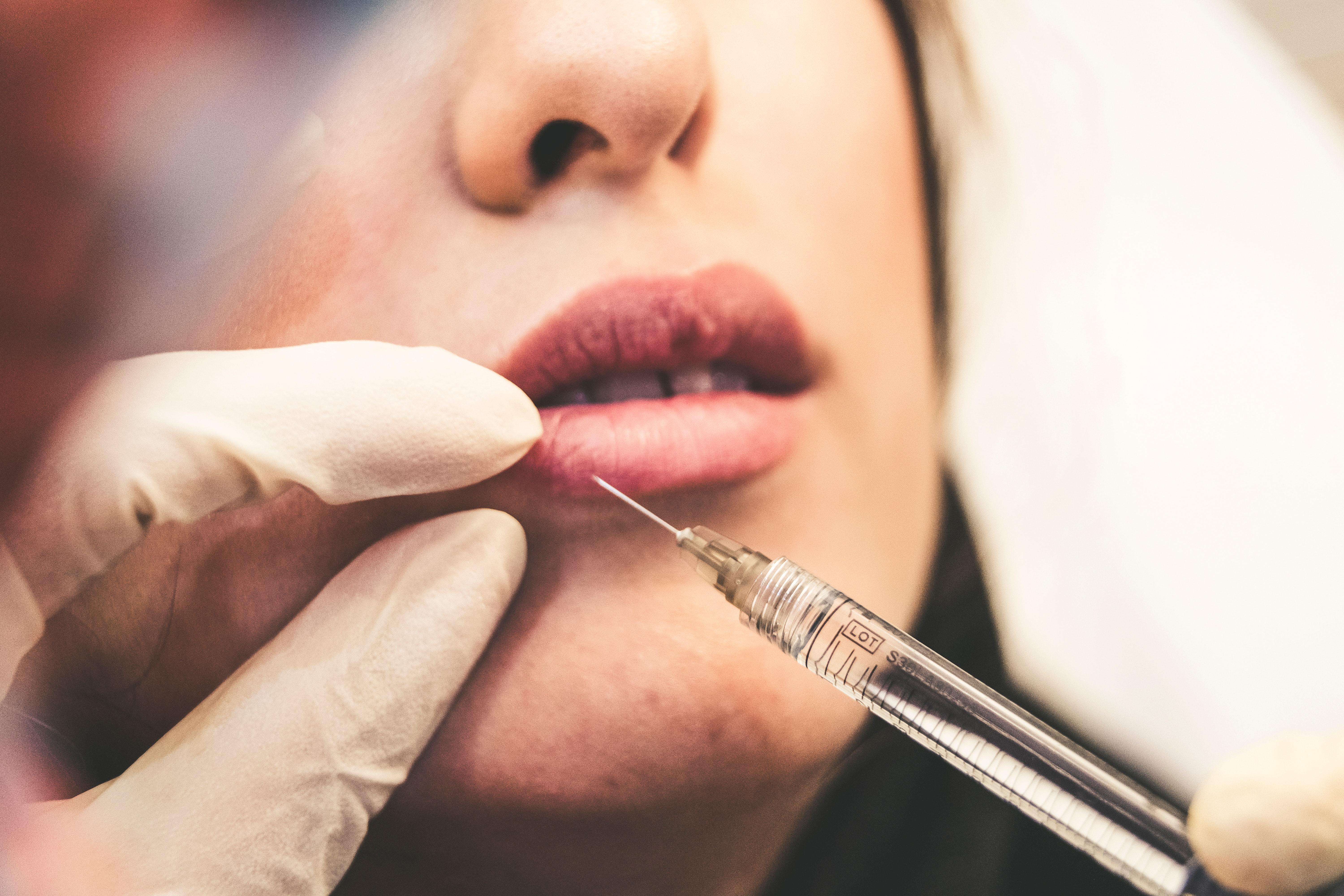
When might dissolving fillers be considered?
Dissolving fillers is mainly considered when previously injected hyaluronic acid filler needs to be reduced or corrected. The reason for treatment should be established before hyaluronidase is used.
Situations that may lead someone to request an assessment include:
more volume than originally intended;
visible or noticeable asymmetry;
a localised area of palpable or visible filler;
filler that appears unusually superficial;
an unwanted change in facial contour;
filler appearing outside the originally treated area;
older HA filler affecting plans for another treatment.
Filler outside the intended treatment area may sometimes be described as filler migration, but a lump or swollen area does not automatically mean that migration has occurred.
Swelling after a recent filler treatment can also temporarily alter the appearance of the area. Assessment should therefore consider when the filler was injected and how the area has changed since treatment.
Which fillers can be dissolved with hyaluronidase?
Hyaluronidase acts on hyaluronic acid. It may therefore be used to reduce fillers whose main material is hyaluronic acid.
Not every HA filler behaves identically. Product characteristics, the amount injected, the treatment area and where the filler is located can all affect the correction that may be possible.
Fillers made from other materials cannot simply be dissolved with hyaluronidase in the same way. If you still have details of your previous treatment, bring the product name, treatment date and treated area to your consultation.
If you are unsure what was injected, the practitioner should review your treatment history and assess the area before deciding whether hyaluronidase should be considered.
You can read more about the underlying filler category in our guide to hyaluronic acid fillers.
How dissolving fillers is assessed
- 1 Review the previous filler treatment
- 2 Assess the treated area
- 3 Discuss the amount of correction wanted
- 4 Consider hyaluronidase if appropriate
- 5 Review the area after it has settled
How does dissolving fillers with hyaluronidase work?
When hyaluronidase is used for filler correction, the medicine is injected into or around the area containing hyaluronic acid filler. The enzyme breaks down hyaluronic acid, which can reduce the structure and volume created by the filler.
The treatment plan depends on what is being corrected. A small localised irregularity does not necessarily require the same approach as a larger area containing filler from several previous treatments.
The amount of visible change cannot always be judged immediately after treatment because the injections themselves can cause temporary swelling.
Using hyaluronidase specifically to dissolve cosmetic hyaluronic acid filler is an off-label use in the UK. Hyaluronidase is also a prescription-only medicine. The reason for using it, possible benefits, limitations, alternatives and relevant risks should therefore be discussed before treatment.
Can fillers be partially dissolved?
In some situations, yes. Dissolving fillers does not always mean attempting to remove every detectable amount of HA filler from an area.
A practitioner may consider treating a more localised area when the concern relates to a specific irregularity or excess volume. How precisely this can be achieved depends on the filler product, its location, the surrounding tissue and how the area responds.
It may also be difficult to predict the final degree of correction before treatment. Temporary swelling can obscure the early appearance, and another assessment may be needed once the area has settled.
If the aim is partial correction, make this clear during the consultation so that the practitioner can explain what is and is not realistically controllable.
Can you make fillers dissolve faster yourself?
There is no reliable home method for selectively and predictably dissolving existing hyaluronic acid filler.
Massage, sauna use, heat, intense exercise and skincare products should not be presented as alternatives to medical assessment or hyaluronidase treatment. Forceful massage may also irritate an area that has recently been injected.
HA filler is gradually broken down over time, but the rate varies between products, treatment areas and individuals. Waiting may therefore be reasonable in some situations, while other concerns may justify assessment sooner.
If you are unhappy with an existing filler result, establish what is causing the concern before trying to alter the area yourself.
Risks of dissolving fillers and when to seek medical help
Temporary reactions can occur after hyaluronidase injections. These may include redness, swelling, tenderness and bruising around the injection sites.
The cosmetic outcome may also differ from what you expected. Too little correction may occur, the area may temporarily appear flatter than expected, or further assessment and treatment may be needed.
An allergic reaction to hyaluronidase is possible. Tell the practitioner about previous serious allergic reactions and any previous reaction to hyaluronidase before treatment.
When is urgent assessment important?
Electively dissolving unwanted filler is different from treating a suspected complication after a recent filler injection.
Severe or increasing pain, markedly pale skin, purple-blue or net-like skin discolouration, or changes in vision require urgent assessment rather than waiting for a routine filler-dissolving appointment.
For a broader explanation of potentially serious problems after filler treatment, see filler complications.
What happens after dissolving filler?
Temporary swelling, redness, tenderness or bruising may occur after injection. These reactions can make the area look fuller, flatter or less even before it settles.
Follow the individual instructions provided by the treating practitioner. Ask:
when the area should be reviewed;
which reactions may be expected;
who to contact outside normal opening hours;
whether another assessment may be needed;
when other cosmetic treatment can be reconsidered.
Do not massage, press or otherwise manipulate the area unless the practitioner has specifically instructed you to do so.
The product information reports possible local irritation, infection, bleeding and bruising, as well as rare severe allergic reactions.
For general recovery guidance after filler-related procedures, read the dedicated filler aftercare page.
Who may consider filler dissolving?
A professional assessment may be appropriate if you:
want to reduce unwanted hyaluronic acid filler;
feel an area appears overfilled;
have visible asymmetry or contour irregularity;
are concerned that filler has moved;
have a lump or persistent swelling that needs assessment;
want old filler reviewed before another treatment plan;
have been advised that dissolving may form part of complication management.
Filler dissolving may not be appropriate where:
the injected product was not hyaluronic acid-based;
the product is unknown and cannot be reasonably assessed;
an active infection is present at the intended site;
there is a known hypersensitivity to hyaluronidase;
the expected result cannot realistically be achieved by dissolving;
pregnancy or breastfeeding requires further medical consideration;
another diagnosis or treatment is more appropriate.
The UK product information advises avoiding hyaluronidase during pregnancy unless no safer alternative exists and recommends caution during breastfeeding.
Find a clinic in your area
Compare on experience & price Make an appointment immediately
How much does filler dissolving cost in the UK?
The cost of dissolving filler can differ according to:
the treatment centre;
the practitioner;
the area being assessed;
whether the original filler is known;
the extent of the correction;
whether consultation is included;
whether follow-up is included;
whether another session is required.
The lowest advertised fee may be a starting price rather than the complete expected cost.
More information before dissolving fillers
What if I do not know which filler was used?
Bring any available treatment record, invoice, product information or correspondence from the clinic that performed the original treatment. If the product is unknown, the practitioner should assess the area and treatment history before deciding whether hyaluronidase is appropriate.
Can ultrasound be used before dissolving filler?
Ultrasound may be useful in selected situations when the position of previously injected filler is uncertain or the treatment history is complex. It is not required for every filler-dissolving treatment.
What should I tell the practitioner before treatment?
Provide information about previous filler treatments, the areas treated, approximate treatment dates, known products, previous reactions and relevant allergies. This information supports the assessment but does not replace examination of the area.
Can hyaluronidase cause an allergic reaction?
Yes. Allergic reactions are possible. Previous reactions to hyaluronidase and a history of serious allergic reactions should be discussed before treatment so that the practitioner can assess the individual circumstances.
What can you expect after dissolving fillers?
The area may look different immediately after treatment, but the first appearance is not necessarily the final result. Injection-related swelling, redness or bruising can temporarily change the shape of the treated area.
Some people may achieve the intended correction after one treatment, while others may need another assessment or treatment. This depends partly on the filler product, how much is present, where it is located and how the area responds.
If you are considering having filler again after dissolving, there is no single waiting period that applies to everyone. The area should first be reassessed after recovery so that the practitioner can determine whether further treatment is appropriate and when it could be considered.
Results vary between individuals, and dissolving filler should not be presented as a guaranteed way to return an area exactly to its appearance before the original filler treatment.
What can you expect after dissolving fillers?
The area may look different immediately after treatment, but the first appearance is not necessarily the final result. Injection-related swelling, redness or bruising can temporarily change the shape of the treated area.
Some people may achieve the intended correction after one treatment, while others may need another assessment or treatment. This depends partly on the filler product, how much is present, where it is located and how the area responds.
If you are considering having filler again after dissolving, there is no single waiting period that applies to everyone. The area should first be reassessed after recovery so that the practitioner can determine whether further treatment is appropriate and when it could be considered.
Results vary between individuals, and dissolving filler should not be presented as a guaranteed way to return an area exactly to its appearance before the original filler treatment.
How do you compare clinics for dissolving fillers?
Correcting existing filler requires assessment of what has already been injected, rather than simply planning a new filler treatment. When comparing clinics, look beyond distance and the headline treatment price.
Useful questions include:
Who will assess the existing filler?
Who prescribes the hyaluronidase?
What relevant experience does the practitioner have with filler correction?
Will they ask which filler product was previously used?
How do they distinguish between partial and more extensive correction?
How are uncertainties and possible risks explained?
When is follow-up offered?
How can you contact the clinic if an unexpected problem develops?
What happens if the filler cannot easily be identified or located?
A professional title alone does not tell you how much experience someone has with a particular corrective procedure. Compare the practitioner's relevant background, treatment-specific experience, assessment process and follow-up arrangements.
For more general provider-selection criteria, see how to choose a filler clinic.
You can then decide whether you want a consultation, want to continue comparing clinics or prefer not to have further treatment.
Compare clinics in United Kingdom

- Dissolve filler with hyaluronidase from
- £ 400,00



- Dissolve filler with hyaluronidase from
- £ 200,00



- Dissolve filler with hyaluronidase from
- £ 200,00

- Dissolve filler with hyaluronidase from
- £ 150,00


- Dissolve filler with hyaluronidase from
- £ 150,00

- Dissolve filler with hyaluronidase from
- £ 280,00

- Dissolve filler with hyaluronidase from
- £ 200,00

- Dissolve filler with hyaluronidase from
- £ 280,00
Frequently asked questions about dissolving fillers
Can all fillers be dissolved?
No. Hyaluronidase acts on hyaluronic acid, so it is used for HA-based fillers. Fillers made from other materials do not respond in the same way and require a different assessment.
Can filler be partially dissolved?
Sometimes. A practitioner may try to reduce filler in a more localised area rather than attempting extensive correction. How targeted this can be depends on the product, location and individual situation.
Can lip filler be dissolved?
If the lip filler is based on hyaluronic acid, a practitioner can assess whether hyaluronidase may be used to reduce some or more of the filler.
Can I dissolve filler myself?
There is no reliable home method for selectively dissolving existing HA filler. Massage, heat, sauna, exercise and skincare products are not predictable substitutes for assessment and treatment.
Will one dissolving treatment be enough?
Not always. The amount of filler, product characteristics, location and intended degree of correction can all affect whether further assessment or treatment is needed.
What if I do not know which filler I have?
Bring any available information about the original treatment. A practitioner can review your treatment history and assess the area before deciding whether hyaluronidase should be considered.
When can I have filler again after dissolving?
There is no universal timing that applies to everyone. The treated area should first recover and be reassessed before another filler treatment is considered.
When should I seek urgent help after a filler treatment?
Severe or increasing pain, unusually pale skin, purple-blue or net-like discolouration, or changes in vision after recent filler treatment require urgent assessment rather than waiting for a routine cosmetic correction appointment.