Face fillers

Drs. Tom van Eijk
Face fillers are injectable products used in selected areas of the face to add volume, provide support or alter contour. They may be considered for concerns such as facial volume loss, changes in facial proportions or certain folds, but filler is not automatically the appropriate treatment for every visible line or facial change.
Where you notice a concern is also not necessarily where treatment should be placed. Facial anatomy, volume distribution, muscle movement, skin quality and skin laxity can all influence what you see.
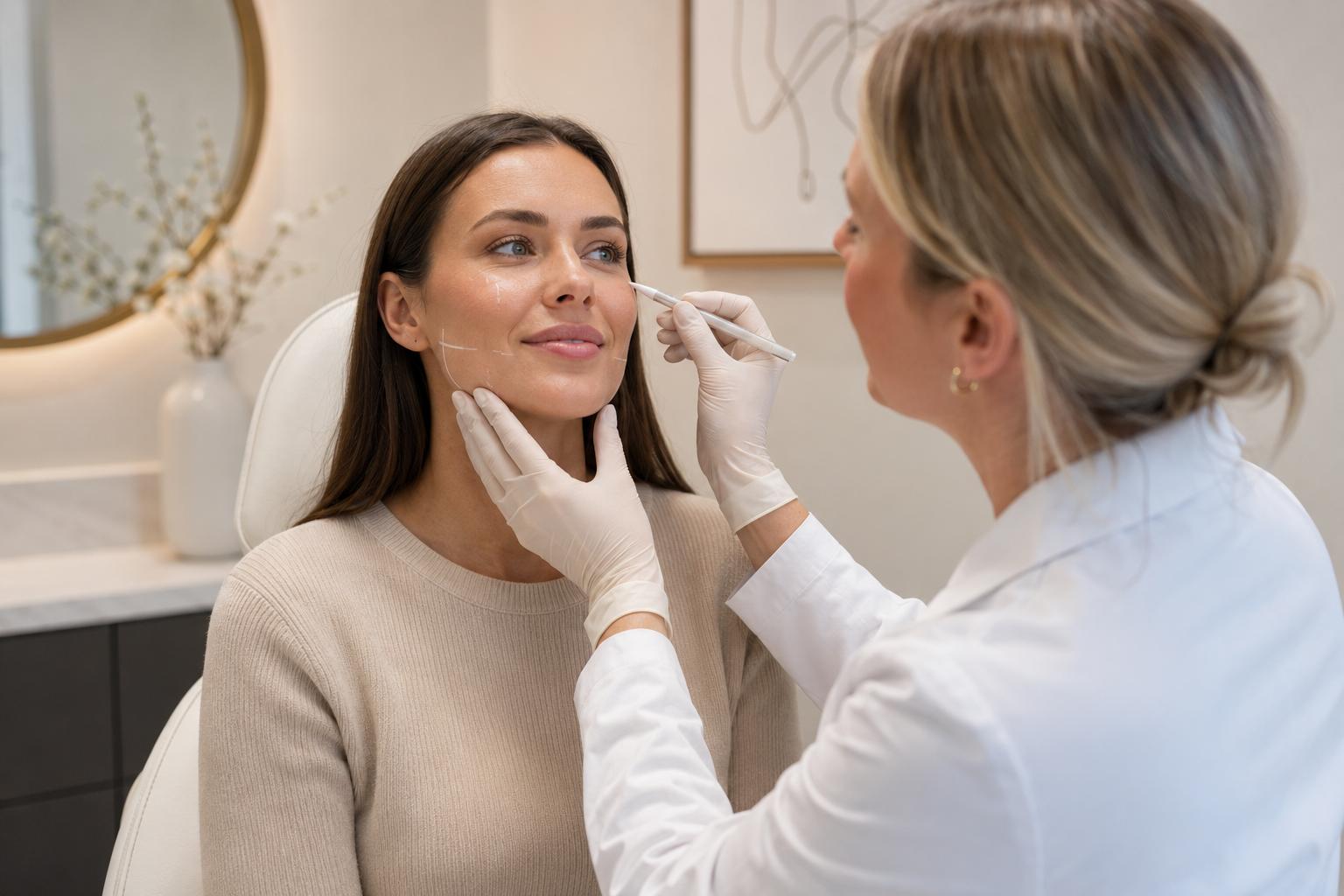
A practitioner should assess the underlying cause, your facial anatomy, previous treatments and what you would like to change before discussing whether filler may be appropriate. If you are still researching the treatment category more broadly, see our guide to fillers.
Compare face filler clinics
Compare on experience & price Make an appointment immediately
What are face fillers?
Face fillers are injectable products placed in or beneath the skin to change volume, support or contour in a specific part of the face. Hyaluronic acid fillers are one commonly used temporary filler category, while other injectable products can work differently.
The product should be selected according to the treatment goal, facial area, tissue characteristics and individual anatomy. A particular brand, a higher volume or a more expensive product does not by itself mean that a treatment is more appropriate.
If you want a broader explanation of the treatment category first, read what fillers are.
Which areas of the face can be treated with fillers?
Fillers can be used in different facial areas, but the reason for treating each area is different. A practitioner should assess the individual area in the context of the rest of the face rather than deciding on treatment from a photograph or one visible feature alone.
Cheeks and cheekbones
Fillers may be used in the mid-face to add or restore volume, alter cheek contour or provide structural support. Treatment planning should consider the relationship between the cheeks, lower face and surrounding structures rather than focusing only on making the cheekbones more prominent.
Chin
Chin filler may be considered when the treatment goal involves chin shape, projection or facial profile balance. Adding volume is not automatically appropriate for every chin or profile.
Jawline
Jawline filler may be used to alter definition or contour along selected parts of the lower face. Facial width, chin position, soft tissue and existing jaw structure all influence what can realistically be achieved.
Lips
Lip fillers may be used to alter volume, shape or proportion. The amount and placement depend on the existing lip anatomy and the intended change rather than one standard lip shape.
Nasolabial folds
The lines running from the side of the nose towards the mouth may sometimes be treated directly. In other cases, changes elsewhere in the mid-face may contribute to how prominent the fold appears.
Marionette lines and mouth area
Fillers may be considered for selected folds extending downwards from the corners of the mouth or for loss of support around the mouth. Skin laxity and facial movement can limit how much a filler alone can change the area.
Under-eye area
Fillers can be considered in selected cases where hollowing contributes to the appearance beneath the eyes. Existing puffiness, fluid retention, skin quality and anatomy are particularly important in this area.
Temples
Temple filler may be considered where there is visible hollowing or volume loss at the sides of the forehead. The temples contain important anatomical structures, so treatment requires appropriate anatomical assessment and experience.
Nose
Filler may be used in selected situations to alter the visible contour of the nose without surgery. It cannot make every type of nasal change and has specific anatomical risks that should be discussed during consultation.
When might face fillers be considered?
The most visible part of a concern is not always its underlying cause. A useful consultation therefore looks beyond the exact spot you would like to change and considers volume, facial structure, muscle movement, skin quality and skin laxity.
Facial volume loss
Filler may be considered when loss of volume or support is contributing to a visible change. The practitioner should assess both the area itself and neighbouring structures because changes in one part of the face can affect how another area appears.
Read more about facial volume loss.
Facial contour
If the goal involves the cheeks, chin or jawline, the discussion is usually about shape, projection and proportion rather than simply filling a hollow or wrinkle.
More filler does not automatically create a better-balanced result. Small changes in one area can alter the overall facial profile.
Deeper folds
A visible fold does not always need to be filled directly. Volume distribution, structural support, skin quality and laxity can all contribute to the way a fold looks.
Expression lines
Lines that appear mainly during facial movement have a different underlying cause from volume loss. A filler is therefore not automatically the most appropriate treatment for every facial line.
Fine lines and skin quality
If the main concern is superficial texture, hydration or fine surface lines, adding significant volume may not address the main issue. Other treatment categories may be discussed during consultation.
Skin laxity
Fillers add volume or support. They do not reproduce the effect of surgery and cannot remove significant loose skin.
Claims that filler will automatically provide a major facial “lift” should therefore be treated cautiously.
One area or a full-face filler treatment?
A face filler treatment may focus on one specific area, such as the cheeks, chin or a fold around the mouth. In other cases, a practitioner may assess several facial areas together because their proportions and support can influence one another.
A broader assessment does not mean that every area needs treatment. Sometimes one targeted treatment is enough, and sometimes no filler treatment is appropriate.
A treatment plan deliberately assessing several areas together is usually described separately as a full-face filler treatment.
What happens during a face filler treatment?
- 1 Discuss what you would like to change
- 2 Assess the area and underlying anatomy
- 3 Discuss filler and non-filler options
- 4 Review the product, amount, limits and risks
- 5 Have the treatment if you decide to proceed
- 6 Receive aftercare and follow-up information
When can you see results from face fillers?
A visible change in volume or contour can often be seen immediately after a filler is injected, but this is not necessarily the final appearance. Swelling, redness, tenderness or bruising can temporarily change how the treated area looks.
The appropriate time to assess the result depends on the treatment area, product, amount used and your individual response. Avoid judging symmetry or the final contour only from how the area looks immediately after treatment.
How long do face fillers last?
There is no single duration that applies to every facial filler treatment. How long a visible effect persists can vary according to the product, treatment area, amount used and individual factors.
A maintenance treatment should be reconsidered rather than automatically repeated simply because a certain amount of time has passed.
For a more detailed explanation, see how long fillers last.
How much do face fillers cost?
The cost of face fillers can vary because different treatment plans use different products, amounts and treatment areas. The practitioner, clinic, consultation structure and included follow-up can also influence the final price.
Factors to compare include:
the facial area being treated;
the proposed amount of filler;
the type of filler;
who performs the treatment;
whether consultation costs are separate;
whether follow-up is included;
how aftercare and unexpected problems are managed.
A low advertised starting price does not tell you whether two clinics are offering the same treatment plan. Compare what is actually included and why a particular amount or product has been proposed.
For detailed pricing information, see filler costs.
Side effects and risks of face fillers
Temporary swelling, redness, tenderness and bruising can occur after facial filler injections. Less common problems can also occur, including infection, persistent lumps, inflammatory reactions or an unwanted cosmetic result.
A rare but serious complication can occur if filler affects blood flow through a blood vessel. Because risk differs between facial areas and individual circumstances, the practitioner should explain the relevant risks before treatment and tell you what symptoms would require urgent assessment.
Read the more detailed guide to filler complications.
Side effects, complications and warning signs
What temporary reactions can happen after face fillers?
Swelling, redness, tenderness and bruising can occur around an injection site. The extent of these reactions varies between people and treatment areas.
Your clinic should explain what it expects after the specific treatment you are having and how to contact them if recovery does not follow the expected pattern.
What complications can occur after face fillers?
Less common complications can include infection, inflammatory reactions, persistent lumps or irregularities and an unsatisfactory distribution of filler.
Vascular occlusion is a rare but potentially serious complication in which blood flow to tissue is affected. This requires prompt medical assessment.
More detailed information is available in our guide to filler complications.
Which symptoms need urgent medical assessment?
Seek urgent advice if you develop symptoms that are severe, unusual or rapidly worsening after treatment.
Severe or increasing pain, unusual pale, grey, blue or mottled skin changes, or sudden changes in vision require urgent assessment. Contact the treating clinic immediately and seek emergency medical care where symptoms are acute or severe.
Can face fillers be dissolved?
Some hyaluronic acid fillers can be reduced or dissolved using hyaluronidase in certain circumstances. This does not mean every filler can be easily removed, and the appropriate response depends on the product and the reason treatment is being considered.
Read more about dissolving filler.
Recovery and aftercare after face fillers
Temporary swelling, redness, tenderness or bruising may occur after treatment. The extent and duration can differ according to the facial area, product and individual response.
Follow the aftercare instructions provided for your specific treatment. Do not massage, press or repeatedly manipulate the treated area unless the practitioner has specifically instructed you to do so.
Before leaving the clinic, make sure you know how to contact them if you have questions or unexpected symptoms. Increasing, unusual or severe symptoms should not simply be ignored while waiting for a routine follow-up.
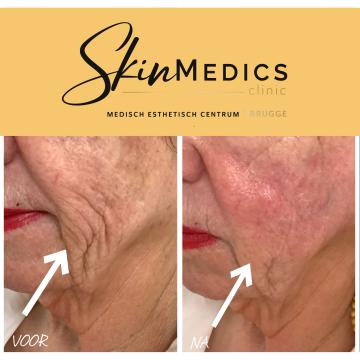
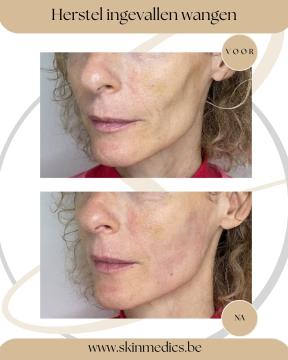
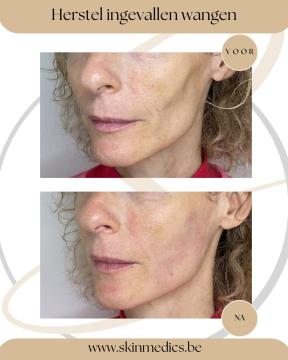
Face fillers before and after: what should you compare?
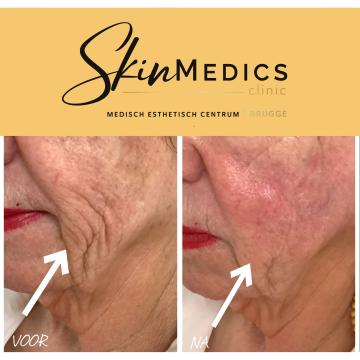
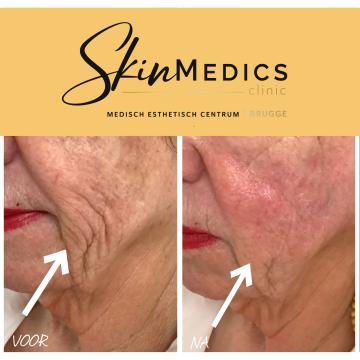
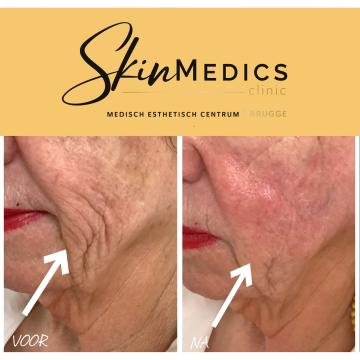
Before-and-after photographs can help you understand a practitioner's treatment style and the types of facial areas they regularly treat. They cannot predict your own result because facial anatomy, starting point, product choice and treatment plan differ between people.
When comparing photographs, look for:
the same facial area before and after;
similar lighting;
a similar camera angle;
a similar facial expression;
a clearly stated treatment area;
realistic skin texture without obvious heavy editing.
Also check that the examples are relevant to the treatment you are considering. Experience shown in cheek filler photographs does not automatically demonstrate the same level of experience with the under-eye area, temples or nose.
See further guidance on comparing filler before-and-after photos.
Face fillers before and after


Face filler reviews
He checked in with me every single day, making sure I was okay and offering constant support and reassurance. He personally picked me up and took me for scans when needed, arranged complimentary treatments, and was always available to answer questions or address any concerns I had.
What impressed me most was that his care didn’t stop after the initial emergency. Even weeks later, he continued to check in on me and genuinely cared about my recovery and wellbeing. His professionalism, compassion, and dedication to his clients are exceptional.
In a situation where many practitioners might have stepped back, Lorne showed true integrity, kindness, and responsibility. I felt completely supported throughout the entire experience, and I am incredibly grateful for everything he did for me.
Thank you, Lorne, for your outstanding care and for going so far above and beyond. You are a credit to your profession. Show less »
From the very beginning, she made me feel completely comfortable. Before starting any treatment, she explained everything in great detail, asked about my preferences and goals, and gave me honest, professional advice about what would suit me best.
During the procedure, she was incredibly kind, gentle, and reassuring, which made the whole experience very comfortable and stress-free.
I absolutely love the results. My face looks refreshed, natural, and well-balanced — not overfilled at all. Exactly the subtle enhancement I was hoping for.
I highly recommend her to anyone looking for natural-looking results and a doctor who truly listens and cares about her patients. Show less »
Yuliya, the practitioner, was incredibly kind and accommodating. She explained everything thoroughly, which made me feel comfortable and confident throughout the process. Her expertise and attention to detail were evident, and she took the time to ensure I was fully informed before proceeding.
The aftercare was just as impressive—Yuliya followed up post-treatment to check on my progress, which I really appreciated. She was friendly, professional, and genuinely lovely, making the entire experience smooth and enjoyable.
I’m very pleased with my results and would happily return. I highly recommend this practice to anyone considering aesthetic treatments. Show less »
During the consultation, everything was explained clearly, including the process, expected results, and aftercare, which made me feel confident and reassured before going ahead with the treatment. Caroline is incredibly knowledgeable and focused on achieving a natural, balanced result rather than anything overdone.
The procedure itself was far more comfortable than I expected, and Louise was attentive throughout, helping to distract me from the injections! I’m thrilled with the outcome — my face looks fresher and more defined, but still completely like me, exactly the result I wanted! Show less »
How do you compare a practitioner or clinic for face fillers?
A high review score or low advertised price does not by itself tell you whether a practitioner is appropriate for the facial area you are considering. Compare the practitioner, treatment plan, product information and aftercare arrangements together.
Professional registration
Check the practitioner's professional registration where this is applicable to their profession and shown. Injectablesbooking practitioner profiles can display professional registration details, including the registration number, so you can check the information provided rather than relying only on a job title.
Registration alone does not demonstrate extensive experience with cosmetic filler treatment.
Experience with your facial area
Ask about experience with the particular area you are considering. Treating cheeks, temples, lips, under-eyes and the nose involves different anatomy and treatment considerations.
Consultation quality
A good consultation should address what you want to change, why the area looks the way it does and whether adding filler is likely to address that cause.
The practitioner should also be willing to explain when filler is unlikely to add meaningful benefit.
Product information
Ask what filler is proposed and why it has been selected for that treatment area. A brand name alone is not evidence that the treatment plan is appropriate.
Amount and treatment plan
Ask which area will be treated, the proposed amount and what change is realistically expected. More filler should not automatically be treated as better treatment.
Risks
The relevant temporary reactions, possible complications and warning signs should be explained before treatment rather than only after a problem occurs.
Aftercare and complication arrangements
Check who you should contact if you develop an unexpected problem and what arrangements the clinic has for assessment after treatment.
Price
Compare what is included rather than choosing solely from the lowest advertised figure. Consultation, treatment amount and follow-up may differ.
Reviews and photographs
Use reviews and before-and-after photographs as supporting information about other people's experiences and the practitioner's visible work. They are not guarantees of your own result or proof that a treatment is risk-free.
For a dedicated comparison checklist, see how to choose a filler clinic.
Choosing not to proceed should remain an option after consultation if the likely benefit does not justify the limitations, cost or risk for you.
Compare clinics for face fillers
If you are considering face fillers, compare clinics on more than location or the lowest listed price. Look at the practitioner providing the treatment, relevant experience, professional information shown on the profile, available prices, reviews and how the clinic describes consultation and aftercare.
A consultation should help establish what is causing the change you want to address and whether filler is a reasonable option. You do not need to decide on treatment before that assessment.
Injectablesbooking brings clinic, practitioner, treatment, price and review information together so you can compare available options before deciding whether to request a consultation.
Compare clinics in United Kingdom

- Filler from
- £ 250,00



- Filler from
- £ 250,00


- Filler from
- £ 250,00

- Filler from
- £ 250,00

- Filler from
- £ 250,00

- Filler from
- £ 250,00

- Filler from
- £ 250,00

- Filler from
- £ 250,00
Frequently asked questions about face fillers
What are face fillers?
Face fillers are injectable products used in selected facial areas to add volume, provide support or alter contour. The appropriate product and treatment area depend on facial anatomy, the underlying cause of the concern and the intended change.
Which areas of the face can be treated with fillers?
Areas that may be treated include the cheeks, cheekbones, chin, jawline, lips, nasolabial folds, marionette area, under-eyes, temples and selected areas of the nose. Not every area or treatment is appropriate for every person.
How do you know which area should be treated?
The place where you notice a concern is not always its underlying cause. A practitioner should assess facial anatomy, volume distribution, contour, muscle movement, skin quality and laxity before proposing where filler should be placed.
When might filler not be the most appropriate treatment?
Filler may be less appropriate when the main cause is muscle movement, superficial skin quality or significant skin laxity rather than loss of volume or structural support. A consultation should assess the cause rather than assuming every visible facial change needs filler.
What are the common side effects of face fillers?
Temporary swelling, redness, tenderness and bruising can occur after treatment. The extent varies between individuals, facial areas and treatment plans.
Can face fillers cause serious complications?
Serious complications are uncommon but can occur. These include problems affecting blood flow to tissue. Severe or rapidly increasing pain, unusual skin colour changes or sudden changes in vision require urgent medical assessment.
How long do face fillers last?
There is no single duration for every face filler. The visible effect varies according to the product, facial area, amount used and individual factors.
What is the difference between face fillers and full-face filler?
Face fillers is a broad term covering filler treatment in any facial area. Full-face filler usually refers to a treatment plan in which several facial areas are assessed together, although that does not mean every area needs to be injected.
Can face fillers be dissolved?
Some hyaluronic acid fillers can be reduced or dissolved using hyaluronidase in selected circumstances. Other filler materials may require a different approach and may not be straightforward to remove.
How much do face fillers cost?
Cost depends on factors such as the treatment area, proposed amount, filler type, practitioner, clinic and what consultation or follow-up is included. Compare the complete treatment plan rather than only an advertised starting price.
How do you choose a practitioner for face fillers?
Compare relevant professional registration where applicable, training, experience with the specific facial area, consultation quality, product information, risk explanation, aftercare arrangements, prices, reviews and before-and-after photographs. Registration or a high review score alone does not prove extensive filler experience.