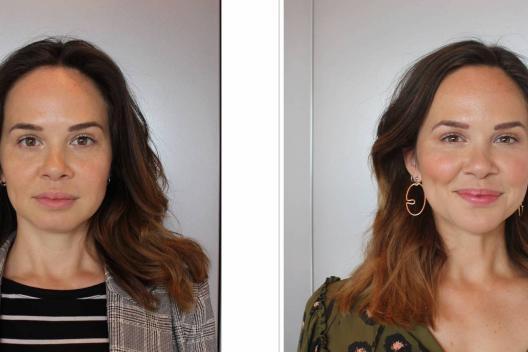
Jawline fillers

Drs. Tom van Eijk
Jawline fillers are injectable dermal fillers used to add volume or structure to selected areas of the lower jaw. Treatment may be used to make the jawline appear more defined, add structure around the jaw angle or improve the visual balance between the jaw and chin.
The possible result depends on your existing jaw shape, chin projection, skin and soft tissue, as well as where and how much filler is placed. Jawline filler adds volume; it does not remove fat, substantially tighten loose skin or reproduce the structural changes possible with surgery.
An initial change may be visible immediately, although swelling can temporarily affect how the jawline looks after treatment. Results also vary between individuals.
You can compare clinics offering dermal filler treatments, including their listed treatment information, prices and reviews, through Injectablesbooking.

Jawline fillers at a glance
Treatment area: Lower jaw, including selected parts of the jawline and jaw angle
Treatment type: Dermal filler; hyaluronic acid fillers are commonly used for facial contouring
Main aim: Add volume, structure or definition to selected areas
Result: An initial change may be visible immediately
Final appearance: Best assessed after early swelling has reduced
Permanent: No, when a temporary dermal filler is used
Amount required: Depends on anatomy, treatment area and intended degree of change
Important limitation: Filler adds volume. It does not remove fat or substantially tighten significant loose skin.
How do jawline fillers work?
Jawline filler changes contour by adding volume at carefully selected points along the lower face. Treatment does not simply involve placing filler evenly from the chin to the ear. The areas treated depend on the existing shape of the mandible, chin projection, jaw angle, soft tissue and the change being considered.
A practitioner may assess the jawline from both the front and side because improving one area can alter how another part of the lower face appears.
Which parts of the jawline can be treated?
Depending on the individual treatment plan, filler may be placed around:
the jaw angle towards the back of the lower jaw;
selected areas along the mandibular border;
areas where the jawline appears less continuous;
the transition between the chin and jawline.
The chin may sometimes be considered as part of lower-face balance, but chin filler is a separate treatment decision and should not automatically be included in every jawline treatment.
What can jawline filler change?
Jawline filler may be used to:
create more visible definition along selected parts of the lower jaw;
increase projection around the jaw angle;
make the transition between the chin and jaw appear more continuous;
partially balance suitable asymmetry;
restore some structural definition where facial volume has changed.
How noticeable the change is will depend on the starting anatomy and treatment plan.
What can jawline filler not do?
Jawline filler works by adding material. Understanding that limitation is important when deciding whether filler matches the change you are considering.
Jawline filler does not directly:
remove fat beneath the chin;
reduce the size of enlarged jaw muscles;
substantially tighten significant loose skin;
change the underlying jaw bone;
correct every form of facial asymmetry;
produce the same structural change as surgery.
Adding more filler is therefore not always the answer when the jawline appears less defined. A practitioner should first assess what is actually contributing to the contour before proposing treatment.
What happens during a jawline filler appointment?
- 1 Consultation and medical history
- 2 Assessment of the jaw, chin and lower-face proportions
- 3 Discussion of the proposed filler, placement and amount
- 4 Treatment if you decide to proceed and it is considered appropriate
- 5 Aftercare information and follow-up arrangements
Why do jawline filler results differ?
Jawline filler results vary because the treatment is being added to an existing three-dimensional facial structure. Two people receiving treatment in the same general area may therefore need very different approaches.
Important differences include:
natural jaw width and projection;
chin position;
jaw angle;
skin thickness;
skin laxity;
distribution of facial fat and other soft tissue;
existing facial asymmetry;
previous filler treatments;
amount and type of filler used;
precise injection placement.
Why might one person need more filler than another?
The amount required depends on the starting anatomy and the degree of change being considered. A subtle improvement to one short part of the jawline is different from trying to create additional structure along several areas of the lower jaw.
More filler does not automatically mean a better result. Additional volume can also make the lower face appear wider or heavier when it is not appropriate for the underlying anatomy.
Why does placement matter?
Small differences in filler placement can change whether additional volume projects outwards, downwards or along the jawline. Treatment planning therefore matters as much as the total quantity used.
Jawline filler results and limitations
An initial change in contour can usually be assessed shortly after filler has been placed, but this is not necessarily the final appearance. Early swelling, tenderness or bruising may temporarily make one side appear different from the other.
Once early treatment reactions have reduced, the relevant questions are whether the planned areas have gained the intended structure and whether the result remains in proportion with the chin and the rest of the lower face.
Possible changes can include:
clearer definition along part of the jaw;
additional projection at the jaw angle;
a more continuous jaw-to-chin contour;
partial improvement in suitable asymmetry.
A jawline can still remain naturally asymmetric after treatment. Filler should not be presented as a method of creating mathematically identical sides of the face.
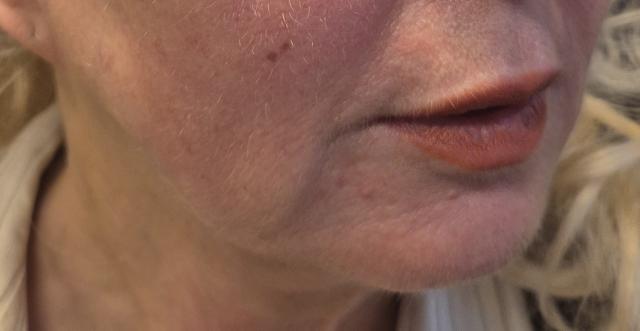
Jawline fillers before and after


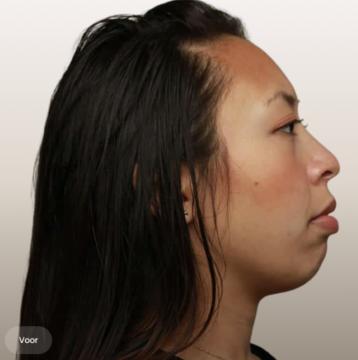
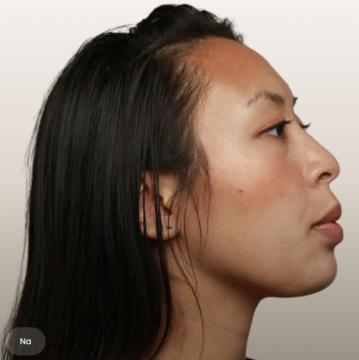




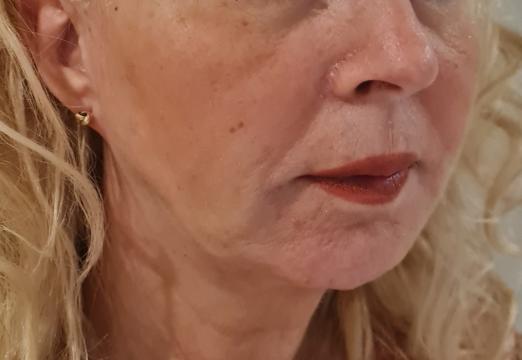


What are the side effects and risks of jawline fillers?
Temporary reactions can occur after injections around the jawline. These may include swelling, redness, tenderness, bruising and temporary unevenness while early swelling is present.
Dermal fillers can also cause less common but potentially serious complications. For that reason, the consultation should cover the filler being proposed, relevant risks, the practitioner's experience with the treatment area and what support is available if a problem occurs.
Vascular occlusion is a recognised complication of dermal filler injections. It happens when blood flow through a vessel becomes blocked and requires prompt clinical assessment.
For a broader explanation of uncommon problems associated with fillers, see our guide to filler complications.
More information about jawline filler risks
When should you contact the clinic?
The clinic should explain before treatment how to contact them if you develop an unexpected reaction or are concerned about the result.
Seek prompt clinical advice if you develop symptoms that are significantly worsening rather than settling, particularly severe or increasing pain, unusual changes in skin colour or other unexpected symptoms around the treated area.
If you are unsure whether a reaction is expected, contact the treating clinic rather than trying to diagnose or correct it yourself.
Can jawline filler be dissolved?
Hyaluronic acid filler can sometimes be treated with an enzyme called hyaluronidase when clinically appropriate. This does not mean that every filler can be dissolved or that every unwanted result requires complete removal.
The appropriate response depends on the filler used and the reason correction is being considered.
Read more about dissolving dermal filler.
Can jawline filler become lumpy or uneven?
Temporary unevenness can be more noticeable while swelling is present. Persistent irregularities can have several possible causes, including filler placement, product distribution or differences that existed before treatment.
Do not repeatedly massage or manipulate the area unless the treating practitioner has specifically advised you to do so.
How long do jawline fillers last?
Jawline filler is temporary when a biodegradable dermal filler is used. How long the visible effect remains can vary according to the specific product, amount used, treatment area and individual factors.
Clinical studies of specific hyaluronic acid fillers designed for jawline treatment have reported measurable improvement through 12 months. This should not be interpreted as a guarantee that every jawline filler treatment will last exactly one year.
The result gradually changes as the filler is broken down and as the face itself changes over time.
For a broader explanation of the factors affecting longevity, see how long dermal fillers last.
Jawline filler recovery and aftercare
Swelling, tenderness and bruising can occur after jawline filler injections. These reactions can temporarily change the apparent shape or symmetry of the jawline, particularly during the first part of recovery.
Your clinic should provide aftercare that reflects the product, injection technique and your individual circumstances.
Follow those instructions rather than applying generic internet aftercare rules. If the treated area becomes increasingly painful, develops unusual colour changes or causes another unexpected concern, contact the treating clinic promptly.
When might someone consider jawline fillers?
Someone may consider jawline filler when they want to discuss adding structure or volume to part of their existing lower-face contour without undergoing surgery.
Examples of treatment goals that may be discussed during consultation include:
increasing definition along part of the mandibular border;
creating more projection around the jaw angle;
improving continuity between the jaw and chin;
addressing a suitable area of asymmetry;
restoring some lower-face structure where volume has changed.
Whether filler is appropriate cannot be determined from the treatment goal alone. A practitioner needs to assess the underlying anatomy, medical history, existing filler where relevant and the realistic limits of adding volume.
Choosing not to have treatment is also a valid option.
What affects the cost of jawline fillers?
The cost of jawline filler can differ because treatment plans are not identical.
Relevant factors may include:
the filler product selected;
the quantity used;
how many parts of the jawline are treated;
whether another area, such as the chin, is assessed separately;
the clinic's pricing structure;
what consultation or follow-up is included.
A low advertised starting price does not necessarily represent the cost of the treatment plan proposed for your jawline. When comparing clinics, check what the quoted amount actually includes.
For more context about how treatment prices are structured, see dermal filler costs.
| Treatment | Unit | City/country | Price | |
|---|---|---|---|---|
| Jawline fillers treatment | ML | United Kingdom | £ 90 | Lowest price |
| Jawline fillers treatment | ML | United Kingdom | £ 326 | Average price |
| Jawline fillers treatment | ML | United Kingdom | £ 1250 | Highest price |
Compare jawline filler prices and clinics
Compare on experience & price Make an appointment immediately
How to compare jawline filler clinics and practitioners
For jawline filler, the comparison should go beyond the lowest listed price. The lower face needs an individual treatment plan, and two providers may propose different areas, quantities or approaches.
When comparing providers, look for information about:
relevant training and professional background;
experience with dermal filler and the jawline area;
how the jaw and chin are assessed together;
the specific filler proposed;
the intended treatment areas;
how much filler is being proposed and why;
before-and-after examples relevant to jawline treatment;
aftercare and follow-up;
how complications or concerns are handled;
total treatment price.
The NHS advises people considering dermal fillers to ask about the name and source of the product and the practitioner’s qualifications, training and experience.
You can also read our broader guide to choosing a filler clinic.
Jawline filler reviews
Everything was explained clearly, and I felt confident I was in safe hands. I would highly recommend Aesthetics by Amo to anyone considering aesthetic treatments and will definitely be returning in the future! Show less »
From the moment I arrived, both Dr Haq and the team made me feel completely at ease. The care, patience and attention I received throughout the appointment were outstanding. Everything was explained clearly, and I never felt rushed or pressured at any point. Dr Haq’s calm and professional manner really helped ease my nerves, and the team were incredibly kind and reassuring throughout. I genuinely felt comfortable the entire time and the whole experience was far more pleasant than I expected.
It’s probably still a little early to comment on the final results, but three days post-treatment I can barely notice any swelling.
For comparison, I experienced much more swelling previously from jawline filler and PDO threads than I have from this treatment.
Overall, I just wanted to thank Dr Haq and the Cosmedocs team for the professionalism, warmth and care they showed me during the whole experience. It made a huge difference to how relaxed and confident I felt going into the procedure. I’m very excited to see the final results over the coming weeks and would happily recommend Cosmedocs to anyone considering treatment. Show less »
What can jawline filler reviews tell you?
Reviews can help you understand how previous clients describe parts of the clinic experience, including consultation, communication, treatment explanations and aftercare.
For jawline filler specifically, useful reviews may indicate whether the provider explained:
why particular areas were being treated;
how much filler was proposed;
realistic limits of the treatment;
what to expect afterwards;
what happened at follow-up.
A positive review does not guarantee that the same treatment plan or result will apply to you.
Jawline filler and masseter treatment are not the same thing
Jawline filler and treatment of the masseter muscle have different purposes.
Jawline filler adds volume or structure to selected parts of the lower jaw.
Botulinum toxin treatment of the masseter aims to reduce activity in a muscle, rather than adding volume.
Which anatomical feature is creating the appearance someone wants to change therefore matters. The treatments should not be presented as interchangeable.
Compare jawline filler practitioners
A jawline filler consultation should involve more than selecting an amount of filler. The practitioner should be able to explain what part of your anatomy they propose treating, how the planned placement relates to the rest of the lower face and what limitations apply.
Useful information to compare includes:
professional background;
relevant filler training;
experience treating the jawline and lower face;
the product proposed;
treatment planning;
before-and-after examples;
follow-up arrangements.
Professional registration or a job title alone does not establish how much experience someone has with jawline filler specifically.
Cosmetic specialists in United Kingdom


- Jawline filler from
- £ 450,00

- Jawline filler from
- £ 250,00

- Jawline filler from
- £ 250,00


- Jawline filler from
- £ 210,00

- Jawline filler from
- £ 210,00

- Jawline filler from
- £ 210,00
Compare clinics offering jawline fillers
Clinics can differ in the filler products they offer, treatment quantities, consultation process, follow-up arrangements and listed prices.
Use the clinic information available on Injectablesbooking to compare these factors side by side. A consultation can then be used to discuss whether adding filler is appropriate for the specific part of the jawline you want assessed.
Do not choose a clinic on price alone. The proposed treatment plan and the experience of the person carrying out the injections are also relevant.
Compare clinics in United Kingdom

- Jawline filler from
- £ 250,00



- Jawline filler from
- £ 450,00


- Jawline filler from
- £ 250,00

- Jawline filler from
- £ 250,00

- Jawline filler from
- £ 250,00

- Jawline filler from
- £ 250,00

- Jawline filler from
- £ 250,00

- Jawline filler from
- £ 250,00
Frequently asked questions about jawline fillers
What are jawline fillers?
Jawline fillers are injectable dermal fillers used to add volume or structure to selected parts of the lower jaw. They may be used to increase definition, alter the appearance of the jaw angle or improve balance between the jaw and chin.
What can jawline filler change?
Jawline filler can add volume and definition to selected parts of the lower jaw. The amount of visible change depends on your existing anatomy, skin and soft tissue, the filler used and the treatment plan.
Does jawline filler make your face wider?
It can. Because filler adds volume, some placements may increase visible width or projection in the lower face. Whether that is desirable depends on the treatment goal and existing facial proportions.
Can jawline filler make the face look slimmer?
Jawline filler does not remove facial fat or reduce muscle size. Adding definition can change how the lower-face contour appears, but it should not be described as a treatment that physically makes the face slimmer.
Can jawline filler get rid of a double chin?
No. Dermal filler adds volume and does not remove fat beneath the chin. If fat or significant skin laxity is the main reason the jawline appears less defined, adding filler may not address the underlying cause.
Can jawline filler tighten loose skin?
Filler may provide structural support in selected areas, but it cannot substantially tighten significant loose skin. A practitioner needs to assess what is contributing to the jawline contour before recommending treatment.
How long do jawline fillers last?
Jawline filler is temporary. Duration varies according to the product, quantity, treatment area and individual factors. Studies of specific hyaluronic acid jawline fillers have reported visible improvement through 12 months, but this is not a guaranteed duration for every treatment.
Are jawline fillers painful?
Jawline filler involves injections, so discomfort, pressure or tenderness can occur. The experience varies according to the product, technique, treatment area and pain-management approach used by the practitioner.
Can jawline filler look too heavy?
Yes. Excessive volume or unsuitable placement can make the lower face appear wider, heavier or more angular than intended. This is why the amount and placement should be planned around the individual's existing facial proportions.
Is jawline filler the same as masseter Botox?
No. Jawline filler adds volume or structure. Botulinum toxin treatment of the masseter acts on muscle activity and is used for a different anatomical purpose.
Can jawline filler be dissolved?
Hyaluronic acid filler may be treated with hyaluronidase where clinically appropriate. Not every type of filler can be dissolved in this way, so the product used needs to be identified first.
What should I compare between jawline filler clinics?
Compare the proposed treatment plan, practitioner background and relevant experience, filler product, quantity, aftercare, complication support, before-and-after examples and total listed price rather than relying on one factor alone.