Full face filler

Drs. Tom van Eijk
Full face filler is an approach in which several areas of your face are assessed together before a treatment plan is created. It does not mean that your whole face must be injected or that a fixed number of millilitres will be used.
During a consultation, the practitioner can consider your facial proportions, existing volume, contours, movement, previous filler treatments and what you would like to discuss. The final plan may involve one area, several areas, treatment in stages or no filler treatment at all.
You can use Injectablesbooking to compare filler treatments and clinics before deciding which practitioners you want to investigate further.

Find a clinic for full face filler
Compare on experience & price Make an appointment immediately
What is full face filler?
Full face filler is a treatment-planning concept in which several facial areas are considered in relation to each other. You may also see terms such as facial balancing or facial harmonisation, although clinics do not always use these names in exactly the same way.
A practitioner might assess areas such as the temples, cheeks, chin, jawline and areas around the mouth. An area can be relevant to the assessment without needing to be injected.
The purpose is therefore not to identify the maximum number of areas that can be filled. It is to decide whether treating a particular area would contribute to the agreed treatment goal.
If you first want to understand what injected filler does within tissue, see how fillers work.
Full face filler, one filler area or a liquid facelift?
Full face filler
Several areas are assessed together. After that assessment, the agreed treatment may involve one area or a combination of areas.
One filler area
If your consultation centres on one specific area, there may be no reason to create a wider multi-area treatment plan. The fact that other areas could technically be treated does not mean they need to be.
Liquid facelift
“Liquid facelift” is not a standardised treatment name. Some clinics use it for combinations of dermal filler, while others may use the term for plans that include additional injectable or skin treatments.
When comparing treatments, check exactly which areas, products and procedures are included rather than relying on the package name.
When can a full-face filler assessment be useful?
A full-face assessment can be relevant when your consultation involves more than one facial area or when the relationship between different areas may influence treatment planning.
For example, the practitioner may want to consider the cheeks, chin and jawline together rather than assessing each area in isolation. This does not mean all three areas should be injected.
Previous filler is also important. Tell the practitioner:
which areas have previously been treated;
approximately when they were treated;
which product was used, if you know;
whether you experienced problems or needed corrective treatment.
Previously placed filler may still influence how a new treatment plan is assessed.
A full-face consultation can therefore result in a smaller treatment plan than expected, treatment at a later date or a decision not to use filler.
Read more about facial volume loss and filler assessment.
How is a full face filler treatment plan decided?
- 1 Discuss your goals and expectations
- 2 Review your health and previous filler treatments
- 3 Assess the face at rest and in movement
- 4 Compare volume, contour and facial proportions
- 5 Decide which areas do and do not need treatment
- 6 Agree the product, amount and treatment sequence
- 7 Discuss risks, limitations and follow-up
Which areas can be assessed during full face filler planning?
The areas considered depend on your anatomy, previous treatments and what you want to discuss during the consultation.
A practitioner may assess:
temples;
cheekbones;
cheeks and mid-face;
chin;
jawline;
nasolabial folds;
marionette lines;
areas around the mouth;
the under-eye area.
This is an assessment list, not a treatment checklist. Some areas may only be examined so the practitioner can understand how different parts of the face relate to each other.
If the consultation is specifically about the mid-face, you can also read about cheekbone fillers.
What happens during a full face filler treatment?
A full face filler treatment should begin with a consultation and assessment rather than with a predetermined number of syringes.
Before treatment, the practitioner should explain:
which areas are being proposed;
why each area is included;
which filler product is being considered;
the planned amount;
relevant risks and limitations;
whether all proposed areas will be treated during one appointment.
If you decide to continue, filler is injected into the areas agreed in the treatment plan. The technique can vary according to the anatomical area, product and treatment approach.
After treatment, you should receive specific aftercare instructions and information about who to contact if you have concerns.
A full face treatment plan does not have to be completed during one appointment.
How many ml of filler are used for full face filler?
There is no standard number of millilitres for full face filler. The amount depends on which areas are actually being treated, your anatomy, previous filler, the selected product and the agreed treatment goal.
A larger number of millilitres does not automatically mean a more complete or better treatment.
When a practitioner proposes an amount, ask how it has been divided across the treatment plan. You should be able to understand:
which area each amount is intended for;
what the intended change is;
whether the full amount is expected to be used at once;
whether any later treatment is already anticipated.
The amount should therefore follow the assessment rather than the treatment being designed around a pre-set package size.
Full face filler in one appointment or in stages?
Full face filler can be planned for one appointment or divided across separate treatment sessions. Neither approach is automatically better.
A staged plan may allow the practitioner and patient to reassess part of the treatment before discussing another area. In other circumstances, several agreed areas may be treated during the same appointment.
Ask:
why the proposed order has been chosen;
whether every area needs to be treated immediately;
when the result will be reviewed;
whether a later stage is optional or already part of the plan.
Treatment in stages should have a clear reason rather than simply increasing the number of appointments.
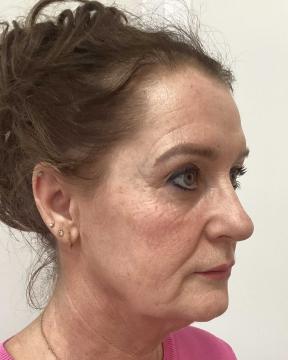
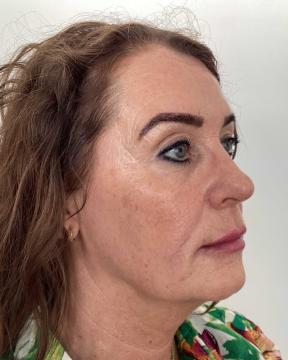
How should you assess full face filler before-and-after photos?
Before-and-after photos can help you understand the types of multi-area treatments a practitioner has previously carried out. They cannot predict what your own result will look like.
For full face filler examples, check whether:
the camera position is similar;
lighting is comparable;
facial expression is similar;
the time between images is stated;
the treated areas are identified;
the amount of filler is disclosed where available;
the result followed one appointment or several stages.
A photograph is much harder to interpret if you cannot tell which areas were actually treated.
See our wider guidance on filler before-and-after photos.
Before and after photos of filler treatments


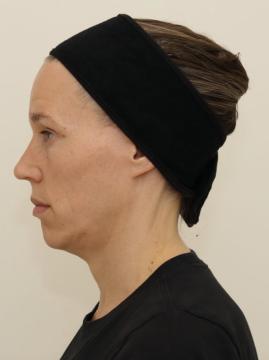
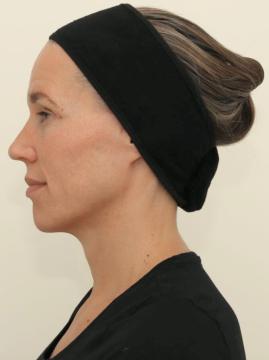
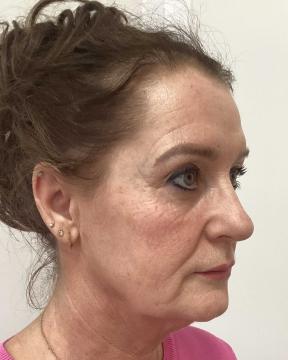
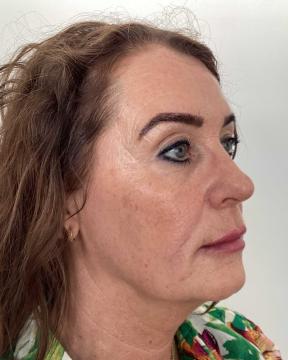
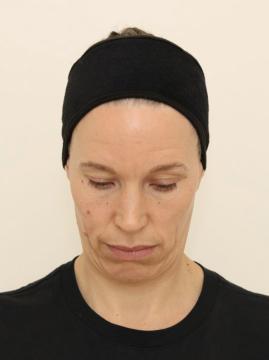
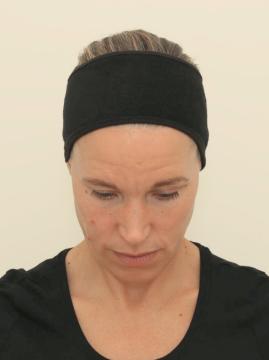
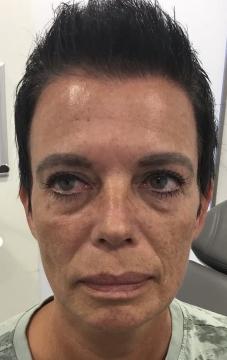
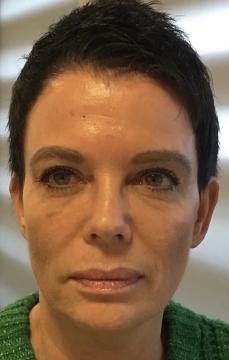
When can you see the result and how long does full face filler last?
Changes in contour or volume may be visible immediately after filler treatment, although early swelling can affect how the area looks.
There is no single duration for an entire full-face treatment plan. Different areas can be treated with different products and different amounts, and they may change at different rates over time.
Ask for the expected duration per treated area and product rather than assuming the entire face will require repeat treatment at the same time.
For the broader topic, see how long fillers last.
Side effects, risks and aftercare
What temporary reactions can occur?
Temporary swelling, redness, tenderness, discomfort or bruising can occur around injection sites. The extent and duration vary between people, treatment areas and treatment plans.
What complications should you know about?
Fillers can also cause complications that require assessment or treatment. These may include infection, persistent lumps or irregularities. Rare but serious problems can occur if blood flow is affected.
For more detailed information, read about filler complications.
What if you notice lumps or an unwanted result?
Contact the treating clinic if you develop a new, persistent or concerning change after treatment. The appropriate response depends on the cause and the product used.
Some hyaluronic acid fillers can be treated with hyaluronidase in specific circumstances. See the dedicated information about dissolving filler.
When should you seek urgent assessment?
Contact the treating clinic urgently or seek medical help if you develop unexpected or rapidly worsening symptoms such as increasing pain, unusual skin colour changes or problems with vision. Do not wait for a routine follow-up appointment if symptoms are concerning.
What makes a careful full face filler treatment plan?
A full face treatment plan should explain why each proposed area is being treated, rather than simply presenting a package containing several syringes.
During the consultation, consider whether:
previous filler treatments are discussed;
each proposed treatment area has a clear purpose;
the practitioner explains how the areas relate to each other;
the quantity of filler is explained rather than simply stated;
untreated areas are also discussed where relevant;
alternatives and limitations are covered;
staged treatment is considered where appropriate;
you can choose not to proceed with part or all of the plan.
A whole-face assessment can legitimately result in a very limited treatment plan. More treated areas do not automatically mean a more considered result.
What does full face filler cost?
There is no single full face filler price that applies to every treatment plan. Cost can vary because the number of treated areas, amount of filler, product and number of appointments can differ.
When comparing quotations, check:
whether the price is per ml or for a treatment plan;
how many millilitres are included;
which areas are included;
which filler product is proposed;
whether the consultation is included;
whether a follow-up review is included;
whether later stages are charged separately;
whether the package includes treatments other than filler.
Two full-face quotations are not directly comparable if they contain different areas, quantities or products.
For broader UK filler pricing information, see filler costs.
How do you compare full face filler clinics and practitioners?
For full face filler, compare more than the advertised package price. The quality of the assessment and the reasoning behind a multi-area plan are particularly important.
Look at whether the practitioner or clinic provides clear information about:
relevant experience with dermal fillers;
experience assessing several facial areas together;
how previous filler is considered;
why each proposed area is included;
how the total quantity has been decided;
whether treatment can be divided into stages;
possible side effects and complications;
follow-up and access to the clinic after treatment.
Where available, you can also review practitioner information and professional registration details shown on Injectablesbooking profiles. Registration alone does not tell you how much experience someone has with full face filler, so relevant training and treatment experience remain important comparison points.
For wider selection criteria, see how to choose a filler clinic.
Use the information available to compare clinics and decide which practitioners you want to investigate or contact.
Compare clinics in United Kingdom

- Filler from
- £ 250,00



- Filler from
- £ 250,00


- Filler from
- £ 250,00

- Filler from
- £ 250,00

- Filler from
- £ 250,00

- Filler from
- £ 250,00

- Filler from
- £ 250,00

- Filler from
- £ 250,00
Frequently asked questions about full face filler
What is full face filler?
Full face filler is an approach in which several facial areas are assessed together before a treatment plan is agreed. It does not mean that the whole face must be injected. The final plan may involve one area, several areas, staged treatment or no filler treatment.
Is full face filler the same as facial balancing?
The terms are often used in similar contexts, but clinics do not always define them in exactly the same way. Full face filler generally refers to assessing several facial areas together, while facial balancing usually places greater emphasis on how facial proportions relate to one another.
Is full face filler the same as a liquid facelift?
Not necessarily. Full face filler generally refers to a filler treatment plan involving one or more facial areas. “Liquid facelift” is used differently between clinics and may sometimes include other injectable or skin treatments as well.
When is one filler area enough?
If one specific area is the main focus of your consultation, a targeted treatment may be enough. A full-face treatment is not automatically more appropriate simply because several areas could technically be injected.
How many ml are used for full face filler?
There is no standard number of millilitres. The amount depends on which areas are actually treated, previous filler, the product used, your anatomy and the agreed treatment plan. Ask why each proposed amount is needed rather than comparing syringe numbers alone.
Can full face filler be done in stages?
Yes. A treatment plan can sometimes be divided across separate appointments. This may allow part of the treatment to be reassessed before another area is considered. The practitioner should explain why one session or staged treatment is being proposed.
What should I tell the practitioner if I have had fillers before?
Tell them which areas were treated, approximately when treatment took place and which product was used if you know. You should also mention previous unwanted reactions, complications or corrective treatment.
How long does full face filler last?
There is no single duration for a full-face treatment plan. Different areas may be treated using different products and amounts, so they can change at different rates over time.
What should I check in a full face filler quote?
Check which areas are included, how much filler is proposed, which product will be used and whether consultation and follow-up are included. Also confirm whether the price is per ml, per appointment or for the complete treatment plan.
Compare full face filler clinics near you
Compare on experience & price Make an appointment immediately