Facial Volume Loss

Drs. Tom van Eijk
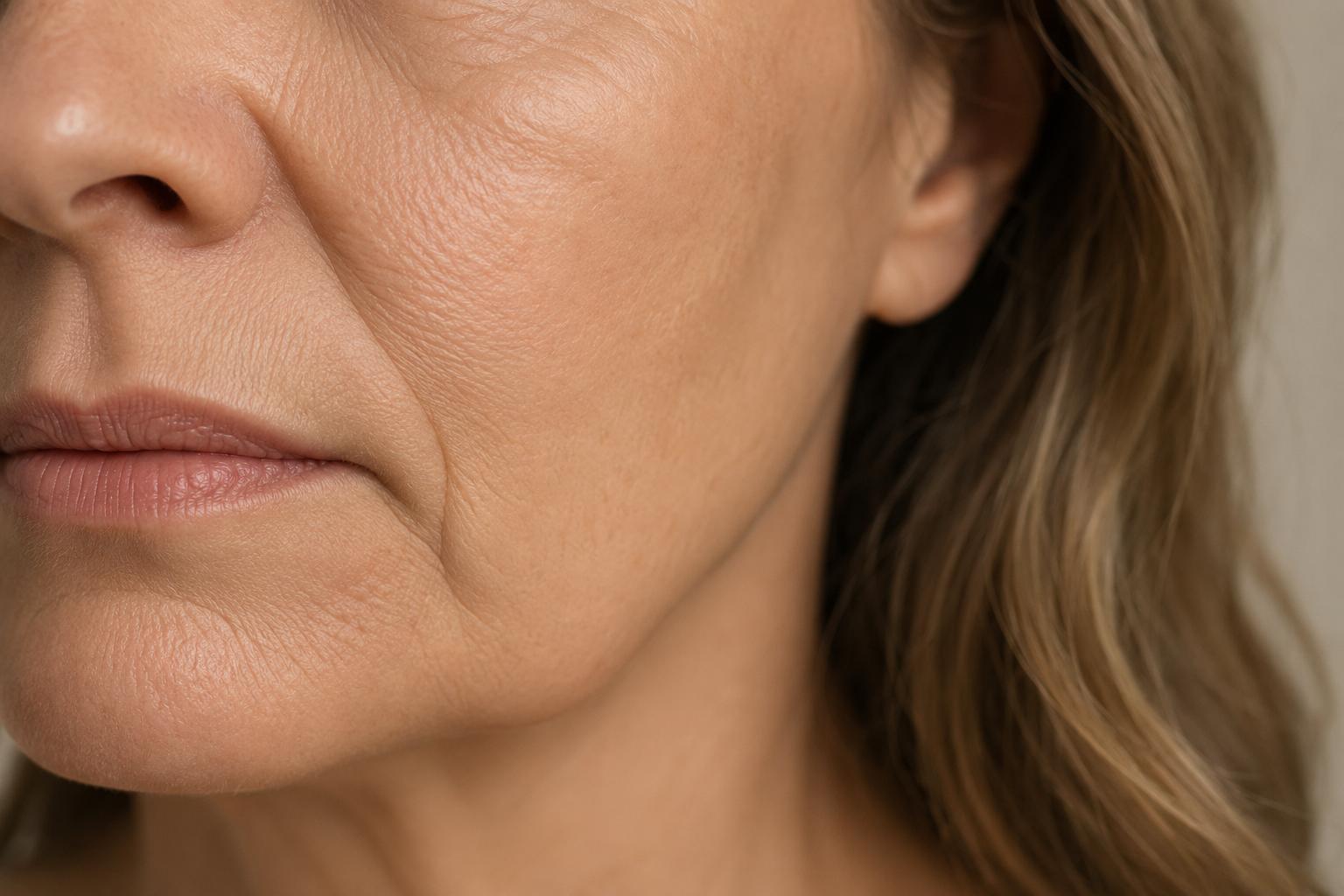
Facial volume loss means that parts of the face have less fullness or structural support than before. It may make areas such as the cheeks or temples look flatter or more hollow and can gradually change the overall facial contour.
The cause is not always simply “losing fat from the face”. Changes in facial fat compartments, underlying bone, connective tissue and skin can all affect how full or supported the face appears.
A practitioner should therefore assess what has actually changed before discussing treatment. Adding volume with a filler may be considered in some circumstances, but it is not automatically the right approach for every less-full or less-firm face.
For a broader introduction to the treatment category, see our guide to dermal fillers.
Compare filler clinics near you
Compare on experience & price Make an appointment immediately
What causes facial volume loss?
Facial volume loss usually develops through a combination of changes rather than one single process. Facial fat, supporting structures and skin can all change differently over time.
Changes in facial fat
Facial fat is distributed across separate areas known as fat compartments. These compartments do not necessarily change in the same way or at the same rate.
As a result, one part of the face may appear flatter or more hollow while another area changes much less. This is one reason facial volume loss does not look identical from person to person.
Changes in facial support
The deeper structures supporting the face also change over time. Changes involving bone and connective tissues can affect the position and support of the softer tissues above them.
A hollow-looking area therefore does not necessarily mean that fat alone has disappeared from that exact location.
Changes in the skin
Collagen, elastin and other components of the skin also change with age. The skin may consequently become less firm or elastic.
This is different from losing deeper facial volume, although skin laxity and volume loss can occur at the same time.
Facial volume loss after weight loss
Significant weight loss can reduce facial fullness as well as body fat. Some people notice flatter cheeks, more visible hollows or a change in their facial outline after losing a substantial amount of weight.
How noticeable this becomes depends on factors such as previous fat distribution, skin quality and individual facial anatomy.
A less-full face after weight loss does not automatically mean that filler is needed or appropriate.
Does facial volume loss start at a certain age?
There is no single age at which facial volume loss begins for everyone.
Genetics, facial anatomy, ageing, weight changes and other individual factors influence where and when changes become noticeable.
What does facial volume loss look like?
Facial volume loss can appear as localised hollowing, flatter contours or reduced fullness in specific parts of the face. The areas affected and how noticeable they become differ between individuals.
Cheeks and mid-face
The cheeks may appear flatter or more sunken than before. This can also change the transition between the cheek, lower eyelid and other parts of the mid-face.
If reduced cheek volume is your main concern, see our guide to fillers for sunken cheeks.
Temples
The temple is the area between the forehead, hairline and cheekbone. Loss of fullness here can create a more hollow-looking contour.
A hollow temple does not automatically mean that the temple itself should be injected. The surrounding facial proportions and anatomy also need to be considered.
Lower-eyelid-to-cheek transition
Changes in mid-face support can make the transition between the lower eyelid and upper cheek appear deeper or more defined.
This does not necessarily mean that the under-eye area itself requires treatment.
Lower face
Changes higher in the face can also influence the way the lower facial contour appears.
For this reason, seeing a deeper line, fold or altered jawline does not automatically mean that filler should be placed directly into that particular line or area.
Is it facial volume loss or skin laxity?
Facial volume loss and skin laxity are different changes. Volume loss mainly involves reduced fullness or deeper structural support, while skin laxity refers more to skin and supporting tissues becoming less firm.
Both can be present at the same time.
Localised hollowing
A clearly hollow or flatter area may suggest that local volume or underlying support has changed.
A practitioner can assess the area in the context of the rest of the face rather than deciding from one visible hollow alone.
Mainly less-firm skin
If the main change is looser, thinner or less-firm skin, simply adding more volume may not address the underlying concern.
Treatments aimed mainly at skin quality also have a different purpose from treatments that physically add volume.
Changes across several facial areas
Sometimes changes are visible across several areas, such as the temples, cheeks and lower facial contour.
In that situation, focusing only on the most obvious line or hollow may not reflect what has changed across the face as a whole.
More pronounced skin laxity
Where skin laxity or excess skin is the dominant concern, filler alone may have limited relevance.
A consultation should distinguish between reduced volume, reduced skin firmness and broader structural changes before a treatment plan is discussed.
How is facial volume loss assessed?
- 1 Discuss what you have noticed
- 2 Compare different facial areas
- 3 Consider volume and skin quality
- 4 Discuss suitable options and limitations
- 5 Review expectations and relevant risks
A facial assessment should not focus only on the area that first caught your attention.
The practitioner may look at the relationship between your cheeks, temples, mid-face, lower face and overall facial proportions. They can also consider whether the visible change appears to involve deeper volume, skin quality, structural support or a combination of factors.
For example, a single hollow area may require a different assessment from a face where reduced fullness is visible across several regions.
The consultation should also establish what a proposed treatment can realistically change and what it cannot. You can then decide whether treatment is something you want to pursue.
What treatments may be considered for facial volume loss?
There is no standard treatment for facial volume loss. The relevant option depends on which structures appear to have changed, where the change is located and what you want to address.
Hyaluronic acid fillers
Hyaluronic acid fillers may be used to add volume to a selected area or support a particular facial contour.
The added volume is present immediately after injection, although early swelling can temporarily affect how the area looks.
Hyaluronic acid filler is temporary and does not stop the underlying ageing process.
Biostimulating injectables
Some injectable treatments are designed primarily to stimulate the body's own collagen response rather than provide the same type of immediate volume replacement as a hyaluronic acid filler.
The products in this category differ in composition, behaviour and intended use. See our separate guide to biostimulating fillers for more detail.
More than one type of change
If volume loss occurs alongside skin laxity or changes in several parts of the face, a practitioner may discuss more than one possible approach.
That does not mean that combining treatments is automatically better. More treatment does not necessarily produce a more appropriate result.
When might filler not be the right approach?
Filler can add volume, but it cannot correct every reason a face appears less full or less supported.
A different approach, further assessment or no cosmetic treatment may be more appropriate when:
skin laxity is the main visible change;
the concern is primarily skin quality rather than volume;
several facial structures have changed and treating one isolated area would not address the overall concern;
existing filler needs to be assessed first;
the result you want cannot realistically be achieved by adding volume;
a medical factor means treatment should be delayed or avoided.
A responsible consultation should include the limitations of filler as well as what it may potentially achieve.
Even when treatment is technically possible, choosing not to have cosmetic treatment remains an option.
When can you see a result after treatment?
The timing depends on the type of treatment used.
With hyaluronic acid filler, the added volume is present immediately after treatment. However, swelling and other temporary injection-site changes can affect the appearance during the early period.
Treatments that rely more on stimulating collagen develop differently and may produce gradual changes rather than immediate added volume.
None of these treatments stops natural changes in the face, and temporary fillers do not provide a permanent result.
If you are specifically researching treatment longevity, see how long fillers last.
What risks should you understand before filler treatment?
Dermal filler injections can cause temporary reactions and less-common complications.
Temporary swelling, tenderness, redness or bruising can occur around injection sites. The likelihood and extent of these reactions vary between people and treatment areas.
More serious complications are uncommon but possible. One important example is vascular occlusion, where filler interferes with blood flow in a blood vessel. This requires prompt assessment and treatment.
Before having filler, ask who you should contact if something does not look or feel as expected after treatment and how the clinic handles suspected complications.
You can read a more detailed explanation on our page about filler complications.
Side effects, complications and recovery
What reactions can happen after filler treatment?
Swelling, redness, tenderness, discomfort or bruising can occur around an injection site after filler treatment.
The extent and duration vary depending on factors including the area treated, the product, injection technique and the individual.
Contact the treating clinic if symptoms worsen, develop differently from what was discussed during your consultation or cause concern.
When should you seek urgent advice after filler?
Unusual severe pain, changes in vision or white, grey or blue discolouration around the treated area may indicate a serious complication.
Contact the treating practitioner or clinic immediately if these symptoms occur. If urgent medical assessment is needed and the treating clinic cannot be reached, seek appropriate urgent medical care.
Can hyaluronic acid filler be dissolved?
Hyaluronic acid fillers can be broken down with an enzyme called hyaluronidase in certain circumstances.
It may be considered for some unwanted outcomes or when clinically indicated as part of complication management. Hyaluronidase is itself a medical treatment and requires appropriate assessment.
See the dedicated guide to hyaluronidase.
How do you compare clinics and practitioners for facial volume treatment?
Comparing providers should involve more than finding the nearest clinic or the lowest advertised price.
Facial volume treatment requires assessment of your anatomy, the cause of the visible change and whether adding volume is appropriate in the first place.
When comparing practitioners, look at:
professional registration and qualifications where relevant;
training relevant to injectable treatments;
experience with dermal fillers;
experience treating the specific facial area being considered;
how thoroughly your face is assessed during consultation;
whether alternatives and limitations are discussed;
what product is proposed and why;
how complications are managed;
how you can contact the clinic after treatment;
whether follow-up care is available.
Professional registration is an important piece of information where applicable, but it does not by itself establish how much experience someone has with a particular cosmetic procedure or anatomical area.
On Injectablesbooking profiles, you can review the practitioner and clinic information shown on the platform, including professional registration information where available, and compare providers before deciding whether to request a consultation.
For more guidance, see how to choose a filler clinic.
Compare clinics for facial volume treatment
If you are considering treatment, compare clinics and practitioners before deciding whether to request a consultation.
Review who performs the treatment, the information available about their professional background, the clinic's approach to consultation and aftercare, and any treatment or price information shown on the profile.
A consultation should help establish whether the change you have noticed is actually related to volume loss and whether adding volume is an appropriate option for your individual circumstances.
Compare clinics in United Kingdom

- Filler from
- £ 250,00



- Filler from
- £ 250,00


- Filler from
- £ 250,00

- Filler from
- £ 250,00

- Filler from
- £ 250,00

- Filler from
- £ 250,00

- Filler from
- £ 250,00

- Filler from
- £ 250,00
Frequently asked questions about facial volume loss
What causes facial volume loss?
Facial volume loss can reflect a combination of changes in facial fat compartments, underlying bone, connective tissue and skin. Significant weight loss can also reduce facial fullness. The relative importance of each factor differs between individuals.
What are the first signs of facial volume loss?
Possible signs include flatter cheeks, more visible hollows around the temples or changes in facial contours. There is no single area where facial volume loss always starts.
Why does my face look more hollow?
A face can appear more hollow because of changes in facial fat, deeper structural support, skin or body weight. A practitioner can assess which changes are most relevant rather than assuming that every hollow area is caused by the same process.
Can weight loss cause facial volume loss?
Yes. Significant weight loss can reduce facial fullness as well as fat elsewhere in the body. How noticeable this becomes depends on your previous fat distribution, skin and facial anatomy.
How can facial volume be restored?
There is no single way to restore facial volume. If genuine localised volume loss is present, a practitioner may discuss a treatment that adds or supports volume, but the appropriate approach depends on what has changed anatomically.
Can fillers help facial volume loss?
Fillers may be used for some types of localised facial volume loss. They are not automatically appropriate when skin laxity, skin quality or another structural change is the main concern.
What is the difference between facial volume loss and skin laxity?
Facial volume loss mainly involves reduced fullness or deeper structural support. Skin laxity refers more to skin and supporting tissues becoming less firm. Both can occur together but do not necessarily require the same treatment.
Are fillers always suitable for a hollow face?
No. A hollow appearance can have different causes, and adding volume may not address every one of them. A practitioner should first assess the area and your broader facial anatomy.
Can creams restore lost facial volume?
Skincare can affect hydration and aspects of skin quality, but a topical cream does not replace deeper facial volume that has been lost.
Can facial volume loss be prevented?
Normal changes in facial fat, skin and underlying structures cannot be completely prevented. Cosmetic treatments also do not stop the natural ageing process.