IPL laser treatment
What is an IPL laser treatment (Intense Pulsed Light)?
An IPL laser treatment is a popular, non-invasive skin procedure used to address pigmentation spots, redness, rosacea, acne, and skin aging. Unlike traditional lasers, IPL uses broad light pulses that can target multiple skin concerns at the same time.
The light is converted into heat in the skin, which stimulates cell renewal and collagen production. Thanks to this mechanism, IPL is known for its short recovery time, natural-looking results, and versatility.
What you need to know about IPL laser
IPL uses light energy to target skin concerns precisely
Multiple sessions are usually needed for optimal results
The treatment typically lasts 20–45 minutes
Temporary redness or mild swelling may occur
Results appear gradually over several weeks
The treatment is safe when performed professionally
Why IPL laser results and experiences differ
Why does the result of an IPL laser treatment look different for everyone?
The outcome of an IPL treatment varies per person due to differences in skin type, pigmentation, and the nature of the skin concern. IPL uses a broad light spectrum absorbed by pigment or blood vessels; the degree of absorption depends on the amount of melanin or hemoglobin in the skin. Higher concentrations of target chromophores generate more heat, enhancing the effect. Settings such as energy level and pulse length also influence tissue response. As a result, the degree of pigment reduction or redness reduction varies among individuals.
Why does one person see results from IPL faster than another?
The speed of results after IPL treatment varies due to differences in skin type, pigment concentration, and vascular density. IPL light is absorbed by melanin or hemoglobin; higher concentrations generate more heat, breaking down target cells faster. The body then naturally removes the damaged pigment or vascular structures. Energy settings and pulse length also affect the thermal impact, so some people see faster reduction of pigment or redness than others.
Why are multiple IPL treatments needed for optimal results?
Multiple IPL sessions are often necessary because pigment and vascular structures exist at different depths and stages of growth. IPL light is selectively absorbed by melanin or hemoglobin, but each session only affects part of the target cells. The body gradually removes these damaged structures through its natural healing process. Repeating treatments targets remaining pigment or vascular components, resulting in stepwise and cumulative improvement in skin tone and evenness.
Why do IPL laser prices vary so much between clinics?
IPL prices vary between clinics due to differences in equipment, treatment protocols, and cost structure. IPL systems differ in light filters, energy output, and maintenance costs, affecting pricing. Practitioner experience also determines how precisely settings are chosen based on skin type and indication, which is reflected in the rate. Additionally, treatment area and number of pulses per session vary, affecting duration and material usage. These factors create significant price differences between clinics for similar treatments.
Why is a consultation important before an IPL laser treatment?
A consultation is important before IPL because of variations in skin type, pigmentation, and medical history. IPL light is absorbed by melanin and hemoglobin; unsuitable skin types can lead to excessive heat and pigment changes. During the consultation, the practitioner evaluates contraindications such as recent sun exposure, medication use, or active skin infections. Energy settings are also adjusted for the individual’s skin condition, reducing complication risks and improving treatment effectiveness.
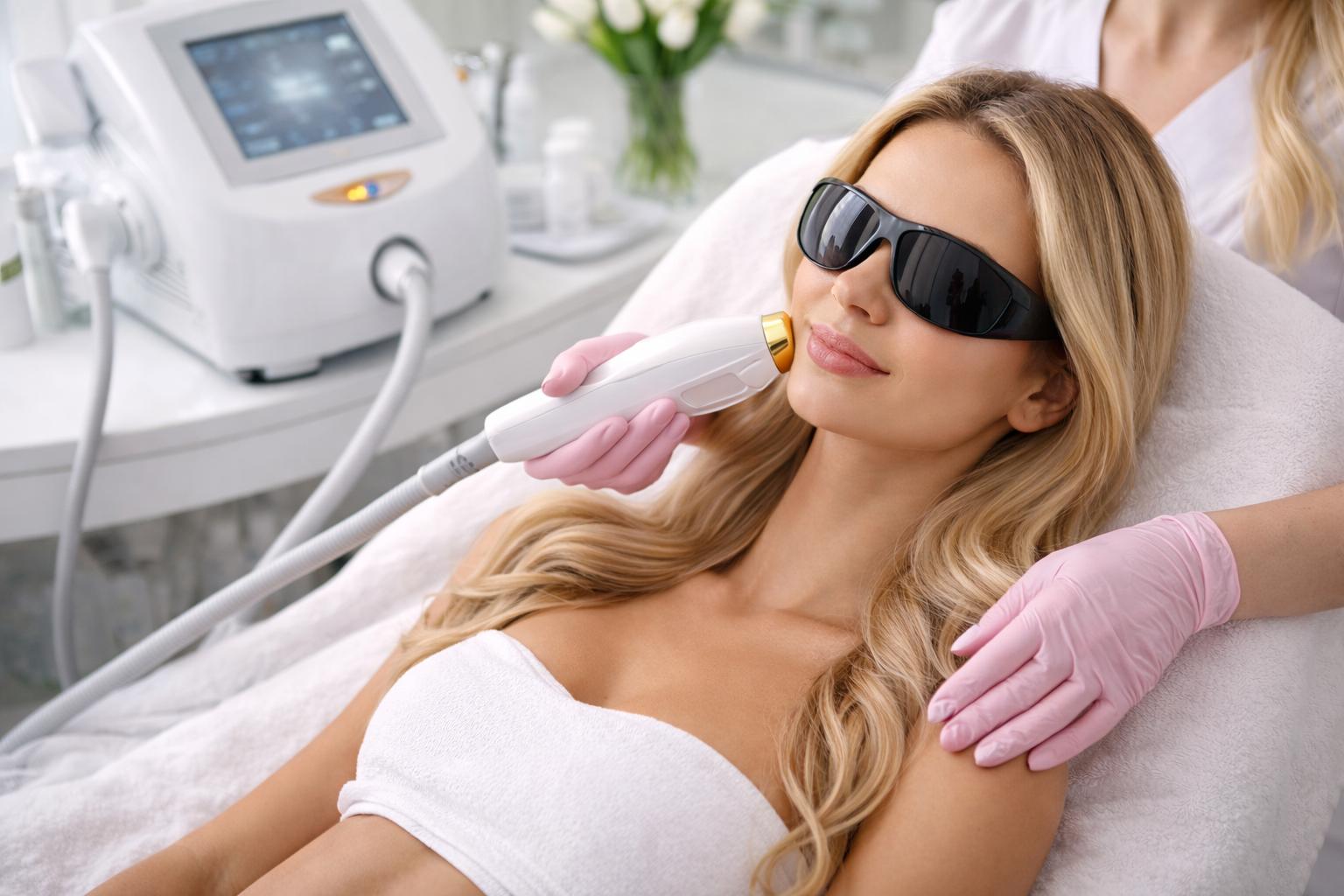
What does IPL laser do & how does it work?
IPL laser in brief
Type: Light therapy
Goal: Skin improvement & rejuvenation
Visible results: Yes
Recovery time: Short
Success factor: Correct settings for each skin type
What happens during an IPL laser treatment?
Light pulses penetrate the skin and are absorbed by pigment or blood vessels.
How does IPL improve the skin?
The heat breaks down pigmentation spots, reduces redness, and stimulates collagen production.
Is the effect permanent with an IPL laser treatment?
Improvements are long-lasting, but aging and sun exposure can cause new concerns to appear.
What can go wrong during an IPL laser treatment?
During an IPL laser treatment, temporary side effects may occur such as redness, a warm or tingling sensation, and mild swelling of the skin. These reactions usually subside within a few hours to one day. In rare cases, complications can arise if the settings are not properly adjusted for the skin type, such as burns or unwanted pigment changes. The risk mainly depends on the specialist’s experience and the equipment used. Therefore, it is important to choose a professional clinic and carefully compare treatments.
Can the skin darken after an IPL laser treatment?
Yes, the treated pigment may temporarily darken before fading. This is a normal part of the process, as IPL light breaks down excess pigment. Within a few days to weeks, the darkened pigment will naturally lighten or flake off superficially. This does not mean the treatment has failed; rather, it shows that the IPL is effectively targeting pigment buildup in the skin.
Which side effects are most common with IPL laser?
The most common side effects are mild redness, a warm sensation in the skin, and sometimes slight swelling. Some people may also feel as if their skin has been lightly sunburned. These reactions are usually mild and disappear within 24 hours. In sensitive skin, recovery may take a bit longer, but serious complications are rare when performed correctly.
When should you contact a doctor after IPL laser?
Contact the treating physician or clinic if you notice blisters, persistent pain, extreme redness, or clear burns that do not subside within one to two days. This could indicate overly strong settings or an unusual skin reaction. Early assessment helps to manage potential complications effectively.
Is IPL laser safe in the long term?
IPL laser has been used for many years in dermatology and cosmetic medicine and is considered safe when performed professionally. The light pulses target pigment and blood vessels without damaging surrounding skin. With correct settings and proper skin assessment, long-term negative effects are very rare. Regular treatments are often used to structurally improve overall skin quality.
Popular IPL applications
Pigmentation spots & sun damage
Rosacea & redness
Acne & acne scars
Skin rejuvenation
Fine lines
IPL Results, Duration & Safety
Improvement in skin tone and texture
Reduction of spots and redness
Collagen stimulation for firmer skin
Results develop gradually over several weeks
Safe when using proper equipment and performed by a specialist
Hoe lang houdt IPL resultaat aan & nazorg
Resultaten zijn vaak zichtbaar na 1–3 sessies
Optimale resultaten na 3–6 behandelingen
Nazorg:
Zon vermijden
SPF gebruiken
Geen sauna eerste dagen
Huid hydrateren
IPL Suitable / Less Suitable Candidates
Suitable if:
You have pigmentation, redness, or acne
You want to address skin aging
You are looking for a non-invasive solution
Less suitable if:
You have very dark skin (risk of pigment changes)
You are pregnant (depending on indication)
You have active skin infections
Is IPL laser suitable for you?
- 1 What is your skin concern?
- 2 How sensitive is your skin?
- 3 Have you had recent sun exposure?
- 4 Are you willing to undergo multiple sessions?
- 5 Do you want gradual, natural results?
IPL Prices, experiences & comparison
Prices vary per clinic and area. Pay attention to experience, equipment, and reviews not just price.
Compare prices in your area
Compare on experience & price Make an appointment immediately
What do people pay attention to in IPL experiences?
Visible results
Comfort during the treatment
Professional consultation
Aftercare advice
Transparency about expectations
Reviews IPL laser treatment
Sammy, my aesthetician, was extremely professional, friendly and very reassuring throughout the treatment, which made the whole experience feel comfortable and relaxed. Hayley was also lovely and very welcoming on reception.
A great experience overall — I’d happily recommend the clinic. Show less »
I had my first laser treatment. I am very pleased with the results Amber talked me through the procedure from start to finish explaining every step. I have no hesitation in recommending this treatment and am looking forward to the second one. I have great trust in Amber and her expertise
I have had my second laser treatment with Amber. The treatment from start to finish was fully explained by Amber. She took great care throughout making sure that I was aware of each stage throughout. I have booked a third session in six weeks time. I can already see a difference in the texture of my skin and I trust Amber explicitly
Amazing chemical peel with Amber last week - it is a real skin booster and Amber is an excellent cosmetic doctor - I trust her explicitly as she is so professional in her knowledge and work Show less »
Their whole team are incredibly kind, caring, knowledgeable and extremely professional.
I trust Dr. Salimi and Parisa’s advice, and expertise, for my botox, filler, IPL laser, polynucleotide treatments and Sculptra.
The team’s level of aftercare is also exceptional. I highly recommend Estetica. Show less »
IPL laser compared with alternatives
IPL vs traditional laser — IPL is milder and more versatile
IPL vs chemical peels — IPL works deeper without peeling
IPL vs microneedling — IPL targets pigmentation and redness more directly
IPL Laser Compare Clinics
Pay attention to:
Specialist’s experience
Type of IPL device
Personalized consultation
Examples of results
Cosmetic specialists in United Kingdom

- Botox zone from
- £ 225,00
- Filler per ml from
- £ 365,00

- Botox zone from
- £ 180,00
- Filler per ml from
- £ 250,00

- Botox zone from
- £ 225,00
- Filler per ml from
- £ 365,00

- Botox zone from
- £ 225,00
- Filler per ml from
- £ 365,00

- Botox zone from
- £ 225,00
- Filler per ml from
- £ 365,00

- Botox zone from
- £ 300,00
- Filler per ml from
- £ 450,00

- Botox zone from
- £ 129,00
- Filler per ml from
- £ 250,00

- Botox zone from
- £ 129,00
- Filler per ml from
- £ 250,00
IPL Laser Differences Between Clinics
Device settings
Number of sessions
Aftercare policy
Pricing structure
Compare clinics in United Kingdom
- Botox zone from
- £ 225,00
- Filler per ml from
- £ 365,00
- Profhilo per 2 ml from
- -

- Botox zone from
- £ 180,00
- Filler per ml from
- £ 250,00
- Profhilo per 2 ml from
- £ 300,00



- Botox zone from
- £ 300,00
- Filler per ml from
- £ 450,00
- Profhilo per 2 ml from
- £ 400,00

- Botox zone from
- £ 129,00
- Filler per ml from
- £ 250,00
- Profhilo per 2 ml from
- £ 195,00
- Botox zone from
- £ 135,00
- Filler per ml from
- £ 210,00
- Profhilo per 2 ml from
- £ 325,00
- Botox zone from
- £ 129,00
- Filler per ml from
- £ 250,00
- Profhilo per 2 ml from
- £ 195,00
- Botox zone from
- £ 129,00
- Filler per ml from
- £ 250,00
- Profhilo per 2 ml from
- £ 195,00
- Botox zone from
- £ 129,00
- Filler per ml from
- £ 250,00
- Profhilo per 2 ml from
- £ 195,00
Frequently Asked Questions about IPL Laser Treatment
What do dermatologists say about IPL?
Dermatologists consider IPL (Intense Pulsed Light) an effective treatment for pigmentation spots, redness, rosacea, sun damage, and unwanted hair. IPL works with a broad light spectrum that is converted into heat to target pigment or blood vessels. Many dermatologists emphasize that proper indication is important: IPL is less suitable for very dark skin types or deep wrinkles. Safety and effectiveness largely depend on correct settings and the experience of the practitioner.
How quickly do you see results after an IPL treatment?
For pigmentation or redness treatments, improvement is often visible within one to two weeks. Pigmentation spots may darken before fading. For hair reduction, treated hairs usually fall out within one to three weeks. Multiple sessions are typically required for optimal results, usually three to six treatments with a few weeks in between.
What are the disadvantages of IPL treatment?
Possible disadvantages of IPL include temporary redness, swelling, or a mild burning sensation immediately after treatment. In some cases, crusts or pigment changes may occur, especially on tanned or dark skin. IPL is less powerful than some lasers, so multiple sessions are often necessary. Incorrect settings can increase the risk of burns or hyperpigmentation.
Why am I not seeing results with IPL?
Lack of results can have various causes, such as incorrectly set energy, unsuitable skin or hair color, hormonal factors, or too few treatment sessions. IPL works best with a contrast between light skin and dark hair. Sun exposure before or after treatment can also reduce effectiveness. A professional skin analysis is essential to set realistic expectations.
How often can you do IPL?
For skin improvement or pigmentation treatments, IPL is usually performed every three to four weeks. For hair reduction, the interval is often around four to six weeks, depending on the hair growth cycle and treated area. Maintenance treatments may be needed once or twice a year to maintain results.
How do you know if an IPL treatment was successful?
A successful IPL treatment is recognized by reduced pigmentation, redness, or visible hair reduction after multiple sessions. The skin appears more even and fresher, and hairs grow back thinner and slower. For hair treatments, treated hairs fall out within a few weeks. The full result is usually assessed after a series of treatments.
IPL laser is a versatile and safe skin treatment that effectively targets pigmentation, redness, acne, and skin aging. Results are natural, gradual, and long-lasting, especially when multiple sessions are followed. Comparing clinics based on experience, price, and reviews increases the likelihood of achieving a beautiful and safe outcome.