Botox for the Chin: Reducing Orange Peel Skin and Dimpling

Drs. Tom van Eijk
Chin Botox is a common term for botulinum toxin treatment of the mentalis muscle, the paired muscle in the centre of the chin. Temporarily reducing excessive mentalis activity may soften chin dimpling, puckering or an orange-peel appearance that becomes more noticeable when you talk, close your mouth or tense your chin.
The treatment affects muscle activity. It does not add volume, increase bony chin projection or directly tighten loose skin. This distinction matters because not every uneven or recessed-looking chin is primarily caused by the mentalis muscle.
A practitioner should assess your chin both at rest and during facial movement before discussing whether treatment may be appropriate. For general information about the treatment category, see Botox and botulinum toxin treatments.
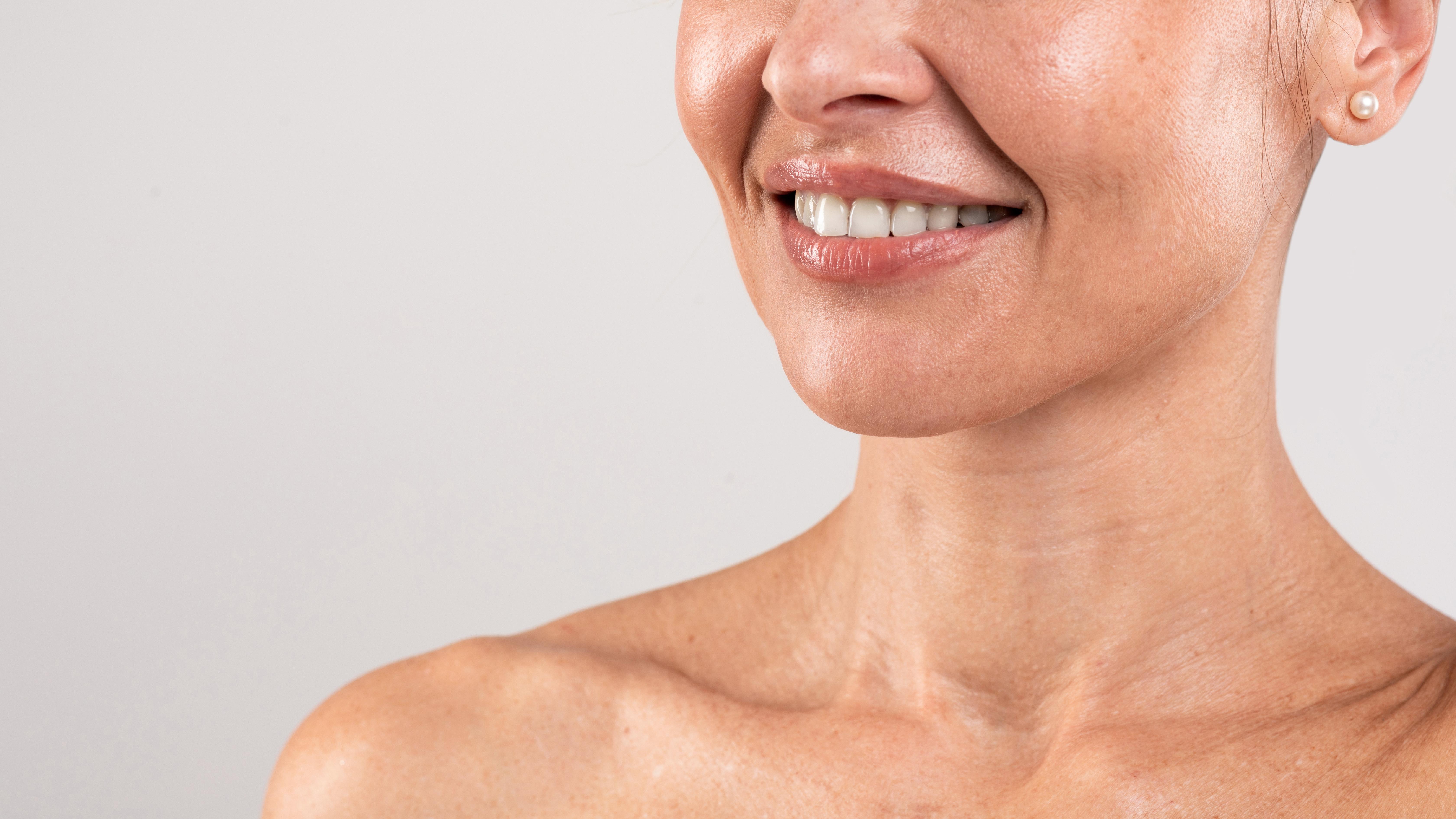
What causes a dimpled or orange-peel chin?
The mentalis muscle sits in the central chin and helps move the lower lip and soft tissue of the chin. When it contracts strongly, it can pull the overlying skin inwards and create visible dimples, puckering or a pebbled texture.
This appearance is often called a dimpled chin, cobblestone chin or orange-peel chin. It may become more noticeable when you speak, purse your lips, close your mouth firmly or deliberately tense the chin.
Botulinum toxin temporarily reduces signalling to the treated muscle. If excessive mentalis contraction is a major reason for the dimpling, reducing that contraction may make the surface of the chin appear smoother during movement.
Dimpling that remains clearly visible when the chin is completely relaxed may also involve skin texture, soft-tissue volume or underlying anatomy. Muscle relaxation alone cannot address every cause of an uneven chin.
What can chin Botox change?
Chin Botox is primarily relevant when the visible change is caused by excessive mentalis contraction.
Chin Botox may help with
Dimpling that becomes more obvious when the chin is tense.
A cobblestone or orange-peel texture caused by mentalis contraction.
Visible puckering of the central chin during facial movement.
A persistently tense appearance caused by strong mentalis activity.
Chin Botox does not directly change
The underlying jaw or chin bone.
Structural chin projection.
Lost facial volume.
Skin laxity.
Every type of crease or uneven skin texture.
The important question is therefore not simply whether dimples are present, but what is producing them. A practitioner can assess this by looking at the chin at rest and while you move the lower face.
What happens during a chin Botox appointment?
- 1 Chin assessed at rest and during movement
- 2 Treatment goal and limitations discussed
- 3 Medical history and relevant medicines reviewed
- 4 Botulinum toxin treatment discussed and prescribed where appropriate
- 5 Mentalis area treated according to the individual plan
- 6 Aftercare and follow-up explained
When does chin Botox start working?
The effect develops gradually rather than immediately. During the days after treatment, mentalis activity may begin to reduce and the dynamic puckering or dimpling of the chin may become less noticeable.
The final appearance depends on factors including your baseline muscle activity, anatomy, treatment plan and individual response to botulinum toxin. A completely motionless chin should not be presented as the expected goal for every person.
The effect is temporary and gradually wears off as muscle activity returns. For a broader explanation of treatment duration, see how long Botox lasts.
Chin Botox before and after photos
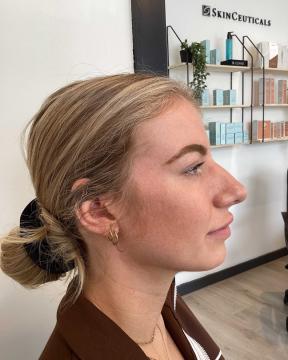
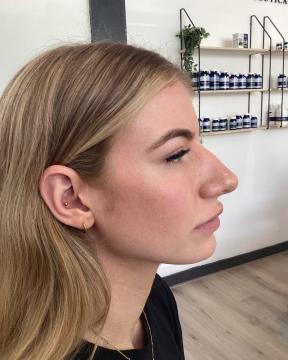
How should you compare chin Botox before-and-after photos?
Before-and-after photographs can illustrate how another person's chin changed after treatment, but they do not predict your own result.
For chin Botox, check whether the person's expression is comparable between images. A relaxed chin in the “after” photograph should not be compared with a strongly contracted chin in the “before” photograph.
Also look at camera angle, lighting, head position and the amount of lower-face movement. For a dedicated visual guide, see chin Botox before and after.
Chin Botox side effects and risks
Temporary reactions around the injection area
Temporary redness, tenderness, swelling or bruising can occur around an injection site. The type and duration of local reactions vary between individuals.
Can chin Botox cause asymmetry?
Temporary asymmetry can occur if the treated muscles respond differently or if botulinum toxin affects nearby muscles. The lower face contains several closely positioned muscles, so assessment of the mentalis and surrounding anatomy is particularly important.
Can chin Botox affect the lower lip or smile?
It can in some cases. The mentalis lies close to muscles involved in lower-lip and mouth movement. Unwanted weakening of neighbouring muscles may temporarily change lower-lip movement, mouth closure or smile symmetry.
What if the result feels too weak or too strong?
The response to botulinum toxin varies. If your chin movement or facial expression changes in a way you did not expect, contact the treating clinic so that it can be assessed rather than attempting to judge the cause yourself.
When should you seek urgent medical help?
Seek immediate medical help if you develop symptoms such as difficulty swallowing, difficulty speaking, slurred speech, breathing difficulty or marked widespread muscle weakness after botulinum toxin treatment. These are not normal local injection reactions.
For broader information about adverse outcomes, see Botox complications.
When does chin Botox need extra medical consideration?
A practitioner should review your medical history before treatment. Extra consideration may be required if there is an infection or inflammation around the intended treatment area, if you have a condition affecting nerve or muscle function, if you use medicines that could be relevant to botulinum toxin, or if you previously experienced an unexpected reaction to treatment.
Pregnancy or breastfeeding also needs to be discussed before any treatment decision. Product information and recommendations can differ, so the practitioner should consider the specific medicine being proposed rather than treating all botulinum toxin products as interchangeable.
If your main concern appears to relate to loose skin, missing volume or structural chin shape rather than mentalis activity, another treatment approach — or no treatment — may be more appropriate.
Is chin Botox an off-label treatment?
It can be, depending on the botulinum toxin medicine used.
UK-authorised botulinum toxin products have specific approved indications. Treatment of the mentalis muscle for cosmetic chin dimpling is not an authorised cosmetic indication for several commonly used products, meaning the treatment may be off-label.
Off-label use means a licensed medicine is being prescribed outside the indication covered by its marketing authorisation. It does not automatically mean that a treatment is inappropriate, but the prescriber should explain what medicine is being proposed, why it is being considered and the relevant benefits, uncertainties and risks.
Aftercare after chin Botox
Your treating clinic should explain what to do after treatment and when to contact them. Follow the instructions you are given for the particular product and treatment plan rather than relying on generic social-media advice.
Contact the clinic if you notice an unexpected change in lower-lip movement, significant asymmetry or another reaction that concerns you.
For general post-treatment guidance, see Botox aftercare.
How much does chin Botox cost in the UK?
Chin Botox prices vary between clinics because pricing models differ. A clinic may price the chin as its own treatment, include it within a wider treatment-area system or use another clinic-specific structure.
When comparing prices, check what the quoted amount actually covers, including whether consultation or follow-up is included.
See the dedicated chin Botox price guide for the pricing information available through Injectablesbooking.
Chin Botox or chin filler: what is the difference?
Chin Botox and chin filler affect different anatomical features.
Chin Botox reduces activity in the mentalis muscle. A filler adds material to soft tissue and is used for volume or contour-related treatment goals. One should therefore not be treated as a substitute for the other without first identifying what is creating the appearance you want assessed.
For a broader comparison of the two treatment principles, see Botox versus fillers.
Chin Botox reviews
From the moment I met him, I was impressed by how thorough and detailed his assessment was. He took a comprehensive medical history, performed an incredibly thorough examination, and, most importantly, was honest and confident in telling me that I did not need any unnecessary procedures. In an industry where overtreatment can sometimes be a concern, I found his integrity and professionalism incredibly refreshing.
What particularly stood out was his willingness to seek a second opinion from Dr Taktouk. It was an honour to meet Dr Taktouk himself, and I greatly appreciated that both specialists independently came to the same conclusion that very little treatment was needed. That level of collaboration and patient-centred care gave me enormous confidence in their recommendations.
The only treatment advised was chin Botox, which I decided to proceed with. Mr Nathan’s injection technique was phenomenal, completely painless and easily the most comfortable injectable treatment I have ever had.
As a maxillofacial surgeon, Mr Nathan brings an exceptional level of clinical expertise. His knowledge of facial and neck anatomy is second to none, and that depth of understanding is exactly what you want when seeking these kinds of treatments. His surgical background gives a level of precision, safety, and confidence that is difficult to match and a massive advantage and reason to visit this clinic.
Most importantly, he never rushed the consultation. He took his time, answered every question thoroughly, and made me feel genuinely listened to. It was without question one of the most in-depth and detailed consultations I have ever experienced.
This is a clinic I will definitely be returning to, and I would wholeheartedly recommend Mr Nathan. If you want someone who understands facial anatomy and a highly skilled pair of surgical hands book in with him. Show less »
How do you compare clinics for chin Botox?
Chin Botox involves the lower face, where small changes in muscle activity can affect the movement of the chin, lower lip and smile. Relevant experience with this specific anatomical area therefore matters when comparing practitioners.
Check whether the practitioner assesses your chin both at rest and during movement. They should be able to explain whether the visible dimpling appears muscle-driven, what treatment may and may not change, which medicine is being considered and what risks are relevant to your individual plan.
Also compare how the clinic handles follow-up and what you should do if the result or movement around the lower face is not what you expected.
For broader practitioner-comparison guidance, see how to choose a Botox practitioner.
Compare clinics offering chin Botox
You can compare clinics offering chin Botox by location and the treatment information available on their Injectablesbooking profiles.
Look beyond the headline price. Consider who will assess and treat you, what information is provided about the treatment, whether relevant follow-up is available and whether the clinic gives you enough information to make your own decision.
Choosing not to proceed after a consultation remains an option.
Compare clinics in United Kingdom

- Botox from
- £ 180,00





- Botox from
- £ 129,00

- Botox from
- £ 129,00

- Botox from
- £ 129,00

- Botox from
- £ 129,00

- Botox from
- £ 129,00

- Botox from
- £ 129,00
Frequently asked questions about chin Botox
What is chin Botox?
Chin Botox is a common term for botulinum toxin treatment of the mentalis muscle. Temporarily reducing excessive mentalis activity may soften dynamic dimpling, puckering or an orange-peel texture that becomes more noticeable when the chin contracts.
What muscle is treated with chin Botox?
The main target is the mentalis, a paired muscle in the centre of the chin. Its contraction moves the soft tissue of the chin and can contribute to a dimpled or cobblestone appearance when it is strongly active.
Can Botox get rid of chin dimples?
It may reduce dimpling when strong mentalis contraction is an important cause. If the dimples are mainly related to skin texture, volume or structural anatomy, reducing muscle activity may have a more limited effect.
Does chin Botox help an orange-peel chin?
It may help when the orange-peel or cobblestone texture appears mainly as the mentalis contracts. An uneven texture that remains at rest can have other contributing causes.
When does chin Botox start working?
The effect develops gradually after treatment rather than appearing immediately. The timing and degree of change vary between individuals and treatment plans.
How long does chin Botox last?
The effect is temporary. Muscle activity gradually returns as the effect of botulinum toxin wears off, and the exact duration varies between individuals, products and treatment plans.
Can chin Botox change my smile?
It can temporarily affect lower-lip or smile movement if nearby muscles are unintentionally weakened. This is one reason why knowledge of lower-face anatomy is particularly important when treating the mentalis.
Can chin Botox make my chin bigger?
No. Botulinum toxin does not add volume or increase the bony projection of the chin. Its purpose in this area is to alter muscle activity.
Can chin Botox fix a recessed chin?
Botulinum toxin does not change the underlying bone or add structural projection. A strongly active mentalis may influence the soft-tissue appearance of the chin, but that is different from correcting a structurally recessed chin.
Is chin Botox the same as chin filler?
No. Chin Botox reduces muscle activity, while chin filler adds material to soft tissue. They address different treatment goals and should not be treated as interchangeable.
Is chin Botox off-label in the UK?
It can be. The authorised cosmetic indications vary between botulinum toxin medicines, and mentalis treatment for chin dimpling is outside the authorised indication for several products. The prescriber should explain which medicine is being considered and whether its use is off-label.
Is chin Botox permanent?
No. The effect of botulinum toxin is temporary. As its effect wears off, activity in the mentalis gradually returns.