Botox chin treatment before and after

Drs. Tom van Eijk
Chin Botox before-and-after photos can show how dimpling and skin movement change when the chin is tensed. These changes are usually related to reduced activity of the mentalis, the muscle in the chin that can pull on the overlying skin during movement.
If muscle activity decreases after treatment, dimpling may appear less pronounced during the same facial movement. Lines or skin texture that were already visible while the chin was relaxed may still remain.
A before-and-after photo only shows what happened for one person. Your anatomy, muscle activity, skin characteristics and treatment plan can be different.
If you first want to understand the treatment itself, read our guide to chin Botox.
Quick links
Chin Botox before-and-after photos
A useful chin Botox before-and-after comparison should show the chin under similar conditions before and after treatment.
This matters particularly for chin dimpling because the appearance of the skin can change substantially depending on whether the mentalis muscle is relaxed or contracted.
When reviewing photos, preferably compare:
tensed before with tensed after;
relaxed before with relaxed after;
a similar camera angle;
the same or very similar head position;
approximately the same distance from the camera;
similar lighting.
If facial expression or photography changes substantially between the two images, the visible difference may appear larger or smaller than it actually is.
Chin Botox before and after photos
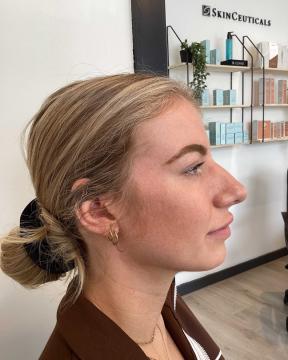
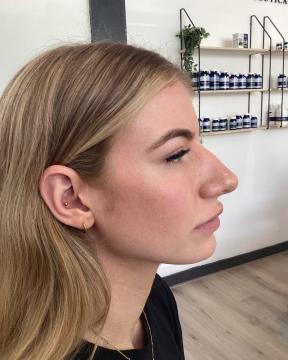
What can visibly change after chin Botox?
The main visible change to look for is how the skin behaves when the chin muscles are active.
Chin dimpling when tensing
Compare whether dimples or a pebbled appearance are less noticeable when the person makes the same chin movement before and after treatment.
Skin movement
The skin may appear less puckered during contraction when activity of the treated mentalis muscle has been reduced.
Movement of the chin
A before-and-after comparison may also show a difference in how strongly the chin contracts. The facial expression needs to be comparable for this to be meaningful.
Lines that remain at rest
Lines, creases or uneven skin texture that were visible when the chin was fully relaxed may remain partly visible.
Chin Botox does not add filler volume or change the underlying bone structure. When interpreting the photos, concentrate primarily on changes that can reasonably relate to muscle activity.
Tensed or relaxed chin: why does it matter?
The mentalis becomes more active when the chin is tensed. This can make dimpling, puckering or a pebbled skin texture much more noticeable.
For a more meaningful comparison:
tensed before = tensed after;
relaxed before = relaxed after.
A photograph showing a strongly tensed chin before treatment and a completely relaxed chin afterwards is not a like-for-like comparison.
Part of the apparent improvement could simply come from the different facial expression.
When reviewing chin Botox before-and-after photos, facial expression should therefore be one of the first things you check.
When should a chin Botox after photo be assessed?
Botulinum toxin does not produce its full treatment effect immediately after the injections.
A photograph taken straight after treatment therefore cannot show the final visible change caused by reduced muscle activity.
When looking at a before-and-after example, check whether the clinic or practitioner explains when the after photo was taken.
If the timing is not provided, it is harder to know which stage of the treatment response the photograph represents.
Why can chin Botox results look different for everyone?
Another person's chin Botox result does not predict exactly what will happen in your case.
Several factors affect what can be seen in before-and-after photos.
Mentalis muscle activity
The strength and pattern of mentalis contraction differ between people. Muscle movement may contribute more strongly to visible dimpling in some people than in others.
Skin characteristics
Not every crease, line or area of uneven texture is caused only by muscle contraction. Features that are already visible while the chin is relaxed may therefore remain.
Individual anatomy
The shape and underlying anatomy of the chin and lower face vary between individuals.
Treatment plan
Treatment planning can also differ according to the person's anatomy, muscle activity and treatment objective.
A good before-and-after image demonstrates what visibly changed for that particular person. It is not a guarantee of the result another person will achieve.
How to compare chin Botox before-and-after photos
- 1 Compare the same facial expression
- 2 Check the camera angle
- 3 Compare the head position
- 4 Check the distance from the camera
- 5 Look for similar lighting
- 6 Check when the after photo was taken
- 7 Check whether other treatments were involved
How can lighting and camera angle distort the result?
An impressive photograph is not automatically a reliable before-and-after comparison.
Different lighting can change the shadows created by chin dimpling and skin texture. Strong side lighting, overhead lighting or softer frontal lighting can make the same surface appear noticeably different.
Camera angle matters as well. A change in angle can alter how chin shape and projection appear in a two-dimensional photograph.
Head position and distance from the camera also affect perspective. A close-up will not show the chin in exactly the same way as an image taken from further away.
The strongest before-and-after comparisons keep the photographic conditions as consistent as reasonably possible.
Five checks for chin Botox before-and-after photos
Is the facial expression the same?
Chin dimpling may become much more noticeable when the mentalis contracts. Avoid comparing a strongly tensed before image with a relaxed after image.
Is the lighting similar?
Changes in the direction or strength of light can alter shadows around dimples, lines and uneven skin texture, making the surface appear smoother or more textured.
Is the camera position comparable?
A different angle, head position or camera distance can change how the shape and projection of the chin appear.
Is the timing of the after photo given?
If you do not know when the after image was taken, it is harder to judge which stage of the treatment response is being shown.
Were other treatments involved?
Check whether the visible change is attributed only to chin Botox or whether fillers or another treatment were also used. Combined treatments make it harder to identify what Botox alone changed.
What can't a chin Botox before-and-after photo tell you?
Even a technically consistent before-and-after photograph cannot tell you everything about the treatment.
A photo alone cannot reliably show:
the amount of product used;
why a particular treatment plan was chosen;
what the treatment felt like for that person;
which potential side effects or risks were discussed;
what aftercare was provided;
how questions or concerns were handled afterwards;
whether the same approach would be appropriate for you.
The chin also sits close to muscles involved in movement around the lower lip and mouth. A static photograph cannot tell you how normal facial movement or function felt after treatment.
Use before-and-after photos as one source of information rather than proof that a clinic, practitioner or treatment will be appropriate for you.
What if your result looks different from what you expected?
Do not assess a chin Botox result using only a photograph taken immediately after the injections. The effect of botulinum toxin develops over time.
If the result remains different from what was discussed at the appropriate review point, or you notice an unexpected change around the chin, lower lip or mouth, contact the clinic or practitioner who treated you.
For more information about unwanted effects and when further assessment may be needed, read about possible Botox complications.
Using before-and-after photos to compare clinics
A clinic displaying a large number of chin Botox photographs is not automatically better than one with fewer examples.
Concentrate on the quality, consistency and transparency of the examples.
Useful before-and-after cases make it clear:
which area was treated;
whether the facial expression is comparable;
whether the photography is consistent;
when the after image was taken;
whether another treatment contributed to the visible change;
whether there are several relevant examples rather than one isolated result.
Photos should only be one part of comparing providers. Also consider the consultation, the practitioner's relevant experience with the area, how risks and expectations are discussed, and what follow-up arrangements are available.
You can also read more about choosing a practitioner for Botox.
Compare clinics in United Kingdom

- Chin Botox from
- £ 180,00





- Chin Botox from
- £ 129,00

- Chin Botox from
- £ 129,00

- Chin Botox from
- £ 129,00

- Chin Botox from
- £ 129,00

- Chin Botox from
- £ 129,00

- Chin Botox from
- £ 129,00
Frequently asked questions about chin Botox before and after
What should I look for in chin Botox before-and-after photos?
Look mainly at changes in chin dimpling and skin movement during the same facial expression. The comparison is more useful when lighting, angle, head position and camera distance are also similar.
Why should the chin be in the same position before and after?
Dimpling can become much more visible when the chin is tensed. Comparing a tensed before image with a relaxed after image can exaggerate the apparent difference.
Can a photo taken immediately after chin Botox show the final result?
No. Botulinum toxin takes time to affect the targeted muscle, so a photograph taken immediately after the injections does not show the final treatment effect.
Will chin Botox remove every dimple, line or crease?
Not necessarily. Changes related strongly to mentalis muscle activity may become less noticeable, while lines or skin texture already visible when the chin is relaxed may remain.
Does chin Botox add volume to the chin?
No. Botulinum toxin does not add filler volume or change the underlying bone structure. The visible change from chin Botox is primarily related to altered muscle activity and associated skin movement.
Why do chin Botox results differ between people?
Muscle activity, skin characteristics, anatomy and treatment planning vary between individuals, so the same type of treatment can produce different visible changes.
How can I tell whether a chin Botox before-and-after photo is a fair comparison?
Compare facial expression, lighting, camera angle, distance and head position. Also check when the after photo was taken and whether any other treatments contributed to the result.
Will I get the same result as someone in a before-and-after photo?
No result can be predicted from another person's photograph. A practitioner can assess your anatomy and muscle movement during a consultation and discuss what may realistically be achievable in your circumstances.