Smoker’s lines fillers

Drs. Tom van Eijk
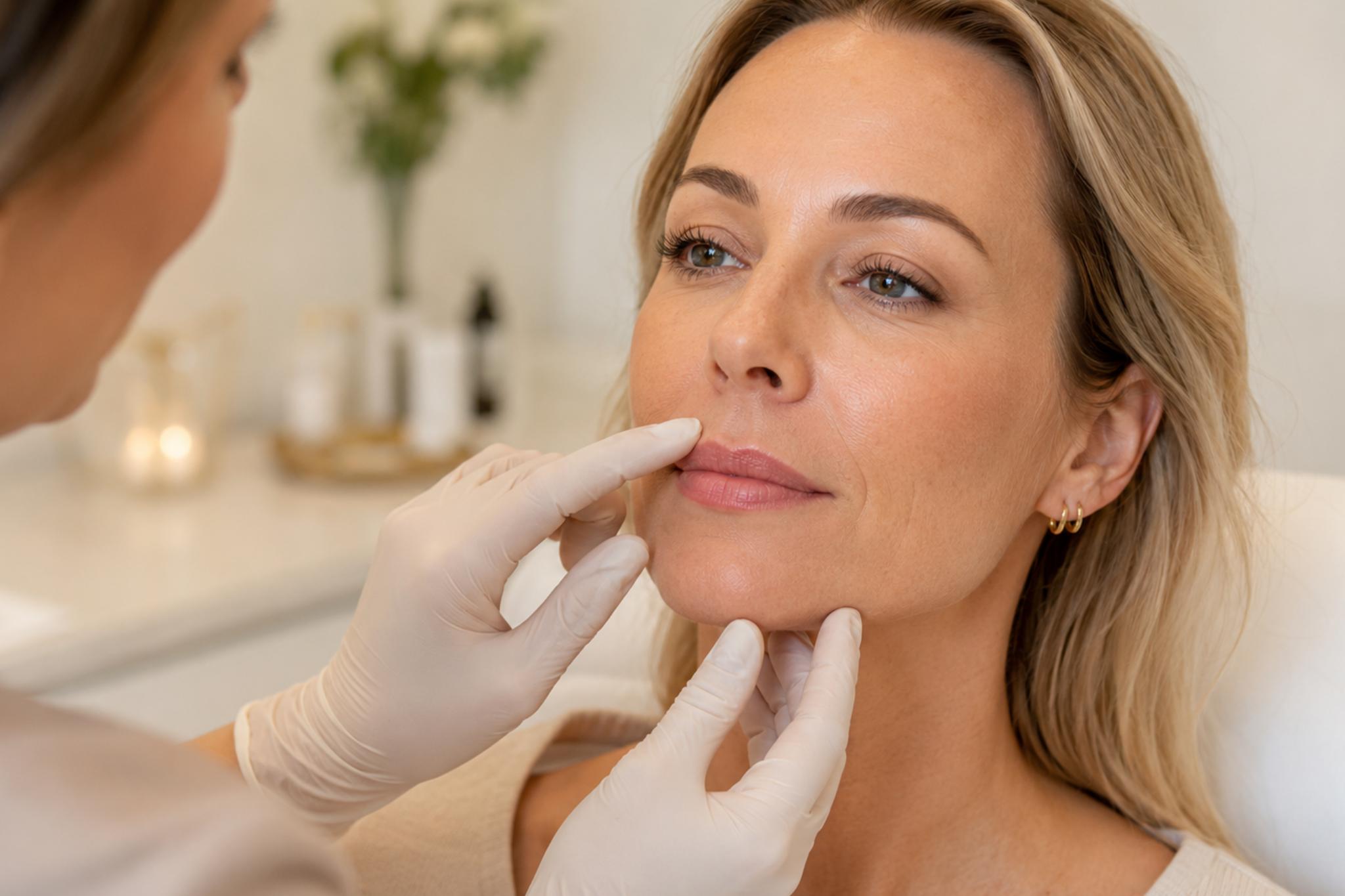
Smoker’s lines filler may be used to soften fine vertical lines above and around the lips, particularly when the lines remain visible while your mouth is relaxed. Treatment does not necessarily mean making your lips fuller: a practitioner should first assess what is contributing to the lines and what filler could realistically change.
Temporary hyaluronic acid filler is commonly considered for this area. The aim may be to soften individual lines or provide subtle support around the upper lip rather than noticeably increase lip volume.
Results vary between individuals, and filler cannot guarantee a completely smooth upper lip.
For a broader explanation of the treatment category, see dermal fillers.
What are smoker’s lines?
Smoker’s lines are fine vertical lines that form above the upper lip or immediately around the mouth. They are also known as lip lines, upper-lip lines or perioral lines.
You do not have to smoke to develop them. Repeated movement of the lips, changes in the skin with age, sun exposure and reduced structural support around the mouth can all contribute.
Lines during movement and lines at rest
Some lines become most noticeable when you talk, purse your lips or make other mouth movements. Others remain visible when your face and mouth are relaxed.
Many people have a combination of both. Looking at the mouth at rest and during movement helps the practitioner understand what is contributing to the lines before deciding whether filler could be useful.
When can filler help smoker’s lines?
Filler may be considered when vertical lines remain visible at rest or when reduced local support around the upper lip contributes to their appearance. Small amounts can be placed selectively to soften individual lines or support the surrounding tissue.
The treatment plan depends on the pattern and depth of the lines, the anatomy around your mouth, the condition of the skin and the result you want to discuss.
Hyaluronic acid fillers are commonly considered because they provide temporary volume and support. There is no single product or technique that is automatically right for every smoker’s line.
For more detail about this type of product, see what hyaluronic acid fillers are.
What can filler not change?
Filler cannot stop the natural ageing process, reverse sun-related skin changes or stop the muscles around your mouth from moving.
It also cannot guarantee that every line will disappear. If additional volume is unlikely to address the main reason your lines are visible, deciding not to have filler may be an appropriate outcome of the consultation.
How does the type of smoker’s line affect the assessment?
Lines mainly visible during movement
If the lines appear primarily while you speak, smile or purse your lips, movement may be an important contributor. Filler adds support or volume but does not stop those muscles from moving.
Lines visible when the mouth is relaxed
When vertical lines remain visible at rest, a practitioner may assess whether carefully placed filler could soften the crease or provide local support.
Very superficial skin lines
If the main issue is the surface texture of the skin rather than loss of support underneath it, adding more volume may have limited benefit.
A combination of factors
Movement, skin changes and loss of structural support can exist at the same time. This is why the treatment plan and likely degree of improvement differ between individuals.
Will smoker’s lines filler make your lips bigger?
Not necessarily. Smoker’s lines can be treated with the aim of softening vertical lines around the upper lip without deliberately creating fuller-looking lips.
However, filler physically adds material to the treated tissue, so its placement and quantity can influence the shape or volume around the lip.
Before treatment, ask the practitioner exactly where the filler would be placed, how much they are considering and whether they expect any visible change in the lip itself.
Treating smoker’s lines and deliberately increasing lip volume are therefore different treatment goals, even though filler may be used in both areas.
What is the best filler for smoker’s lines?
There is no single filler that is best for every person or every smoker’s line.
The practitioner needs to consider the depth and position of the lines, the surrounding tissue, where the product will be placed and how much correction is appropriate. Product properties and injection technique also influence the treatment plan.
Instead of choosing a treatment based only on a brand name, ask why that specific product and technique are being proposed for your upper-lip lines and what degree of change the practitioner expects.
How does smoker’s lines filler treatment work?
- 1 Explain which lines you want assessed
- 2 Assess the mouth while relaxed
- 3 Assess the lips during movement
- 4 Discuss product, placement and amount
- 5 Place the filler in the agreed areas
- 6 Review aftercare and when to seek help
Is smoker’s lines filler painful?
The area around the upper lip can be sensitive, so you may feel the injections. How uncomfortable treatment feels varies between individuals and can also depend on the injection technique and the anaesthetic used.
A clinic may use numbing cream, and some filler products contain a local anaesthetic.
Ask during your consultation what pain relief is used and what sensations you may experience during and shortly after treatment.
What results can you expect from smoker’s lines filler?
A change may be visible immediately after filler is injected, but the first appearance is not necessarily the final result. Temporary swelling, redness or tenderness can make the upper-lip area look different during the early period after treatment.
The intended result is usually to make selected vertical lines less noticeable or improve local support while keeping the mouth proportionate to the surrounding features.
The amount of improvement depends on your starting anatomy, the type and depth of the lines, the product, the amount used and how it is placed.
A completely smooth upper lip cannot be guaranteed.
How long does smoker’s lines filler last?
There is no single duration that applies to every smoker’s lines treatment. Temporary filler gradually reduces over time, and longevity varies according to the product, amount, treatment area and individual factors.
See how long dermal fillers last for the dedicated duration guide.
How should you compare smoker’s lines filler before and after photos?
Before-and-after photos show what happened in an individual case. They do not predict exactly what will happen after your own treatment.
For a more useful comparison, check whether the before and after images use a similar facial expression, camera angle, distance and lighting. Also check when the after photo was taken, because early swelling can temporarily affect how the area looks.
Pay particular attention to the vertical upper-lip lines and lip contour rather than judging the entire face.
See the dedicated guide to filler before and after photos for more guidance on evaluating treatment images.
Before and after smoker’s lines filler


Smoker’s lines filler side effects, risks and aftercare
What temporary reactions can occur?
Swelling, redness, tenderness and bruising can occur after dermal filler treatment. These reactions may temporarily make the mouth area look different from the settled result.
Ask the clinic what they consider an expected reaction, how long they expect it to last and how to contact them if you are concerned.
For a broader overview, see dermal filler side effects.
When should you contact the clinic?
Contact the treating clinic promptly if pain, swelling, skin changes or other symptoms are becoming more severe, appear unusual or are not following the recovery pattern the practitioner explained to you.
Increasing pain, unusual skin discolouration, marked warmth or swelling, or signs of infection require assessment rather than being assumed to be normal recovery.
Can serious complications happen?
Yes. Serious complications are less common than temporary injection reactions, but dermal filler treatment is not risk-free.
One important complication is vascular occlusion, where filler interferes with blood flow. Sudden visual disturbance after filler treatment is a medical emergency and requires immediate assessment.
Read the dedicated guide to filler complications for more detail.
What should you avoid after smoker’s lines filler?
Aftercare instructions can differ according to the treatment and practitioner. Follow the specific advice given by the clinic rather than assuming that generic filler instructions apply to you.
Before leaving, ask what applies to exercise, heat, make-up, skincare and touching or massaging the treated area. Do not massage the filler unless your practitioner has specifically instructed you to do so.
Can smoker’s lines filler be dissolved?
Hyaluronic acid filler can be broken down with hyaluronidase in certain circumstances. This does not mean every unwanted result or every type of filler can be managed in exactly the same way.
A suitably qualified practitioner should first assess what product was used, where it was placed and why dissolving or correction is being considered.
See the dedicated information about hyaluronidase.
How much does smoker’s lines filler cost?
The cost depends on the treatment plan rather than the name “smoker’s lines filler” alone. Factors can include the product used, the amount required, the practitioner or clinic and what is included in consultation, review and aftercare.
When comparing prices, check what product and quantity the price refers to rather than comparing the headline figure alone.
You can review current listed filler costs on Injectablesbooking.co.uk.
How do you compare clinics for smoker’s lines filler?
For smoker’s lines, relevant experience with dermal filler around the mouth and upper lip matters because small differences in product amount and placement can affect both the lines and the lip contour.
When comparing clinics and practitioners, check:
who will actually perform the injections;
the practitioner’s relevant training and professional registration information where shown;
experience treating the perioral area;
which filler product is being proposed and why;
whether your mouth is assessed both at rest and during movement;
what aftercare is included;
how the clinic manages questions or complications after treatment.
Where a practitioner profile on Injectablesbooking shows a professional registration number, you can use that information as part of your checks. Registration alone does not tell you how much experience someone has with smoker’s lines filler, so also look at relevant treatment and anatomical-area experience.
For broader comparison criteria, see how to choose a filler clinic.
Questions to ask during your consultation
What do you think is contributing to my vertical lip lines?
What could filler realistically change, and what is unlikely to change?
Where would you place the filler?
Could the proposed treatment visibly change my lip volume or contour?
Which product would you use and why?
Does existing filler in or around my lips affect the plan?
What should I do if I develop a problem after treatment?
A consultation does not mean you have to proceed with treatment.
Compare clinics in United Kingdom

- Mouth Wrinkles from
- £ 250,00



- Mouth Wrinkles from
- £ 450,00


- Mouth Wrinkles from
- £ 250,00

- Mouth Wrinkles from
- £ 250,00

- Mouth Wrinkles from
- £ 250,00

- Mouth Wrinkles from
- £ 250,00

- Mouth Wrinkles from
- £ 250,00

- Mouth Wrinkles from
- £ 250,00
Experiences with smoker’s lines filler
I Highly recommend Stay Young and will definitely be returning. Show less »
Nicola provides excellent advice and therre is no pressure to have extra work done. It was entirely my choice.
She is really friendly, putting me at ease, as well as being professional.
Her salon is beautiful
I have a review after a fortnight to check.
I highly recommend Nicola Child Aesthetics and looking forward to another visit when it's needed. Her salon is beautiful and her products reasonably priced. Show less »
After just one session, the difference was visible but still very natural — the lines have softened significantly without making my upper lip look puffy or overdone.
The procedure itself was quick and only mildly uncomfortable, and the practitioner took great care to explain everything and tailor the treatment to my face. There was a little swelling and bruising for a few days, but nothing major — and it was well worth it for the refreshed look I’ve gained.
Overall, I’m really happy with the outcome. My lips and the surrounding skin look smoother and I still look like myself — just a slightly more relaxed version! I would definitely recommend this treatment to anyone looking to improve fine lines around the mouth area. Show less »
Frequently asked questions about smoker’s lines filler
Can filler help smoker’s lines?
Filler may soften some vertical lines around the upper lip, particularly when lines remain visible while the mouth is relaxed or reduced local support contributes to them. A practitioner should assess the area before deciding whether filler is appropriate for your circumstances.
Can you get smoker’s lines if you do not smoke?
Yes. Smoking is not the only contributor. Repeated lip movement, skin changes, sun exposure and reduced support around the mouth can also contribute to vertical upper-lip lines.
Will smoker’s lines filler make my lips bigger?
Not necessarily. Filler can be placed with the aim of softening vertical lines rather than deliberately increasing lip volume. However, the product still adds volume locally, so placement and amount can influence the lip contour.
What is the best filler for smoker’s lines?
There is no single best filler for everyone. The choice depends on the lines being treated, the surrounding anatomy, product characteristics, placement and the result being discussed with the practitioner.
Is smoker’s lines filler painful?
The upper-lip area can be sensitive. How treatment feels varies between individuals and depends partly on the injection technique and any anaesthetic used.
How long does smoker’s lines filler last?
There is no fixed duration that applies to everyone. Temporary filler gradually reduces over time, and longevity varies with the product, amount, treatment area and individual factors.
Can filler completely remove smoker’s lines?
Not necessarily. Filler may make selected lines less noticeable, but a completely smooth upper lip cannot be guaranteed. The possible degree of improvement depends on what is contributing to the lines and the treatment plan.
What are the risks of smoker’s lines filler?
Temporary swelling, redness, tenderness and bruising can occur. More serious complications are less common but are possible, including problems with blood flow. Your practitioner should explain the relevant risks and what to do if you develop concerning symptoms.
What if I already have filler in my lips?
Tell the practitioner about previous filler treatments and, if known, the product used and when it was injected. Existing filler in or around the lips may affect the assessment and treatment plan.
How do I choose a practitioner for smoker’s lines filler?
Compare relevant training, professional registration information where applicable, experience with dermal filler around the mouth, the proposed product and treatment plan, aftercare and how complications are managed. Injectablesbooking profiles can also show practitioner and clinic information to help you compare options.