Botox cheeks

Drs. Tom van Eijk
Botulinum toxin may sometimes be used in or around the cheek for carefully selected movement-related lines, but Botox for general cheek wrinkles is not a standard licensed cosmetic indication in the UK. Whether it is relevant depends on what is causing the lines and exactly where they appear.
Lines that appear mainly when you smile can be influenced by facial movement, while persistent cheek creases may also relate to skin quality, loss of elasticity or changes in facial volume. Standard botulinum toxin does not replace lost cheek volume.
The cheek is also close to muscles involved in smiling and moving the mouth. For this reason, the exact anatomy and injection position matter. A practitioner should assess your face both at rest and during expression before deciding whether botulinum toxin is appropriate.
For a broader explanation of the treatment category, see our guide to Botox.
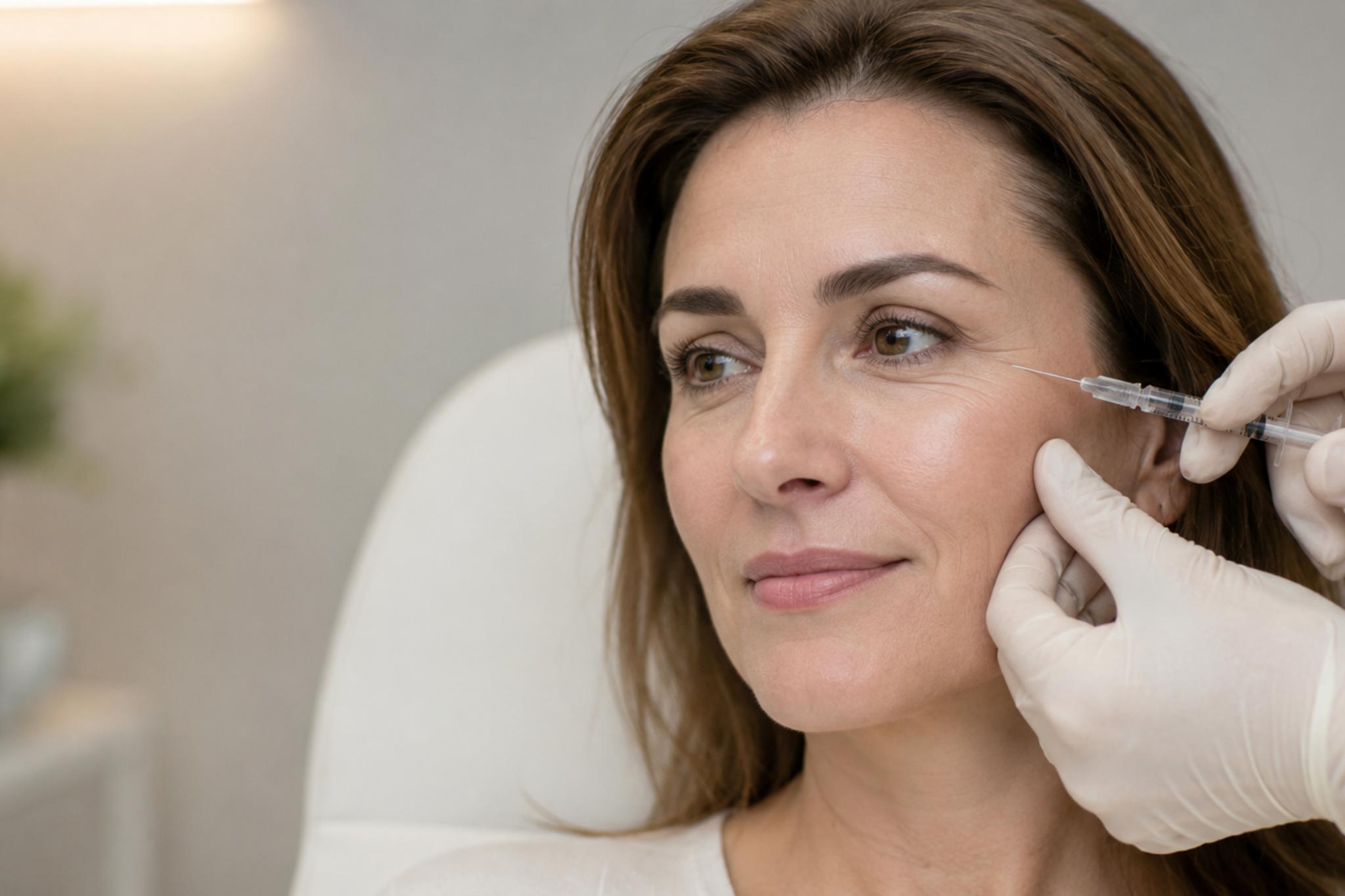
What is cheek Botox?
“Cheek Botox” is an informal description rather than one standardised treatment. It can refer to the use of botulinum toxin in a carefully selected part of the cheek or close to the cheek to reduce activity in a particular muscle.
Botox is a brand of botulinum toxin type A. Different botulinum toxin products are available in the UK, and their units, authorised uses and dosing instructions are not interchangeable.
The important question is therefore not simply whether you have “cheek wrinkles”. A practitioner needs to identify which movement or anatomical change is creating the line.
For example, wrinkles extending from the outer corner of the eye are usually considered separately as crow's feet. Lines lower on the cheek may have a different cause and may not respond to botulinum toxin in the same way.
Lines beside the eyes
Lines spreading from the outer corners of the eyes when smiling may belong to the crow’s-feet area rather than the cheek itself.
Read more about Lines beside the eyes.
Cheek folds caused by volume changes
Botulinum toxin relaxes muscle activity; it does not replace cheek volume. The treatment approach therefore depends on what is creating the crease.
Read more about Cheek folds caused by volume changes.
Which cheek lines might be assessed for Botox?
Botulinum toxin is most relevant to wrinkles that are influenced by repeated muscle contraction. On the cheek, this distinction needs particular care because smiling naturally moves several muscles across the mid and lower face.
A practitioner may assess:
whether the line is visible only during smiling or also at rest;
its position in relation to the eye and mouth;
which facial muscles contribute to it;
whether skin laxity or volume change contributes more than muscle movement;
your existing facial movement and symmetry;
whether previous injectable treatments have changed the area.
If a cheek crease remains prominent when your face is completely relaxed, relaxing one muscle may not address its main cause.
Choosing not to treat the area is also a reasonable outcome of the consultation.
Who may consider cheek Botox?
Someone may ask about cheek Botox because they notice small creases or bunching of the cheek skin during facial expression, particularly when smiling.
That does not automatically mean botulinum toxin is the appropriate treatment. The line may come from movement, skin elasticity, facial volume, or a combination of factors.
Because treating the wrong muscle can alter facial movement, the consultation should focus on the exact line rather than treating the entire cheek as one “Botox area”.
When comparing providers, you can also read our guide to choosing a Botox doctor.
What happens before cheek Botox?
- 1 Identify the exact cheek line or movement
- 2 Assess your face at rest and while smiling
- 3 Discuss whether botulinum toxin is appropriate
- 4 Review the product, prescription, risks and expected limitations
- 5 Decide whether to proceed with treatment
- 6 Receive treatment-specific aftercare and follow-up information
How is Botox injected into the cheek area?
There is no single standard injection pattern called “cheek Botox”. Placement depends on the exact muscle being considered and the reason for treatment.
This matters particularly around the upper cheek because the muscles responsible for smiling sit close to treatment areas around the eye. Product information for BOCOUTURE, for example, specifically warns that injections used for crow’s feet should avoid being placed too close to the zygomaticus major muscle because this can affect the lip.
The practitioner should therefore assess facial movement before deciding on injection points rather than treating a fixed diagram or a generic “cheek zone”.
If the proposed use falls outside the licensed indication for the specific botulinum toxin product, this should be explained during the consultation.
What can cheek Botox actually change?
Where a carefully selected cheek line is strongly influenced by muscular movement, reducing that movement may soften how prominently the line appears during facial expression.
The aim should not be to stop normal cheek movement completely. Smiling involves coordinated movement of multiple muscles, and changing one area can affect the balance of the expression.
Botulinum toxin also has clear limitations. It does not replace lost facial volume and should not automatically be expected to correct static folds, loose skin or every type of cheek wrinkle.
A consultation is therefore more useful than choosing treatment based only on the location of the line.
How quickly does cheek Botox work?
There is no single evidence-based timeline that should be promised for “cheek Botox” as a category, because the term can describe different injection locations and techniques and cheek wrinkles are not a standard licensed cosmetic indication.
Botulinum toxin effects generally develop gradually rather than immediately. Your practitioner should explain when they expect the specific product and technique being proposed to take effect and when the result should be reviewed.
Do not judge the result immediately after the injections.
How long does Botox in the cheeks last?
There is no reliable universal duration for cheek Botox because treatment can involve different muscles, techniques and botulinum toxin products.
Your practitioner should explain the expected duration for the exact treatment being considered. Product units are not interchangeable between different botulinum toxin preparations, so a dose or result from one product should not automatically be compared directly with another.
If you feel the result has worn off, another consultation should take place before deciding whether treatment should be repeated.
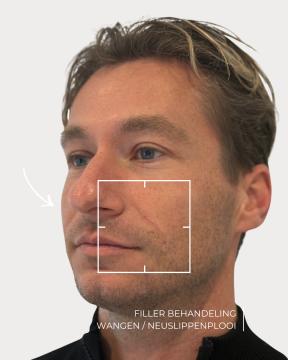
Botox for cheeks before and after
Before-and-after photographs can help you understand the type of cheek line a clinic has treated and the degree of change achieved in another person.
However, they are most useful when the photographs show the same facial expression, similar lighting and the same treatment area. A photograph of cheek filler, cheek augmentation or another treatment should not be presented as evidence for cheek Botox.
Individual results vary, and another patient's photograph cannot predict your own result.
Botox for cheeks before and after
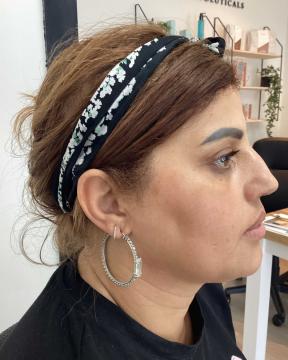
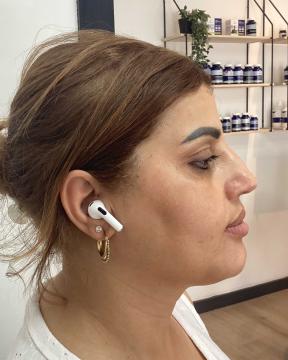
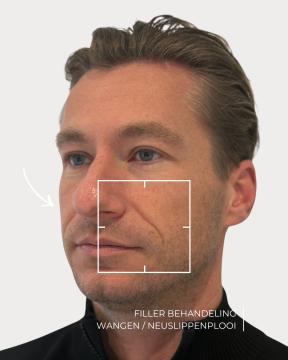
Risks and aftercare for cheek Botox
Temporary reactions after injections
Injection-site redness, tenderness, swelling or bruising can occur after botulinum toxin injections. Other reactions vary according to the product and area treated. Ask the practitioner what reactions are expected for the particular treatment being proposed.
Can cheek Botox affect your smile?
It can if botulinum toxin affects a nearby muscle involved in smiling or moving the mouth. Possible unwanted effects can include altered movement, weakness or facial asymmetry. This is one reason why precise anatomical assessment is particularly important in the cheek area.
What should you do after treatment?
Follow the instructions supplied for your specific treatment and botulinum toxin product. Avoid relying on generic social-media aftercare rules because advice may differ depending on the area and technique. Our detailed Botox aftercare guide explains the subject separately.
When should you seek urgent medical help?
Rarely, the effects of botulinum toxin can spread beyond the treatment area. Seek urgent medical attention if you develop symptoms such as difficulty swallowing, slurred speech or difficulty breathing after treatment.
When might Botox not address the cheek concern?
Not every cheek line is primarily caused by muscle contraction.
Botulinum toxin may have limited value when the main concern is:
loss of cheek volume;
a crease that remains clearly visible at rest;
reduced skin elasticity;
changes in skin texture;
folds caused by several anatomical factors rather than one muscle.
This is why the first stage should be identifying the cause of the visible line rather than deciding in advance that Botox is required.
What about micro-Botox or mesobotox on the cheeks?
Some providers use terms such as micro-Botox, microtoxin or mesobotox for techniques involving small, relatively superficial amounts of botulinum toxin.
These terms do not describe one universally standardised treatment, and they should not be confused with the licensed cosmetic indications and injection techniques described in the product information for individual botulinum toxin medicines.
If a clinic proposes this type of treatment for your cheeks, ask what product is being used, what the intended treatment target is and whether the proposed use is licensed or off-label.
How much does cheek Botox cost in the UK?
There is no cheek-Botox price range included on this page because prices should be based on current UK Injectablesbooking data rather than transferred from the Dutch page or taken from competitor clinics.
A clinic may price botulinum toxin according to the treatment area, product, amount required or its own pricing structure. If the cheek treatment is off-label or individually planned, it may not appear as a standard “one area” treatment.
For broader UK pricing information, see our Botox costs guide.
Reviews mentioning cheek Botox
I had the skin rejuvenation package for my face, using the BTL Exilis Ultra 360 radiofrequency machine, which I had read lots of good things about online (really pleased when I found out that it had come to Taunton).
I wanted skin tightening and removal of some lines, especially on my forehead, eyes and cheek lines (Nasolabial folds), which had got worse over the years.
Smita was terrific. She explained everything really well and was very professional. The treatment itself took about 45 mins and was pain free, and she took her time. I did not feel rushed. The local location at Swan Retreat in Taunton was very nice, the treatment room had a calm atmosphere and was very peaceful. It also had lots of free parking so getting there and home was easy after the treatment.
I am really happy with the results so far, and have 2 more treatments to go but my skin already looks tighter, brighter, smoother and the lines are reduced as I wanted.
Really happy with Serenity Women’s Clinic.
They also do anti wrinkle Botox injections, which I want to have in the future. Show less »
How to compare clinics for Botox in the cheeks
Because cheek treatment can involve muscles used in facial expression, compare more than the headline price.
Useful questions to ask include:
Who assesses whether botulinum toxin is appropriate?
Who prescribes the medicine?
Which botulinum toxin product is being proposed?
Is that product authorised for use in the UK?
Is the intended cheek use licensed or off-label?
What experience does the practitioner have with this exact anatomical area?
What change are they aiming to create?
How will they try to preserve normal facial movement?
What happens if unwanted asymmetry or weakness develops?
Is follow-up available if you have concerns?
Botulinum toxin is a prescription-only medicine in the UK. Comparing the consultation, treatment planning and follow-up process can therefore be as important as comparing price.
For more detail about provider selection, see how to compare Botox clinics.
Compare clinics offering Botox treatments
Clinic profiles can help you compare information such as location, treatment availability, listed prices and reviews.
For cheek Botox specifically, confirm with the clinic that it offers treatment for the exact cheek concern you want assessed. A clinic listing general Botox does not necessarily mean that it treats cheek lines.
Compare clinics in United Kingdom
- Cheekbone fillers from
- £ 450,00




- Cheekbone fillers from
- £ 300,00

- Cheekbone fillers from
- £ 300,00

- Cheekbone fillers from
- £ 300,00

- Cheekbone fillers from
- £ 300,00

- Cheekbone fillers from
- £ 300,00

- Cheekbone fillers from
- £ 300,00
Frequently asked questions about Botox for cheeks
Can Botox be injected into the cheeks?
Botulinum toxin may be used in carefully selected areas of the cheek, but general cheek wrinkles are not a standard licensed cosmetic indication for Botox in the UK. A practitioner should first identify what is causing the line and whether muscle movement is an important factor.
Does Botox remove cheek wrinkles?
Not all cheek wrinkles respond to botulinum toxin. It may soften some movement-related lines, but it does not replace lost cheek volume and may have limited effect on lines mainly caused by skin laxity or other structural changes.
Is cheek Botox the same as crow's-feet Botox?
No. Crow’s feet are lines around the outer corners of the eyes. Cheek lines sit lower on the face and may involve different muscles and causes, although the areas can be close to one another.
Can cheek Botox change your smile?
Unwanted changes in facial movement are possible if botulinum toxin affects nearby muscles involved in smiling. Precise assessment and injection placement are therefore particularly important around the cheek.
Is cheek Botox the same as cheek filler?
No. Botulinum toxin reduces activity in selected muscles, whereas dermal filler is used to add or restore volume. Which approach, if any, is appropriate depends on the cause of the cheek concern.
How long does cheek Botox last?
There is no single reliable duration for “cheek Botox” because different muscles, products and techniques may be involved. Ask the practitioner what duration they expect for the exact treatment being proposed.
How quickly will I see cheek Botox results?
Botulinum toxin does not work immediately, but a cheek-specific timeline should not be promised without knowing the product and technique. Your practitioner should explain when the treatment should be assessed.
What are the risks of Botox in the cheek?
Possible effects include temporary injection-site reactions and unintended weakness or asymmetry if nearby muscles are affected. Rarely, botulinum toxin can cause serious effects beyond the treatment area. Seek urgent medical help for swallowing, speech or breathing difficulties after treatment.
How do I choose a clinic for cheek Botox?
Compare who assesses and prescribes the treatment, the product being used, the practitioner’s experience with the cheek area, how risks are explained and what follow-up is available. Also ask whether the proposed treatment is licensed or off-label.
Should every cheek wrinkle be treated with Botox?
No. Cheek lines can result from facial movement, skin characteristics, volume changes or several factors together. A consultation may conclude that botulinum toxin is unlikely to address the main cause, and choosing not to have treatment remains an option.