Rejuran vs fillers

Drs. Tom van Eijk
Rejuran and dermal fillers are injectable treatments, but they have different primary purposes. Rejuran is a polynucleotide-based product associated with skin-quality treatments, while conventional volumising fillers are used to add volume, shape facial contours or address certain folds.
Is Rejuran a filler? Rejuran is not a conventional volumising dermal filler. It is a polynucleotide-based injectable product primarily discussed for selected skin-quality concerns rather than restoring significant facial volume.
The main difference is the result each treatment is intended to achieve. Rejuran is commonly discussed for concerns involving skin texture and fine lines. Dermal fillers may be considered when changes in facial volume or structure are the main concern.
Neither treatment is automatically better. The appropriate option depends on your skin, facial anatomy, medical history, the exact product and what you hope to address.
This comparison explains how the treatments differ in their intended effects, results, recovery, risks and costs.
Compare treatments near you
Compare on experience & price Make an appointment immediately
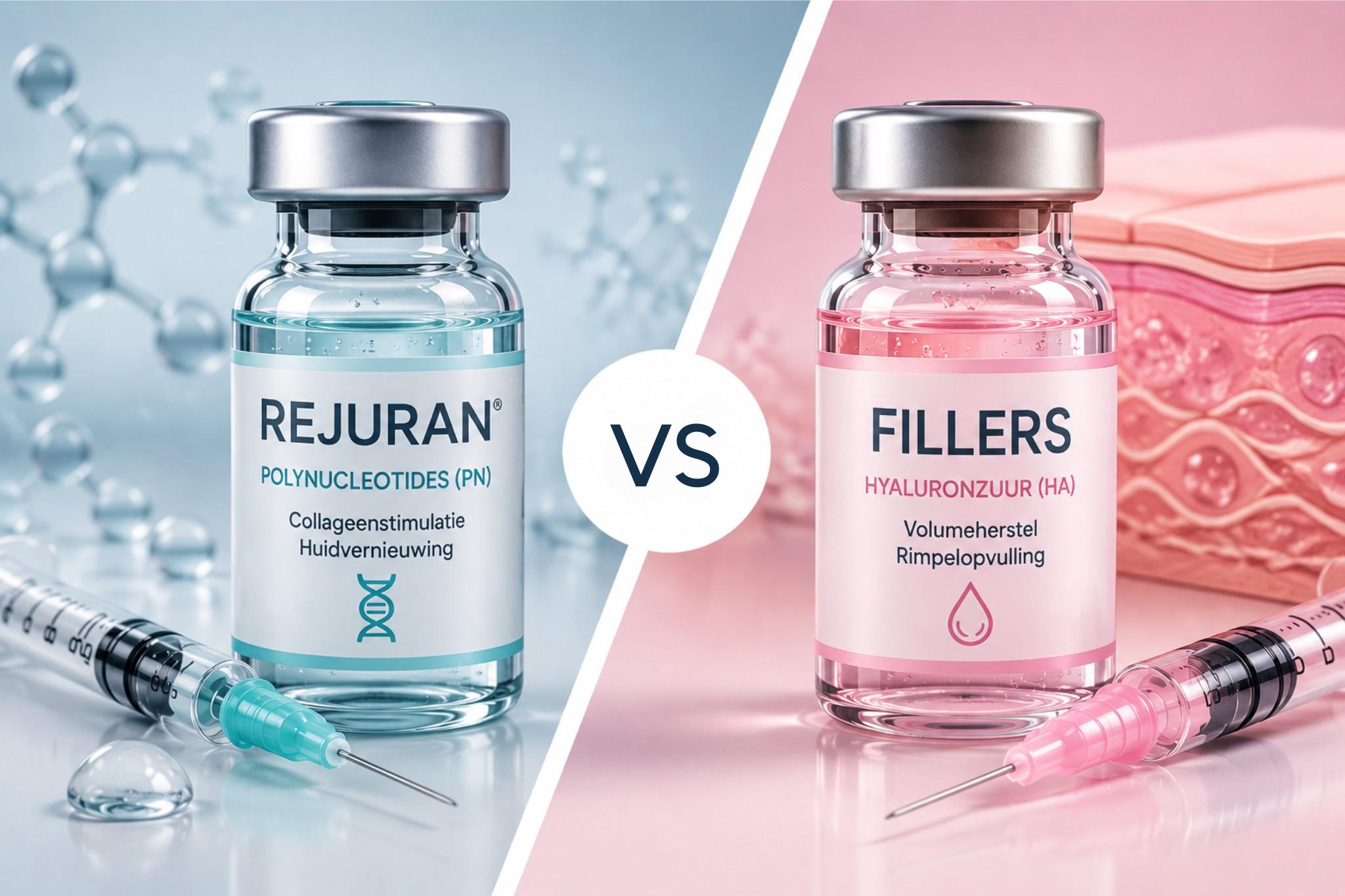
Which concerns may Rejuran or fillers address?
The most useful way to compare Rejuran with dermal fillers is to identify the concern you want assessed.
Fine lines and uneven skin texture
Rejuran may be discussed for concerns involving fine lines and skin texture. However, results vary, and the evidence depends on the specific product and treatment indication.
Loss of facial volume
Conventional volumising fillers may be considered when the main concern is reduced facial volume or changes in contour. Rejuran is not intended to create the same structural volume effect.
Cheeks, chin and facial contours
When the aim is to change cheek projection, chin shape or other facial contours, the discussion usually concerns structural treatments rather than skin-quality improvement.
Under-eye concerns
Fine lines, thin-looking skin, hollowness and puffiness are different concerns. Neither Rejuran nor filler is appropriate for every under-eye issue. This area requires careful assessment because of its anatomy and the potential risks of injections.
Acne scars
Acne scars differ in type and depth. Rejuran should not automatically be considered more suitable than fillers or other procedures. A practitioner needs to assess the scar structure before discussing treatment options.
A consultation may establish that neither treatment is appropriate or that another approach would better address the concern.
How Do Rejuran and Filler Results Compare?
Rejuran and conventional volumising fillers are intended to address different concerns.
Rejuran: Primarily discussed for selected skin-quality concerns, including texture and fine lines. Any visible change may develop gradually and depends on the product and individual response.
Dermal fillers: Often used to restore volume, alter facial contours or address selected folds. Changes in fullness or contour may be visible relatively soon, although swelling can affect the initial appearance.
Treatment schedule: The number of appointments depends on the specific product, treatment area and proposed treatment plan.
Duration: Neither treatment has one universal duration. Results depend on product characteristics, treatment technique and individual circumstances.
Recovery: Both can cause temporary redness, swelling, tenderness or bruising, but their risk profiles differ.
A consultation should establish which concern is being assessed and whether either treatment is appropriate.
How do Rejuran and dermal fillers work differently?
Rejuran and dermal fillers differ in their ingredients and intended effects.
Rejuran
Rejuran is a brand associated with injectable polynucleotide (PN) products. Polynucleotides are DNA-derived substances being studied for their potential effects on skin quality and tissue responses.
Rejuran is generally discussed for concerns involving the appearance of skin texture and fine lines rather than significant facial volume replacement. Its formulation, intended use and supporting evidence need to be considered for the exact product.
Dermal fillers
Many conventional dermal fillers contain hyaluronic acid, although other filler materials are also used. Volumising fillers are placed within tissues to change contours, add volume or soften certain folds.
A visible change in fullness or shape may be apparent relatively soon after filler treatment, although swelling and the settling process can affect the initial appearance.
The key distinction
Rejuran should not be expected to provide the same structural volume effect as a conventional volumising filler. Likewise, a filler used for volume should not automatically be considered a substitute for a skin-quality treatment.
Both require an individual assessment to determine whether their intended effects are relevant to a particular concern.
Before and after photos of Rejuran
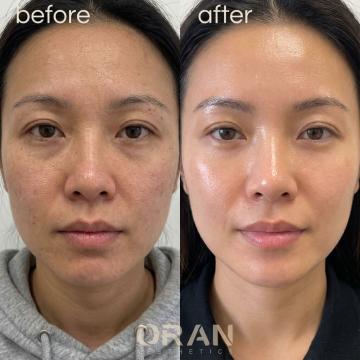
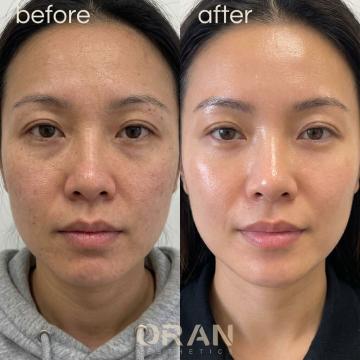
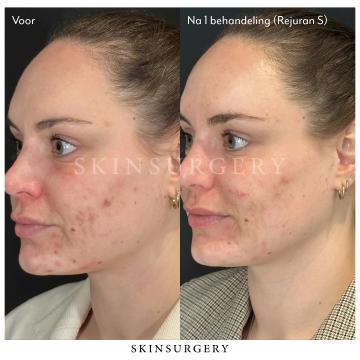
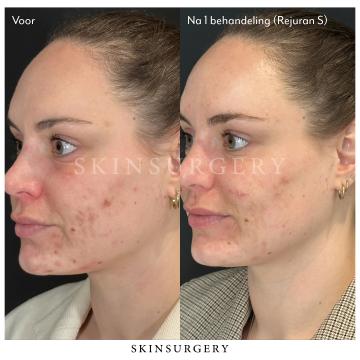
Rejuran before and after vs filler before and after
Before-and-after photos can help you understand the difference between skin-quality improvement and volume correction. Rejuran before-and-after photos usually focus on texture, fine lines, hydration and overall skin quality. Filler before-and-after photos usually show changes in shape, contour, volume or deeper folds.
Photos should never be treated as a guarantee. Lighting, angles, facial expression, skin type, number of sessions and practitioner technique all affect how results appear.
Cosmetic specialists in United Kingdom








How do results, recovery and risks compare?
Rejuran and dermal fillers are intended to produce different types of results, so comparing them by speed or duration alone can be misleading.
Conventional volumising fillers may create an early visible change in fullness or contour. Rejuran is more commonly discussed in relation to gradual changes in skin quality rather than immediate structural volume.
There is no single timeline or duration that applies to every Rejuran product or dermal filler. Results depend on the product, treatment area, technique and individual response.
Recovery
Both treatments may cause temporary redness, swelling, tenderness, bruising or visible injection marks. Rejuran may also leave small raised areas after injection, depending on the technique.
The recovery period varies. Neither treatment should automatically be described as having no downtime.
Possible complications
Injectable procedures can cause complications beyond ordinary swelling and bruising. Dermal fillers can rarely interrupt blood flow to tissue, potentially causing serious injury. Visual complications have also been reported after facial filler injections.
Unusual or increasing pain, marked skin discolouration or other concerning symptoms require urgent medical assessment. Sudden changes in vision or stroke-like symptoms after a facial injectable procedure require emergency medical attention: call 999.
Before any treatment, ask about the specific product, potential risks, recovery expectations and arrangements for managing complications.
Aftercare and recovery
Always follow the aftercare advice from your clinic. General aftercare after Rejuran or fillers may include:
avoiding intense exercise for a short period;
avoiding sauna, sunbeds and heat;
not rubbing or massaging the area unless told to;
avoiding make-up directly after treatment if advised;
using gentle skincare;
protecting the skin from strong sun exposure.
Recovery can vary. Rejuran may leave temporary injection marks or small bumps. Fillers may cause swelling or bruising, especially in areas such as the lips or under eyes.
How much do Rejuran and fillers cost in the UK?
The cost of Rejuran or a dermal filler treatment depends on the product, treatment area, clinic and proposed treatment plan.
Rejuran may be priced per session or according to a course of treatments. Dermal fillers may be priced by product quantity, anatomical area or another clinic-specific pricing structure.
A single appointment price is therefore not always a meaningful comparison. Check exactly which product is included, the pricing unit, whether a consultation or follow-up is included and whether additional sessions may be needed.
Current UK prices should be based on verified clinic information for the relevant product. Prices from another country or for a differently defined treatment cannot be used as a reliable comparison.
The full proposed treatment plan and associated charges should be explained before any decision is made.
Read more about Rejuran cost and choosing a Rejuran practitioner if you want to compare clinics more carefully.
How should you choose between Rejuran and fillers?
Choosing between Rejuran and dermal fillers starts with understanding the specific concern you want assessed.
A practitioner should consider your skin characteristics, facial anatomy, medical history, previous treatments and expectations. The consultation should explain what the proposed product is intended to do, what evidence supports its use and which risks or limitations apply.
Check the practitioner's professional registration, relevant experience and arrangements for managing complications. Ask for the exact product name and information about its regulatory status and suitability for use in the UK.
If both skin-quality and volume-related concerns are present, different treatment options may be discussed. Combining treatments is not automatically necessary or more effective, and any proposed plan requires individual assessment.
Injectablesbooking is an independent clinic comparison and booking platform, not a treatment clinic. Clinic information and patient reviews can support your research, but they do not replace professional clinical advice.
Choosing not to proceed with an injectable treatment remains a valid option.
Compare clinics in United Kingdom

- Rejuran from
- £ 295,00










Frequently asked questions
Does Rejuran add volume like dermal fillers?
Rejuran is not primarily intended to create the structural volume associated with conventional volumising fillers. It is generally discussed for skin-quality concerns rather than changing facial contours.
Is Rejuran better than dermal fillers?
Neither is universally better. Volumising fillers may be considered for changes in facial volume or contour, while Rejuran may be discussed for skin texture and fine lines. Suitability depends on the individual concern and product.
Which has more downtime, Rejuran or fillers?
Both can cause temporary redness, swelling, bruising, tenderness and injection marks. The extent of these effects depends on the product, anatomical area and technique.
Can Rejuran and dermal fillers be combined?
Different treatments may be considered within an individual plan, but combining them is not automatically appropriate or more effective. A practitioner should explain the rationale, risks and timing.
Compare treatments near you
Compare on experience & price Make an appointment immediately