Mouth corner fillers

Drs. Tom van Eijk
Mouth corner filler may provide subtle support when loss of volume or tissue support contributes to downturned mouth corners. A temporary hyaluronic acid dermal filler is usually used for this purpose.
Mouth corner filler is not suitable for every cause. Strong muscle activity, skin laxity or changes elsewhere in the lower face may require a different approach. During a consultation, the practitioner should assess your mouth at rest and in motion, as well as your chin, jawline and cheeks.
The aim is to soften the downturned appearance while maintaining natural expression. Results vary, and treatment cannot create a permanent smile or guarantee a lift.
Mouth corner filler is a medical treatment. Your suitability, the product and the amount required should be determined during a personal consultation.
Read more about filler treatment.
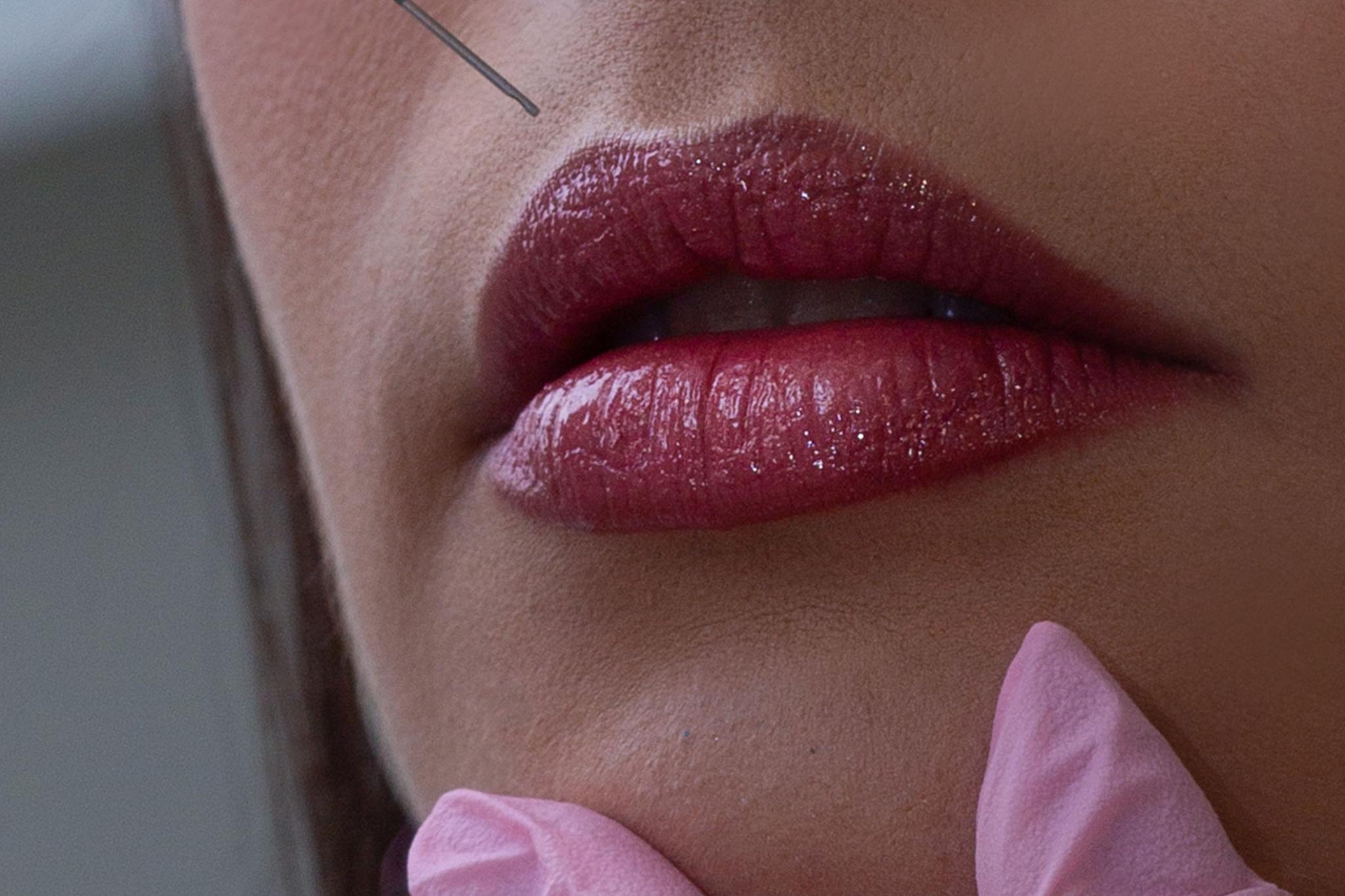
What is mouth corner filler?
Mouth corner filler uses a temporary hyaluronic acid gel to support tissue around the point where the upper and lower lips meet. It may be considered when reduced volume or structural support contributes to a downturned appearance.
The filler adds volume or support. It does not stop the muscles around the mouth from moving.
What can mouth corner filler change?
Depending on your anatomy and treatment plan, mouth corner filler may:
provide subtle support beneath the mouth corners;
soften shadows beside the mouth;
improve the transition between the mouth and lower face;
create a more balanced appearance at rest.
The change should usually be subtle. Mouth corner filler cannot fully correct significant skin laxity or guarantee perfectly level mouth corners.
Is mouth corner filler the same as lip filler?
No. Lip filler is used to change lip volume, shape or definition. Mouth corner filler is placed beside or beneath the mouth corners to provide support.
Why do mouth corners turn down?
Several factors may contribute:
reduced volume and tissue support;
activity of the depressor anguli oris, or DAO, muscle;
skin laxity;
changes in the chin, cheeks or jawline;
natural facial asymmetry;
inherited facial proportions;
ageing, sun exposure, smoking or changes in weight.
More than one factor may be involved. The practitioner should therefore assess both the structure and movement of the lower face.
Read more about what are dermal fillers?
Downturned mouth corners, marionette lines and nasolabial folds
Downturned mouth corners
This describes the position of the mouth corners themselves. They point slightly downwards when the face is at rest. Mouth corner filler may be considered when reduced support contributes to this appearance.
Marionette lines
Marionette lines are creases or shadows that run from the mouth corners towards the chin. They may appear alongside downturned mouth corners, but they are not the same concern.
Read more about marionette line filler.
Nasolabial folds
Nasolabial folds run from the sides of the nose towards the mouth. They are a separate treatment area.
Read more about nasolabial fold filler.
Lips
Lip filler is intended to change the volume, shape or proportions of the lips. This differs from using mouth corner filler to support tissue beside or beneath the mouth corners.
Read more about Lip fillers.
Who may be suitable for mouth corner filler?
Mouth corner filler may be considered when reduced volume or structural support is an important cause and the person wants a small, natural-looking change.
Treatment may be suitable for:
mild to moderate volume loss around the mouth corners;
shadows caused by reduced tissue support;
a slightly downturned resting position;
mild natural asymmetry that may be softened.
When might mouth corner filler not be enough?
Mouth corner filler may not be the most appropriate option when:
the DAO muscle is the main cause of the downwards pull;
there is significant skin laxity or tissue descent;
changes elsewhere in the lower face are the main cause;
adding volume could make the lower face appear heavier;
the expected result cannot realistically be achieved.
The consultation should include an assessment of the chin, cheeks, jawline, facial movement and skin quality.
When should treatment be postponed?
Tell the practitioner about:
previous filler treatments in the area;
medicines, including blood-thinning medicines;
allergies;
active skin, dental or mouth infections;
recent or planned dental treatment;
medical or inflammatory conditions;
pregnancy or breastfeeding.
Read more about dermal fillers during pregnancy.
Mouth corner filler or a muscle-relaxing treatment?
Mouth corner filler may be considered when loss of volume or structural support contributes to the downturned appearance.
A botulinum toxin treatment may be discussed when strong DAO muscle activity is pulling the mouth corners downwards. Its effect develops gradually rather than appearing immediately.
In some people, both reduced support and muscle activity are involved. A practitioner may then discuss a staged or combined treatment plan.
Neither option is permanent. The most appropriate treatment depends on the cause, facial anatomy and expected outcome.
What is the best treatment for downturned mouth corners?
There is no single best treatment for everyone. Mouth corner filler may help where support has been lost, while a muscle-relaxing treatment may be more appropriate when muscle activity is the main cause.
Significant skin laxity or broader lower-face changes may require another approach.
How does mouth corner filler treatment work?
- 1 Consultation and medical history
- 2 Assessment at rest and during movement
- 3 Discussion of results, alternatives and risks
- 4 Selection of the product and amount
- 5 Treatment using a needle or cannula
- 6 Immediate assessment of the treated area
- 7 Aftercare advice and follow-up if required
How much mouth corner filler is needed?
A practitioner may discuss amounts such as 0.5 ml or 1 ml for both sides, but there is no standard quantity. The amount depends on the starting position, natural asymmetry, the product used and whether another area is being treated.
Is 0.5 ml enough?
A small amount may be enough for a subtle correction in some people. More may be considered where support has reduced more noticeably or where an adjoining area also forms part of the treatment plan.
When reviewing a price or treatment proposal, ask:
whether the amount covers both mouth corners;
whether a full syringe will be opened;
whether another treatment area is included;
whether consultation and follow-up are included.
Is more filler better?
No. Too much volume around the mouth may appear heavy or unnatural. The amount of mouth corner filler should be based on facial proportions and the treatment objective rather than a fixed number of millilitres.
Mouth corner filler results
An initial change may be visible immediately after treatment. Swelling, redness and tenderness can affect the appearance during the first few days.
A suitable result may include:
a less downturned appearance at rest;
subtle support beneath the mouth corners;
softer shadows beside the mouth;
a more balanced lower face;
no obvious increase in volume.
Results differ between people and complete symmetry cannot be guaranteed.
Does mouth corner filler affect mouth movement?
Mouth corner filler provides volume or support and does not stop the muscles from moving. Swelling may temporarily make the mouth feel different.
Contact the treating clinic if you experience persistent difficulty speaking, smiling, eating or moving your mouth normally.
Can the mouth corners look uneven?
Natural facial asymmetry is common. Temporary swelling may make a difference between the two sides more noticeable shortly after treatment.
Perfect symmetry cannot be guaranteed.
How long does mouth corner filler last?
Mouth corner filler is temporary and may remain visible for several months. Duration can be influenced by:
the product used;
the amount injected;
movement around the mouth;
individual metabolism;
skin quality;
smoking and sun exposure;
previous treatments.
Read more about how long do dermal fillers last?
What can mouth corner filler not do?
Mouth corner filler cannot:
create a permanent smile;
stop the ageing process;
fully correct significant skin laxity;
directly reduce strong muscle activity;
guarantee perfect symmetry.
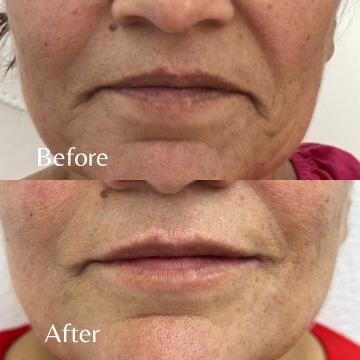
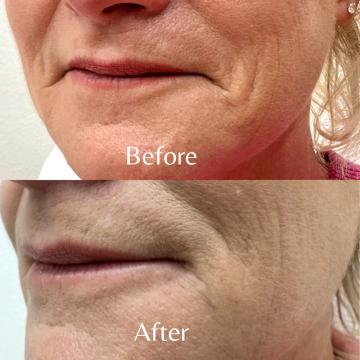
Mouth corner filler before and after photos




Mouth corner filler recovery and aftercare
Redness, tenderness, swelling, small injection marks and bruising may occur after treatment. Temporary swelling may make the mouth corners appear uneven.
During the first 24 to 48 hours, avoid unnecessary pressure, rubbing or massage unless your practitioner advises otherwise. Follow the clinic’s instructions regarding make-up, exercise, alcohol, heat exposure and skincare.
Swelling and bruising should usually begin to settle gradually. Contact the clinic if symptoms worsen rather than improve.
Seek advice if you develop:
increasing pain;
unusual or spreading skin discolouration;
rapidly increasing swelling;
signs of infection;
persistent painful lumps;
problems moving the mouth.
Mouth corner filler risks and side effects
Common temporary reactions include redness, swelling, tenderness, bruising and temporary asymmetry.
Read more about dermal filler side effects.
Less common problems may include infection, persistent lumps, delayed inflammatory reactions or an unsatisfactory result.
Read more about dermal filler complications.
When is urgent assessment needed?
Contact the treating practitioner or seek urgent medical assessment if you experience:
severe or increasing pain;
white, grey, blue or blotchy skin;
skin that feels unusually cold;
sudden changes in vision;
other rapidly worsening or unusual symptoms.
These symptoms may indicate a rare disruption to the blood supply and require prompt assessment.
Can mouth corner filler be dissolved?
A hyaluronic acid mouth corner filler can sometimes be broken down using hyaluronidase. This is a separate medical procedure with its own limitations and risks.
Read more about dissolving dermal fillers.
How much does mouth corner filler cost?
The total cost of mouth corner filler may depend on:
the amount of filler used;
the brand and type of hyaluronic acid gel;
the practitioner’s qualifications and experience;
the clinic’s location;
whether another area is treated;
consultation and follow-up arrangements;
the clinic’s policy on reviews or adjustments.
A low advertised starting price may not represent the complete cost of treatment.
Before booking, ask:
how many millilitres are included;
whether the price covers both mouth corners;
which product will be used;
whether consultation and follow-up are included;
whether further treatment would involve an additional charge.
No exact UK prices have been added because current prices should come from the clinic database.
Read more about fillers costs.
How to choose a mouth corner filler practitioner or clinic
Choose a qualified and suitably trained medical practitioner with relevant experience in mouth corner filler and lower-face treatments.
Before treatment, check:
who will perform the procedure;
their professional registration, training and experience;
whether a full medical consultation is completed;
whether facial movement and the whole lower face are assessed;
which product will be used;
whether the product can be traced by brand and batch number;
whether risks and alternatives are explained;
what the complete cost includes;
whether follow-up is available;
how the clinic manages complications.
Where should you not have mouth corner filler?
Avoid treatment:
from someone who cannot demonstrate suitable qualifications and training;
without a medical consultation;
in a setting without appropriate hygiene procedures;
without information about the product being used;
without clear aftercare and complication arrangements;
when there is an active infection or inflammation in the treatment area.
Read more about how to choose a dermal filler practitioner.
Compare mouth corner filler clinics
Mouth corner filler may be suitable when reduced volume or support contributes to downturned mouth corners. The intended change should usually be subtle and appropriate for the rest of the face.
Mouth corner filler is not the best choice for every cause. Strong muscle activity, significant skin laxity or changes elsewhere in the lower face may require a different treatment plan.
Compare clinics using:
practitioner qualifications and relevant experience;
the quality of the medical consultation;
assessment of the whole lower face;
explanation of alternatives and risks;
the filler product being used;
aftercare and complication procedures;
availability after treatment;
recent and relevant patient reviews;
the complete treatment cost;
distance from the clinic.
Compare clinics in United Kingdom

- Filler from
- £ 250,00



- Filler from
- £ 250,00


- Filler from
- £ 250,00

- Filler from
- £ 250,00

- Filler from
- £ 250,00

- Filler from
- £ 250,00

- Filler from
- £ 250,00

- Filler from
- £ 250,00
Frequently asked questions about mouth corner filler
What is mouth corner filler?
Mouth corner filler is a temporary hyaluronic acid treatment intended to support tissue around downturned mouth corners. It may be considered when reduced volume or structural support is an important cause.
Can mouth corner filler lift downturned mouth corners?
Mouth corner filler may provide subtle support, but it does not produce a clear lift in every person. The result depends on the cause, anatomy, skin quality and amount used.
What is the difference between downturned mouth corners and marionette lines?
Downturned mouth corners describe the position of the corners themselves. Marionette lines are creases or shadows that run from the mouth corners towards the chin.
Is mouth corner filler or Botox better for downturned mouth corners?
Mouth corner filler may be considered where support or volume has been lost. Botulinum toxin may be discussed when strong DAO muscle activity is the main cause. A consultation is needed to distinguish between them.
How much mouth corner filler is needed for both sides?
A practitioner may discuss amounts such as 0.5 ml or 1 ml, but there is no standard amount. It depends on your anatomy, asymmetry, product and treatment plan.
How much does mouth corner filler cost?
The cost depends on the clinic, practitioner, product and amount used. Check whether the price covers both sides and includes consultation and follow-up.
How long does mouth corner filler last?
The effect is temporary and may remain visible for several months. Duration varies according to the product, amount, facial movement, metabolism and lifestyle.
When can the final result be assessed?
An initial change may be visible immediately, but swelling can affect the appearance. The result is easier to assess once the area has settled.
Can I return to work after mouth corner filler?
Many people return to normal activities quickly, although swelling, redness or bruising may remain visible.
Can mouth corner filler affect my smile?
Mouth corner filler does not stop muscle movement, but swelling may temporarily make the mouth feel different. Persistent problems with smiling, eating or speaking should be reported to the treating clinic.
Can the mouth corners become uneven?
Natural asymmetry is common and may appear more noticeable while the area is swollen. Perfect symmetry cannot be guaranteed.
What are the main risks of mouth corner filler?
Possible reactions include swelling, redness, bruising, tenderness and temporary asymmetry. Less common complications include infection, persistent lumps and blood-vessel complications requiring urgent assessment.
Find clinics for mouth corner filler
Compare on experience & price Make an appointment immediately