Profhilo vs skin boosters

Drs. Tom van Eijk
Profhilo or skin boosters, which treatment may suit you better depends mainly on what you want to improve. Profhilo is generally considered when skin quality, firmness and elasticity are important goals, while traditional HA skin boosters are more commonly considered when hydration, skin texture, dullness or fine superficial lines are the main concern.
There is considerable overlap. Profhilo can also support hydration, while a skin booster may influence more than moisture alone. Neither treatment is therefore automatically better.
The more useful comparison is whether the specific product, treatment technique and intended result match your skin goal.
A practitioner can assess your skin, treatment area and expectations during consultation and explain whether Profhilo, a traditional HA skin booster or no injectable treatment may be appropriate.
For a broader introduction to the treatment, see Profhilo treatment.
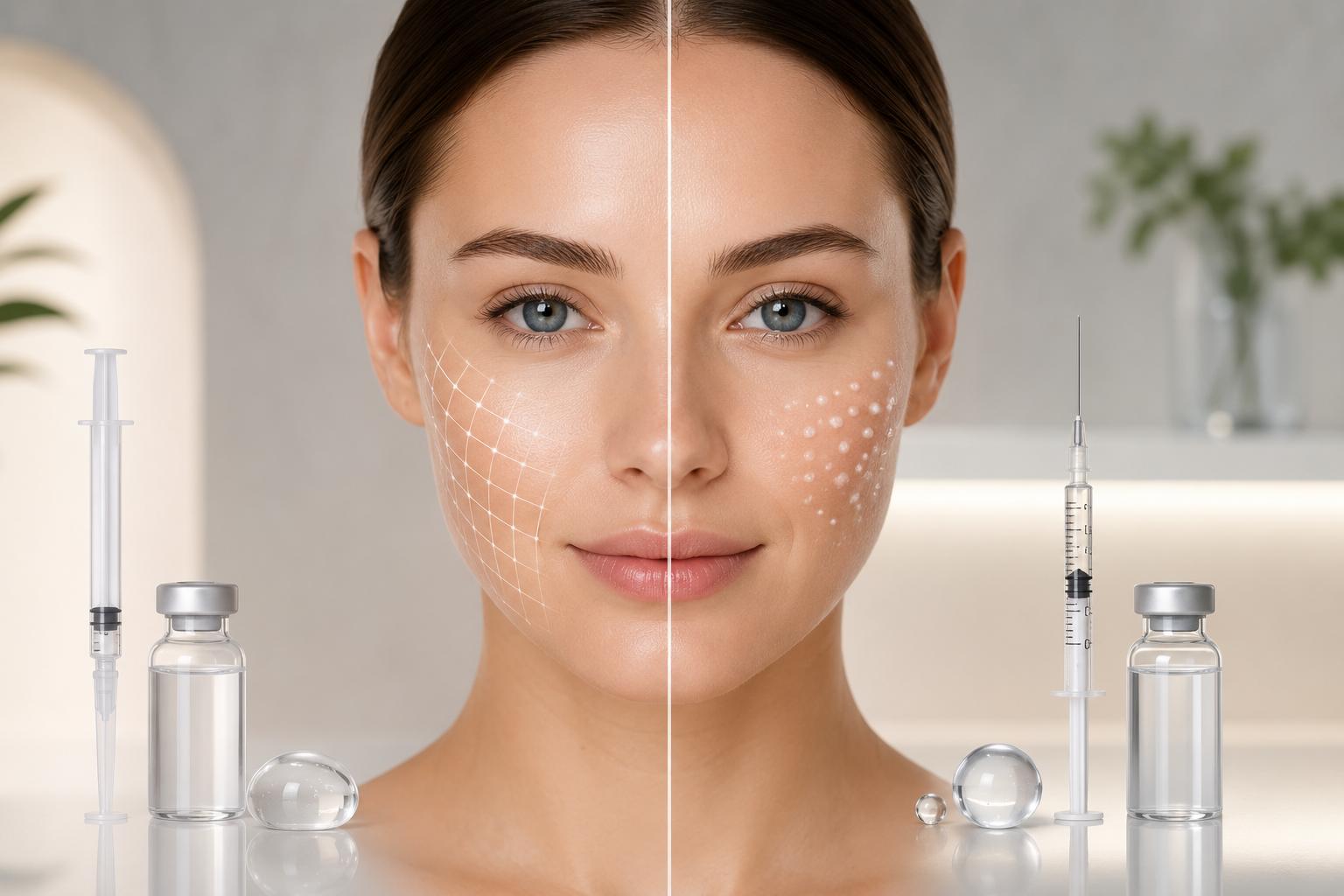
Is Profhilo a skin booster?
Profhilo is often discussed alongside skin boosters because both involve injectable hyaluronic acid and are used with the aim of supporting skin quality.
However, Profhilo is a specific hyaluronic acid product, while “skin booster” is a broader treatment category that can include different products, formulations and treatment protocols.
Profhilo contains high- and low-molecular-weight hyaluronic acid combined into hybrid complexes. It is generally used as a skin-quality treatment rather than as a conventional filler for creating targeted facial volume.
Traditional HA skin boosters may also contain hyaluronic acid, but their formulation, placement and intended use differ between products.
This distinction matters because asking only whether Profhilo or a skin booster is “better” leaves out an important question: which exact product is being proposed and what is it intended to improve?
For more detail about the product itself, read what Profhilo is.
Before treatment, ask:
Which exact product will be used?
What skin goal is it intended to address?
Why has this product been selected?
Where will it be injected?
What type of change is realistic?
Profhilo vs skin boosters, the main differences
Treatment focus
Profhilo is more commonly discussed when reduced firmness, elasticity or mild skin laxity forms part of the treatment goal.
Traditional HA skin boosters are more commonly discussed when hydration, texture, dullness or fine superficial lines are the main priorities.
These goals overlap, so the product should be selected according to the individual treatment goal rather than category alone.
Hyaluronic acid formulation
Both treatments may contain hyaluronic acid, but this does not mean that their formulations or properties are identical.
Profhilo uses high- and low-molecular-weight hyaluronic acid combined into hybrid complexes.
Traditional skin boosters vary by product, meaning their formulation and treatment protocol can also differ.
Injection approach
Profhilo is commonly administered through a limited number of selected injection points when treating areas such as the face.
Traditional HA skin boosters may instead be distributed through a larger number of smaller injections.
The exact injection pattern depends on the product, treatment area and technique.
Treatment course
Profhilo and traditional skin boosters may both be proposed as a course of treatment rather than a single isolated appointment.
The number and spacing of sessions depend on the product, treatment area, skin assessment and treatment plan.
For Profhilo-specific information, see how many Profhilo treatments may be needed.
Type of result
Both treatments generally aim for gradual changes in skin quality rather than a major alteration in facial shape.
Profhilo is more commonly associated with hydration, firmness and elasticity, while traditional skin boosters are often considered primarily for hydration and texture.
Visible changes can be subtle and results vary between individuals.
Which treatment may better match your skin goal?
The clearest way to compare Profhilo with a traditional HA skin booster is to start with the change you are considering.
Hydration is the main priority
A traditional HA skin booster may be discussed when improving hydration is the main goal, particularly where dryness, dullness or fine superficial lines are relevant concerns.
Profhilo can also support hydration, so hydration alone does not automatically determine the treatment choice.
The clinic should explain why the proposed product fits the specific treatment area and goal.
Firmness and elasticity are the main priorities
Profhilo may be considered when reduced firmness or elasticity forms a more important part of the treatment goal.
The intended effect remains a skin-quality change rather than targeted facial reshaping.
Texture and fine superficial lines are the priority
Traditional HA skin boosters may be considered when skin texture or fine superficial lines are more important than structural volume.
How much change may be possible depends partly on what is causing the visible line or textural difference.
You have several skin-quality concerns
If hydration, texture and reduced firmness are all relevant, there may not be one obvious treatment choice.
Ask which concern the practitioner considers the main priority and what each proposed product is expected to address.
Your main concern is facial volume loss
Neither Profhilo nor a traditional HA skin booster is primarily intended to create targeted facial volume.
If volume is the main comparison point, see Profhilo vs fillers.
Your main concern is more pronounced skin laxity
Neither option should automatically be presented as a solution for significant loose skin.
A practitioner should assess whether the degree of change expected from an injectable skin-quality treatment is likely to match your goal.
How to compare Profhilo and skin boosters
- 1 Define your main skin goal
- 2 Ask which exact product is proposed
- 3 Check the intended treatment area
- 4 Compare the complete treatment plan
- 5 Discuss the expected result and limitations
When do results appear after Profhilo or a skin booster?
Profhilo and traditional HA skin boosters should not be judged by how the skin looks immediately after the injections.
The intended skin-quality changes generally develop gradually. How quickly they become noticeable can depend on the product, treatment area, treatment plan and individual response.
Temporary swelling or small raised areas around injection sites can temporarily change the appearance of the skin and should not be confused with the intended final result.
When comparing treatment plans, ask:
When should the result be assessed?
What type of change should be expected?
Is more than one appointment proposed?
When would the practitioner review whether the treatment goal has been met?
For a Profhilo-specific timeline, see when you may see Profhilo results.
What are the possible reactions after Profhilo or a skin booster?
Profhilo and traditional HA skin boosters both involve injections, so temporary reactions can occur around the treated areas. These may include redness, mild swelling, tenderness, bruising or small raised areas at the injection sites.
The pattern and intensity of these reactions can differ depending on the product, treatment area, number of injection points, technique and individual response.
Is recovery the same after both treatments?
Not necessarily. Profhilo and traditional skin boosters can use different injection patterns.
Profhilo may be placed at a smaller number of selected injection points, while some traditional skin boosters are distributed using multiple smaller injections. This can affect where temporary swelling, redness or small bumps appear after treatment.
Ask the practitioner what is normally expected after the exact product and technique being proposed.
When should you contact the clinic?
Contact the treating clinic if pain, redness, swelling or heat becomes increasingly pronounced rather than gradually improving, or if you develop discharge, fever or another symptom that differs clearly from the expected recovery explained during consultation.
Acute or severe symptoms require prompt medical assessment.
What should you discuss before treatment?
Tell the practitioner about relevant medical conditions, medicines, allergies, previous injectable treatments and any current skin problems. Pregnancy or breastfeeding should also be discussed before treatment.
A practitioner should assess whether treatment should proceed, be modified or be postponed according to your individual circumstances.
For more detailed information specifically about Profhilo reactions and complications, see Profhilo side effects.
Is Profhilo or a skin booster cheaper?
One advertised appointment price does not necessarily show which treatment will cost less overall.
The complete treatment cost may depend on:
The exact product
The amount used
The treatment area
The proposed number of sessions
Follow-up arrangements
Any maintenance discussed later
The more useful comparison is therefore the complete treatment plan rather than only the price of one appointment.
Ask what the quoted price includes and whether the clinic has explained the full proposed course.
For dedicated UK Profhilo pricing information, see Profhilo cost comparison.
How do you compare Profhilo and skin-booster clinics?
Choosing between clinics should involve more than checking whether they offer Profhilo or a skin booster.
Ask who will perform the treatment, what exact product is proposed and why that treatment plan is considered relevant to your skin goal.
Who will perform the injections?
Check the practitioner's professional background and verified qualifications or registrations relevant to their role.
A professional title by itself does not tell you how much experience someone has with Profhilo or the particular skin booster being proposed.
Do they have relevant treatment experience?
Ask about experience with the specific product, injection technique and treatment area.
Experience with one injectable treatment should not automatically be treated as experience with every skin-quality injectable.
Is the proposed product clearly identified?
The clinic should be able to tell you exactly which skin booster or Profhilo product is being proposed.
This gives you a clearer basis for comparing treatment plans between providers.
Are the limitations explained?
The consultation should cover what the treatment may realistically change and what it is unlikely to change.
Be cautious if a skin-quality treatment is presented as producing dramatic lifting, significant volume replacement or guaranteed results.
Is there a clear follow-up process?
Ask how aftercare works, who to contact if you have concerns and how unexpected reactions are managed.
For a more detailed provider-selection checklist, see how to choose a Profhilo doctor.
Compare clinics in United Kingdom

- Profhilo from
- £ 300,00





- Profhilo from
- £ 259,00

- Profhilo from
- £ 259,00

- Profhilo from
- £ 259,00

- Profhilo from
- £ 259,00

- Profhilo from
- £ 259,00

- Profhilo from
- £ 259,00
Frequently asked questions about Profhilo vs skin boosters
Which is better, Profhilo or a skin booster?
Neither is automatically better. Profhilo is more commonly considered when firmness, elasticity or mild skin laxity are priorities, while traditional HA skin boosters are more commonly considered when hydration, texture or fine superficial lines are the main goals.
Is Profhilo a skin booster?
Profhilo is often grouped with skin boosters because it is an injectable hyaluronic acid treatment for skin quality. However, Profhilo is a specific product, while “skin booster” describes a wider category of products.
Is Profhilo better for skin firmness?
Profhilo is more commonly discussed when firmness and elasticity are important treatment goals. Whether the likely change is appropriate depends on your skin, treatment area and expectations.
Are skin boosters better for hydration?
Traditional HA skin boosters are commonly considered when hydration is the main priority. Profhilo can also support hydration, so this feature alone does not determine which treatment is more appropriate.
Does Profhilo add volume like filler?
Profhilo is not normally used to create targeted facial volume or defined contours in the way conventional dermal fillers can. Its main purpose relates to skin quality.
What are the disadvantages of Profhilo?
Profhilo may not match every treatment goal, changes can be subtle and gradual, more than one appointment may be proposed and temporary reactions around injection sites can occur.
Can Profhilo and a skin booster be combined?
Different skin-quality treatments may sometimes form part of one treatment plan, but combining them is not automatically necessary or more effective. Each treatment should have a clear purpose.
How do I know which skin booster is being used?
Ask the clinic for the exact product name. “Skin booster” is a treatment category rather than one standard product, so formulation and treatment protocols can differ.
Is Profhilo better for loose skin?
Profhilo may be considered when mild skin laxity forms part of the concern, but it should not be expected to correct every degree of loose skin.
How many Profhilo or skin-booster treatments will I need?
This depends on the product, treatment area, skin assessment and proposed protocol. Compare the complete treatment plan rather than assuming every product follows the same schedule.