Rejuran for acne scars

Drs. Tom van Eijk
Rejuran may help improve skin texture around some atrophic, or indented, acne scars, but it should not be expected to remove deep or tethered scars completely. Whether it is a reasonable option depends more on the type, depth and structure of the scar than on the Rejuran name itself.
Rejuran contains polynucleotides, usually shortened to PN. These injectable substances are used with the aim of supporting skin quality and tissue remodelling. Research specifically supporting Rejuran as a standalone acne-scar treatment remains limited, so a realistic aim is possible improvement rather than guaranteed scar removal.
If you first want a broader explanation of the product, see the main Rejuran treatment guide.
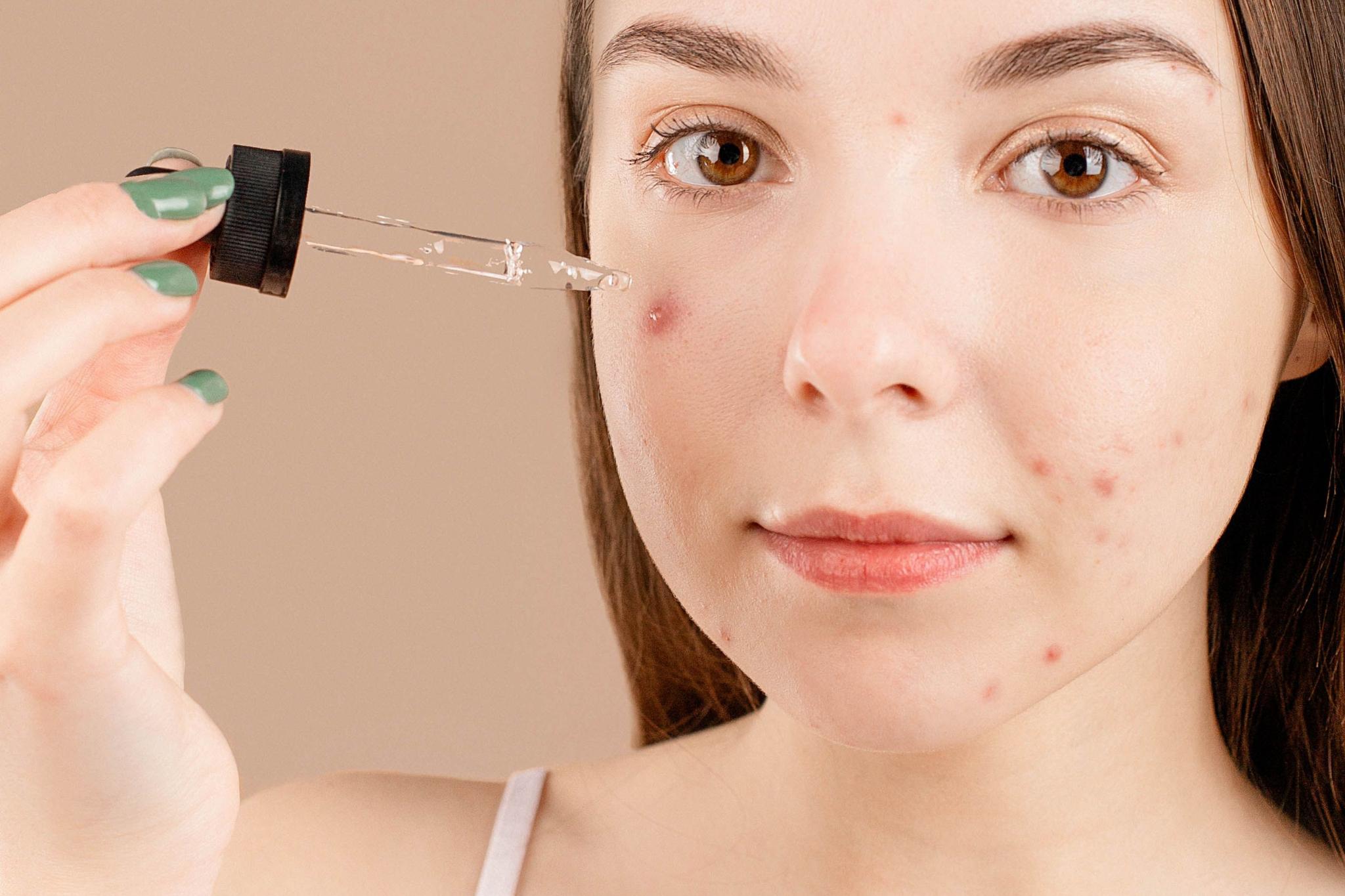
Can Rejuran help acne scars?
Rejuran may be considered for some atrophic acne scars, where part of the skin surface sits lower than the surrounding skin. The possible benefit depends on the scar pattern, depth, skin condition and whether the scar is tethered to deeper tissue.
Research into injectable polynucleotides has reported improvements in atrophic acne scarring, but the evidence base remains small. It does not establish that every acne-scar subtype responds equally or that Rejuran itself can reliably remove acne scars.
First check whether it is actually an acne scar
Not every mark left after acne is a structural scar. This matters because a treatment aimed at texture is not automatically appropriate for a colour change.
Atrophic acne scars
Atrophic scars are depressions in the skin. Common patterns include rolling, boxcar and ice-pick scars, although one person can have several types at the same time.
Red marks after acne
Persistent redness after inflammation is sometimes called post-inflammatory erythema. The main visible change is colour rather than a depression in the skin.
Brown or darker marks after acne
Post-inflammatory hyperpigmentation is also primarily a colour change. It should not automatically be treated as though it were an indented scar.
Active acne
Rejuran for acne scars concerns changes left after acne, not treatment of active acne itself. If inflammatory acne is still present, a suitable healthcare professional can assess whether the active condition should be addressed before an elective scar procedure is considered.
Which acne scars might Rejuran be considered for?
The scar itself matters more than the brand name. Acne can leave depressions with very different shapes, depths and structural causes, so one injectable treatment should not be assumed to work equally well for every scar.
Rolling scars
Rolling scars can create broader, shallow depressions or an uneven, wave-like surface. Some are tethered by fibrous tissue beneath the skin. If tethering is an important part of the scar, simply trying to improve skin quality may not address the whole problem.
Boxcar scars
Boxcar scars usually have more defined edges and can range from relatively shallow to deeper depressions. Depth is particularly important when considering what an injectable skin-quality treatment might realistically change.
Ice-pick scars
Ice-pick scars are narrow and extend more deeply into the skin. It would be inappropriate to assume that Rejuran alone can adequately correct a deep ice-pick scar.
Mixed acne scarring
Many people have more than one scar type. A practitioner therefore needs to assess the individual scars rather than treating the entire area as though every depression has the same cause.
There is currently not enough evidence to state reliably that one specific acne-scar subtype is the definitive “best” type for Rejuran.
What is Rejuran S for acne scars?
Rejuran S is a formulation within the Rejuran range that is specifically positioned for depressed and sunken scars, including acne scarring. Its scar-focused positioning makes it particularly relevant when discussing Rejuran for acne scars, but this does not mean it is appropriate for every scar.
Rejuran products contain polynucleotides. These DNA-derived molecules are used in aesthetic medicine with the aim of supporting processes involved in tissue quality and remodelling.
PN and PDRN are frequently used interchangeably in online marketing, although they are not necessarily identical terms. For a more focused explanation, see polynucleotides in Rejuran.
The important distinction is between product positioning and clinical evidence. A product being marketed for depressed scars does not prove that it will produce a particular amount of improvement in every acne scar.
How acne scars can be assessed before Rejuran
- 1 Confirm whether active acne is still present
- 2 Identify the main scar types
- 3 Assess depth and possible tethering
- 4 Discuss what Rejuran could realistically change
- 5 Agree how any result would be reviewed
When might Rejuran alone not be enough?
Rejuran should not be treated as a universal solution for acne scarring. Deeper scars and scars whose structure is influenced by tissue beneath the skin may require a different treatment strategy or a combination approach.
For example, the depth of an ice-pick scar may limit what can realistically be achieved through skin-quality improvement alone. With some rolling scars, fibrous tethering beneath the skin can contribute to the depression.
Rejuran may also be a poor match when the main concern is redness or pigmentation rather than indentation.
A useful consultation question is therefore not simply, “Does Rejuran treat acne scars?” Ask instead:
“What type of scar do I have, what is Rejuran intended to change in that scar, and what is likely to remain visible?”
Risks, recovery and when to contact your clinic
Possible reactions after Rejuran
Small injections can cause temporary local reactions such as redness, swelling, tenderness and bruising. The frequency and severity can differ between individuals, treatment areas and injection techniques.
For the dedicated safety information, see Rejuran side effects.
What can the skin look like afterwards?
Injection points, mild swelling or redness may be visible immediately after treatment. How quickly these settle varies, so follow the aftercare instructions provided by the treating clinic.
A fuller timeline is available in the guide to Rejuran recovery.
When should you contact the treating clinic?
Contact the clinic if a reaction is unexpected, severe or clearly worsening rather than settling. Increasing pain, marked redness or swelling, discharge, fever or another concerning symptom should be assessed rather than self-treated.
What results from Rejuran for acne scars are realistic?
A realistic expectation is possible softening of texture or the appearance of selected atrophic scars, not complete removal of acne scarring. The amount of visible change can depend on the starting scar pattern, depth, tethering, surrounding skin and treatment plan.
Small studies of injectable polynucleotides have reported improvement in atrophic acne scarring, but the evidence is not strong enough to justify promising a fixed percentage improvement for an individual patient.
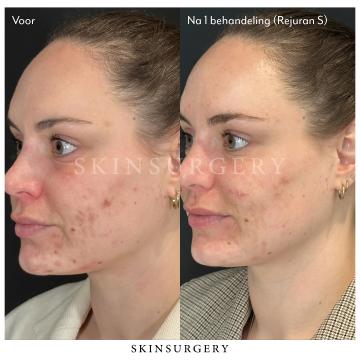
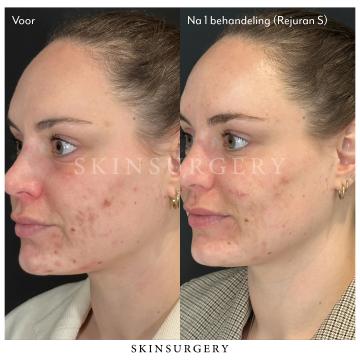
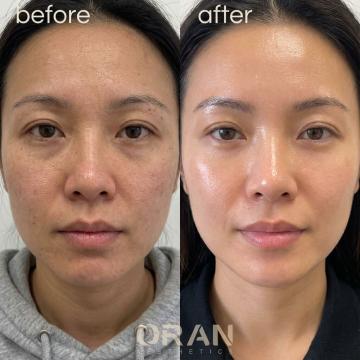
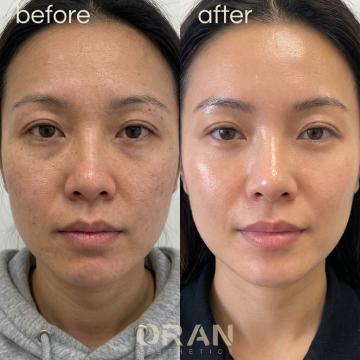
Photos also require careful interpretation. Lighting, camera distance, angle, facial expression and temporary changes in the skin can make differences look larger or smaller than they are.
For guidance on interpreting treatment images, see Rejuran before and after.
Rejuran before and after photos
What does Rejuran for acne scars cost in the UK?
The cost can vary according to the clinic, treatment plan, area being treated, product used and amount required. With acne scarring, it is particularly important to establish what is actually being treated before comparing headline prices.
This page does not provide a national price range because its primary purpose is acne-scar suitability and expectations. See the dedicated Rejuran costs page for current UK price information available through Injectablesbooking.
When comparing a quoted price, check what it covers, which Rejuran product is proposed, who performs the treatment, whether follow-up is included and what happens if you have a concern afterwards.
How do you compare practitioners for Rejuran acne-scar treatment?
For acne scarring, it is not enough to establish that a clinic offers Rejuran. The practitioner should be able to explain what type of scar they believe they are treating and why the proposed treatment matches that scar.
Useful points to compare include:
the practitioner's relevant professional background;
relevant experience with injectable treatments and acne scarring;
experience using Rejuran for the proposed indication;
whether different scar patterns are assessed before treatment;
how limitations and realistic outcomes are explained;
what product is proposed and why;
how aftercare and complications are managed;
whether you have an opportunity to ask questions before deciding.
Professional registration may be relevant depending on the practitioner's profession, but registration alone does not demonstrate extensive experience with Rejuran or acne-scar treatment.
For more detail, see how to choose a practitioner for Rejuran.
Compare UK clinics offering Rejuran
If you are considering Rejuran for acne scarring, compare clinics before requesting a consultation. The aim of the consultation should be to establish what kind of scarring is present, what the proposed treatment is intended to change, what its limitations are and whether another approach also needs to be considered.
You can compare information such as location, available treatment information, practitioner details, pricing where listed and patient reviews.
A consultation does not commit you to treatment. Choosing not to proceed remains an option if the expected benefit, risks, cost or treatment plan do not feel appropriate for you.
Compare clinics in United Kingdom

- Rejuran from
- £ 295,00




Rejuran clinic reviews
Frequently asked questions about Rejuran for acne scars
Does Rejuran remove acne scars?
Rejuran should not be expected to remove acne scars completely. Injectable polynucleotides may support improvement in skin texture and some atrophic scars, but results vary and the available evidence remains limited. Scar type and depth are important when deciding what may be realistic.
Which acne scars may be considered for Rejuran?
Rejuran may be discussed for atrophic or indented acne scarring. Rolling, boxcar and ice-pick scars differ in shape and depth, however, and one treatment should not be expected to work equally well for all of them.
Can Rejuran help rolling scars?
It may be considered in some cases, but rolling scars can involve fibrous tethering beneath the skin. If tethering is contributing substantially to the depression, improving skin quality alone may not address the full structure of the scar.
Does Rejuran work for boxcar scars?
That depends partly on the depth and shape of the scar. A relatively shallow depression and a deeper boxcar scar should not be expected to respond in the same way, so individual assessment is important.
Can Rejuran treat ice-pick scars?
Deep ice-pick scars extend narrowly into the skin. It would be inappropriate to assume that Rejuran alone can adequately correct this type of deep structural scar.
What is Rejuran S?
Rejuran S is a formulation in the Rejuran range positioned specifically for depressed and sunken scars, including acne scarring. This does not mean it is automatically suitable for every scar or that a particular result is guaranteed.
Is Rejuran for acne scars the same as treating active acne?
No. This use of Rejuran concerns skin changes left after acne rather than treatment of active inflammatory acne. If active acne remains, ask an appropriate healthcare professional to assess the condition before considering an elective scar procedure.
Can Rejuran help red or brown acne marks?
Redness and post-inflammatory pigmentation are different from atrophic acne scars because the main change is colour rather than a structural depression. The underlying concern should therefore be identified before comparing treatments.
What are the disadvantages of Rejuran for acne scars?
Possible disadvantages include temporary injection-site reactions, cost, uncertain individual improvement and the possibility that Rejuran does not address the main structural cause of a deeper or tethered scar.
How long do Rejuran results last?
There is no single duration that applies to every person or treatment area, and acne-scar changes are particularly dependent on what could realistically be altered in the first place. See the dedicated guide to how long Rejuran lasts.