How does Botox work?

Drs. Tom van Eijk
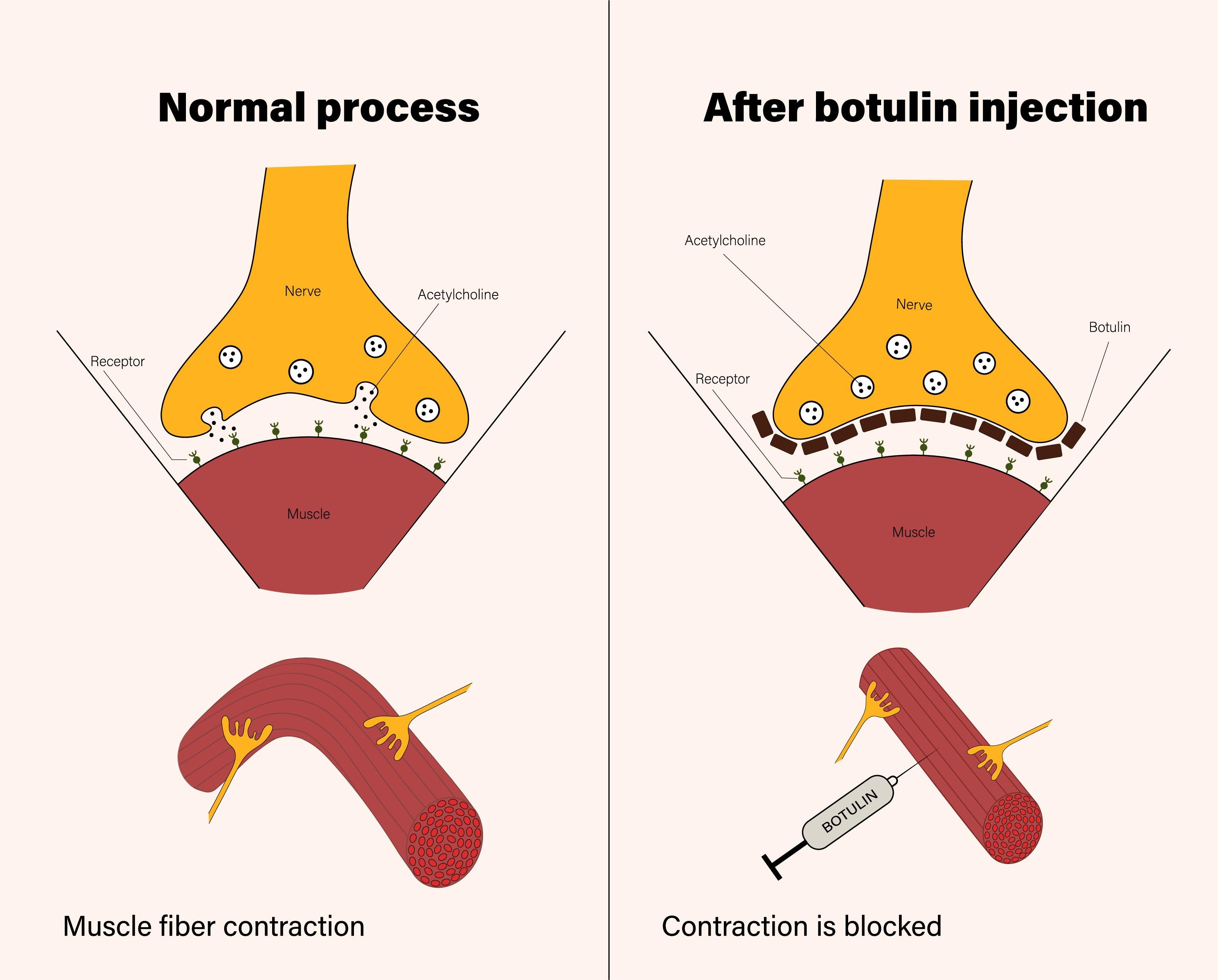
Botox works by temporarily reducing the release of acetylcholine, a chemical messenger that nerves use to tell muscles to contract. When a selected muscle receives less of this signal, it contracts less strongly.
In cosmetic treatment, this can reduce how strongly the skin folds during expressions such as frowning or raising the eyebrows. The effect is temporary and depends on the muscle treated, the amount used, the injection points and individual anatomy.
Botox does not fill a wrinkle. It changes communication between selected nerve endings and muscles.
Botox is a brand of botulinum toxin type A. The name “Botox” is also commonly used informally for this treatment category, although not every botulinum toxin treatment uses the Botox brand.
For a broader introduction to treatment rather than the biological mechanism, see the Botox treatment overview.

Compare clinics near you
Compare on experience & price Make an appointment immediately
What is Botox and how does botulinum toxin work?
Botox contains botulinum toxin type A, a substance that affects the release of acetylcholine from certain nerve endings.
Normally, a motor nerve releases acetylcholine where it meets a muscle. The acetylcholine binds to receptors on the muscle cell and helps trigger a muscle contraction.
Botulinum toxin interrupts part of this process at the nerve ending. Less acetylcholine is released, so the muscle receives a weaker signal to contract.
The treatment does not simply “switch off the whole nerve”. Its main effect in this context is to temporarily reduce communication between the treated nerve ending and the muscle it controls.
How much muscle activity is reduced depends on factors including the treatment plan, anatomy, injection position and dose.
How Botox works step by step
- 1 Botulinum toxin type A is injected into the planned treatment area
- 2 The toxin reaches nerve endings that communicate with the selected muscle
- 3 It is taken up by those nerve endings
- 4 Botulinum toxin type A interferes with SNAP-25, a protein involved in releasing acetylcholine
- 5 Less acetylcholine is released from the nerve ending
- 6 The muscle receives less stimulation to contract
- 7 Muscle activity reduces temporarily and the skin may fold less strongly during movement
What happens at the nerve–muscle junction?
The point where a motor nerve communicates with a muscle is called the neuromuscular junction, or nerve–muscle junction.
Normally, an electrical signal travels along the nerve until it reaches the nerve ending. This causes acetylcholine to be released into the small space between the nerve and the muscle.
The acetylcholine then interacts with receptors on the muscle cell and helps start a contraction.
What does Botox do to SNAP-25?
SNAP-25 is one of the proteins involved in releasing acetylcholine from a nerve ending.
Botulinum toxin type A cleaves SNAP-25. This disrupts the normal process used to release acetylcholine, so less of the chemical messenger reaches the muscle.
The result is reduced signalling from the nerve ending to the muscle.
A simple way to understand it
Think of the nerve as sending an instruction to the muscle.
The instruction can still travel down the nerve, but botulinum toxin temporarily interferes with an important step needed to pass that instruction from the nerve ending to the muscle.
The muscle remains present. It simply receives less stimulation to contract.
What does Botox do to a muscle?
Botulinum toxin temporarily reduces the activity of the selected muscle. The muscle can still exist and function, but its ability to contract strongly is reduced while the treatment is active.
Treatment does not always aim to remove all movement. How much movement remains depends on the muscle involved, anatomy, dose, injection placement and treatment goal.
What happens to dynamic lines?
Dynamic lines are lines that become more visible when a muscle contracts. Examples include lines that appear when you frown, smile or raise your eyebrows.
If the underlying muscle contracts less strongly, the skin over it is folded less forcefully during that movement. This can make movement-related lines appear less prominent.
What about lines that remain at rest?
A line that is already visible when the face is relaxed is not simply “filled in” by botulinum toxin.
Reducing repeated muscle contraction may reduce how strongly the area continues to crease, but an established line at rest may remain visible.
What does Botox not do?
Botulinum toxin does not:
add lost facial volume;
physically fill a wrinkle;
remove excess skin;
change bone structure;
permanently stop a muscle from functioning.
Treatments that add volume work differently. See the guide to the difference between Botox and fillers.
When does Botox start working?
Botulinum toxin does not produce its full visible effect immediately after injection.
The biological process develops gradually as the toxin is taken up by nerve endings and reduces acetylcholine release. A change in muscle movement may therefore become noticeable after several days rather than straight away.
The exact timing can differ between products, treatment areas and individuals.
Why can the result change over the following days?
Reduced nerve-to-muscle signalling develops progressively. As muscle contraction decreases, the effect on movement-related lines can become easier to see.
This is why the appearance immediately after injection is not the final treatment result.
Why does Botox eventually wear off?
The nerve and muscle are not permanently destroyed.
Over time, functional communication between the nerve and muscle gradually recovers. Muscle activity therefore returns, and lines caused by repeated movement may become more noticeable again.
For a fuller explanation of treatment duration rather than mechanism, see how long Botox lasts.
Important limits of how botulinum toxin works
Why do dose and injection position matter?
Botulinum toxin acts locally around the area in which it is placed. Dose and injection position therefore influence which muscle fibres are affected and how much movement is reduced.
Treatment planning requires an understanding of which muscles produce a particular movement and how nearby muscles interact. A practitioner should assess anatomy and movement before deciding on a treatment plan.
Can a nearby muscle also be affected?
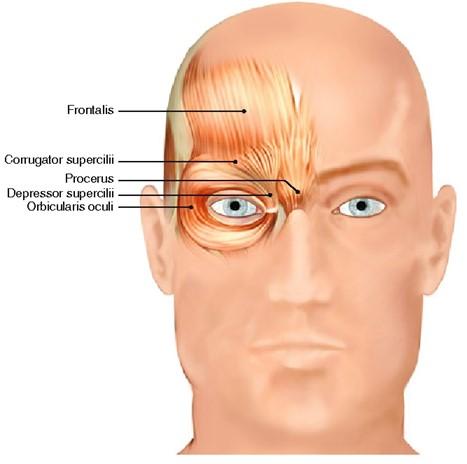
It is possible for an unintended nearby muscle to be affected. Depending on the area treated, this may temporarily change movement, symmetry or the position of nearby facial features.
The likelihood and type of effect depend on factors including anatomy, treatment area, injection technique and dose.
For more detail about risks rather than mechanism, see Botox treatment complications.
Does Botox permanently damage the muscle?
Botulinum toxin is used to temporarily reduce nerve-to-muscle signalling. The expected treatment effect is not based on permanently destroying the muscle.
As signalling recovers, muscle activity gradually returns.
Why does the effect wear off?
The reduction in acetylcholine release is temporary. Nerve-to-muscle communication gradually becomes functional again, allowing the muscle to contract more strongly.
When should urgent medical help be sought?
Problems with swallowing, speaking or breathing after botulinum toxin treatment require urgent medical assessment. These are not routine temporary injection-site reactions.
Does botulinum toxin only work on muscles?
No. Acetylcholine is involved in communication with some structures other than skeletal muscle.
For example, botulinum toxin can also reduce nerve signalling to sweat glands. The underlying involvement of acetylcholine is related, but the treatment goal is different from reducing facial muscle contraction.
Botulinum toxin is also used medically for several conditions using treatment protocols that differ from cosmetic facial treatment.
For the separate sweating indication, see Botox for excessive sweating.
What should you compare between Botox clinics?
Understanding how botulinum toxin works does not mean every treatment is planned or carried out in exactly the same way.
When comparing clinics or practitioners, consider whether the consultation covers your facial movement, the muscles involved, the result you want to discuss and the limitations of treatment.
You can also compare:
the practitioner's professional background;
relevant experience with the treatment area;
how risks and realistic expectations are explained;
the approach to treatment planning;
follow-up arrangements.
Choosing to have a consultation does not mean you have to proceed with treatment.
Compare clinics in United Kingdom

- Botox from
- £ 180,00





- Botox from
- £ 129,00

- Botox from
- £ 129,00

- Botox from
- £ 129,00

- Botox from
- £ 129,00

- Botox from
- £ 129,00

- Botox from
- £ 129,00
Frequently asked questions about how Botox works
Why doesn't Botox work immediately?
Botulinum toxin needs to be taken up by nerve endings and interfere with the release of acetylcholine. Muscle activity therefore reduces gradually rather than instantly, so the visible effect develops over time.
What does Botox block in the body?
Botulinum toxin type A reduces the release of acetylcholine from certain nerve endings. Acetylcholine is a chemical messenger used to pass signals from nerves to muscles and some other structures.
Does Botox block the entire nerve?
No. It mainly interferes with the release of acetylcholine from the treated nerve ending. It does not simply switch off the entire nerve.
What does SNAP-25 have to do with Botox?
SNAP-25 is a protein involved in releasing acetylcholine from nerve endings. Botulinum toxin type A cleaves this protein, which reduces acetylcholine release and weakens signalling to the muscle.
Does Botox completely stop a muscle moving?
Not necessarily. The amount of movement that remains depends on factors such as the muscle treated, anatomy, dose, injection position and treatment plan.
Why does Botox wear off?
The effect is temporary because nerve-to-muscle communication gradually becomes functional again. As signalling returns, the muscle can contract more strongly.
Can Botox permanently damage a muscle?
The intended effect of cosmetic botulinum toxin treatment is temporary reduction in muscle activity, not permanent destruction of the muscle. Muscle activity normally returns as nerve-to-muscle signalling recovers.
Why might Botox appear to have little effect?
A limited visible effect can have several explanations, including the muscle involved, treatment plan, dose, injection position, timing of assessment or the reason the line is visible.
If this is the main concern, see why Botox may not work as expected.